Broken Chargers, Not Buyers: Rivian CEO Scaringe Pinpoints the True Roadblock to Mainstream EV Adoption
For years, the narrative surrounding the slower-than-anticipated shift to electric vehicles in the U.S. has often revolved around range anxiety, purch...
Editorial Team
World Of EV
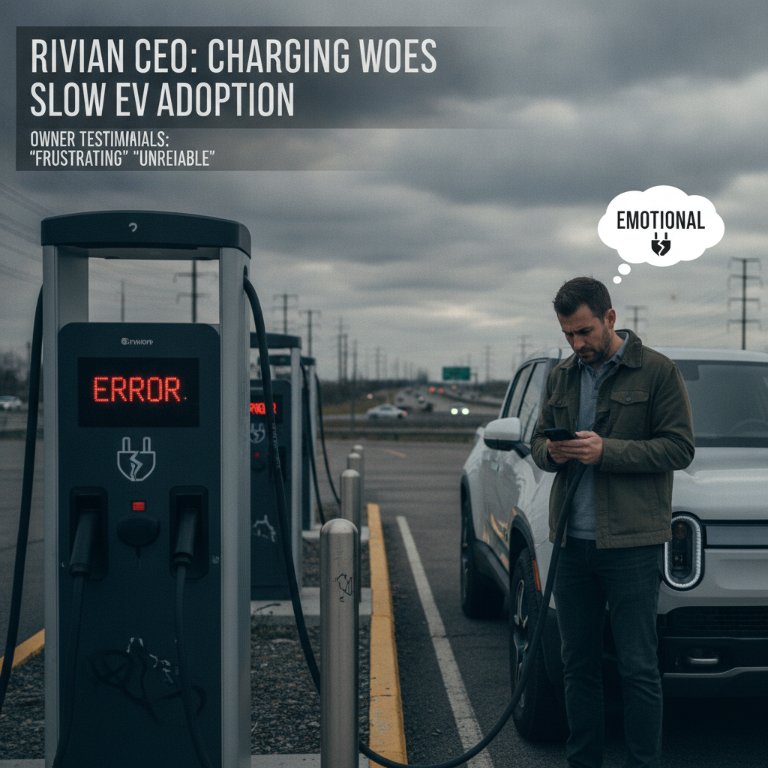
For years, the narrative surrounding the slower-than-anticipated shift to electric vehicles in the U.S. has often revolved around range anxiety, purchase price, or even a perceived 'anti-EV' sentiment among consumers. However, Rivian CEO RJ Scaringe has boldly challenged this conventional wisdom, asserting that the primary impediment to widespread EV adoption isn't a lack of desire, but rather a fundamental failure in the supporting infrastructure – specifically, malfunctioning public chargers and a bewildering array of charging networks. This pointed critique from a leader at the forefront of the EV revolution offers a crucial re-evaluation of the industry's challenges.
Scaringe's perspective echoes a growing frustration within the burgeoning EV community. While automakers pour billions into developing compelling electric models, the user experience often stumbles at the most critical juncture: charging. This isn't merely an inconvenience; it's a significant barrier to entry for prospective buyers and a source of deep exasperation for current owners, fundamentally eroding confidence in the EV ecosystem. The promise of seamless electric mobility remains just that – a promise – when the infrastructure consistently fails to deliver.
The Charging Conundrum: A Closer Look
Scaringe's diagnosis zeroes in on two critical pain points that directly impact the everyday EV user experience:
- Malfunctioning Public Chargers: Drivers frequently encounter charging stations that are out of order, partially functional, or deliver significantly reduced power. This directly translates to wasted time, missed appointments, and the ever-present stress of finding an alternative when power is critically low.
- Confusing Charging Networks: The fragmented landscape of public charging is a labyrinth of different apps, payment systems, and membership requirements. Navigating this complexity can be daunting, even for tech-savvy users, and presents a significant hurdle for mainstream consumers accustomed to the simplicity of traditional fueling stations.
Echoes from the EV Community: User Experiences Speak Volumes
Scaringe's analysis finds strong validation within online communities. Reddit users, a vocal and highly engaged segment of EV enthusiasts and owners, have consistently highlighted these practical challenges. Their shared personal experiences underscore the 'emotional' toll of unreliable charging, emphasizing that for mainstream consumers, practical and reliable charging isn't just a convenience; it's the top priority for successful EV ownership. Common refrains include the anxiety of arriving at a promised charging location only to find it inoperable, the frustration of juggling multiple apps for a single charging session, and the feeling of being stranded due to inadequate or unreliable infrastructure.
Why This Matters:
This isn't just about an industry executive airing grievances; it's a critical recalibration of the EV industry's priorities. If Scaringe and the collective voice of EV owners are correct, then the industry has been, in part, addressing the wrong problems. Focusing solely on range, performance, or price without concurrently delivering a robust and reliable charging experience is akin to building fantastic cars without paving roads.
- Who Wins? Charging companies that prioritize reliability, uptime, and user-friendliness stand to gain immensely. Automakers who actively invest in or partner with such companies to ensure a seamless charging experience for their customers will build critical brand loyalty. Furthermore, the consumer, who desperately needs this problem solved, ultimately wins when the industry shifts its focus appropriately.
- Who Loses? Charging network operators with consistently poor maintenance records will face increasing scrutiny and potential customer exodus. Automakers who continue to downplay or ignore the infrastructure issue risk alienating a growing segment of the market and seeing their innovative vehicles hampered by external limitations.
- What Does This Signal? This signals a pivotal moment for the industry to move beyond superficial fixes and address the foundational challenge of infrastructure. It's a call to action for greater collaboration between automakers, utility providers, and charging companies to standardize, simplify, and most importantly, reliably maintain the public charging ecosystem. This isn't a 'do-or-die' moment for any single company, but it absolutely is a 'do-or-die' moment for the widespread adoption of electric vehicles in the U.S.
The Road Ahead: From Frustration to Functionality
Rivian CEO RJ Scaringe's candid assessment, reinforced by the everyday experiences of EV owners, makes it unequivocally clear: the path to mainstream EV adoption runs directly through a functional and intuitive charging infrastructure. The industry must pivot from debating consumer sentiment to aggressively solving these practical charging challenges. Only then can electric vehicles truly move beyond early adopters and fulfill their promise as the dominant mode of transportation.