Beyond the Steel: Tesla's Robotaxi App Update Signals the Real-World Arrival of Cybercab
On the heels of its highly anticipated Cybercab launch event in Austin, Texas, Tesla has rolled out a major update to its official Robotaxi iOS app, p...
Editorial Team
World Of EV
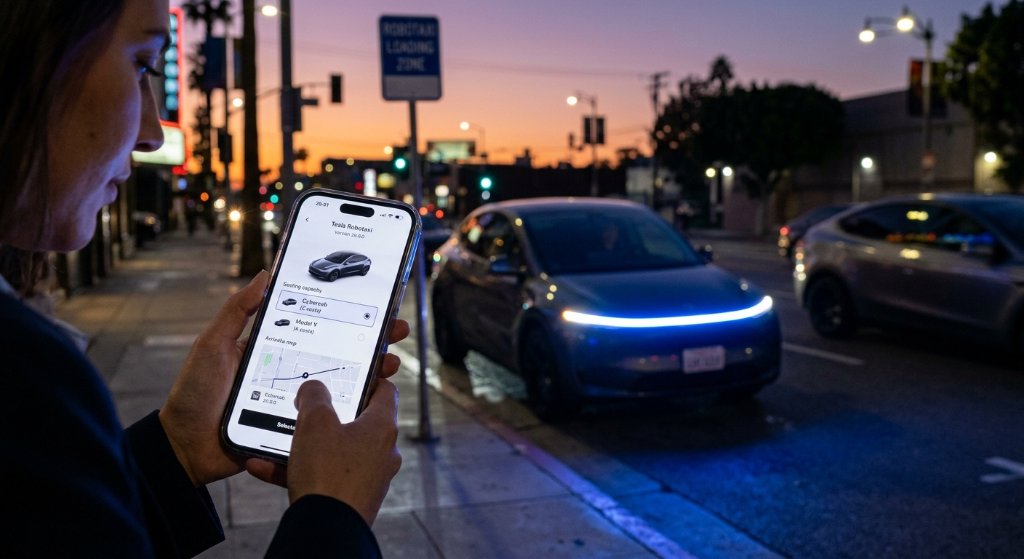
On the heels of its highly anticipated Cybercab launch event in Austin, Texas, Tesla has rolled out a major update to its official Robotaxi iOS app, pushing version 26.8.0 live on the App Store. Far from a routine maintenance update, this release represents the critical digital architecture that links Tesla's vision-based autonomous fleet with the real-world user experience. It serves as tangible evidence that Tesla is aggressively transitioning from a pure-play automotive manufacturer into a fully realized autonomous mobility provider.
This pivot arrives at a defining moment for the company. While competitors like Alphabet’s Waymo have spent years quietly scaling commercial driverless rides in major urban centers, Tesla has faced persistent skepticism over its vision-only, lidar-less Full Self-Driving (FSD) approach. By officially integrating the purpose-built, pedal-free Cybercab into its active hailing ecosystem alongside its massive fleet of customer-owned Model Y vehicles, Tesla is signaling that its long-promised autonomous software suite is finally ready for the public stage.
Designing the Autonomous UX: What’s New in Version 26.8.0
The latest app update reveals how Tesla intends to handle the logistical realities of running a mixed-vehicle driverless network. No longer a conceptual interface, version 26.8.0 introduces features tailored to real-world consumer behavior and fleet operations:
- Dual-Tier Seating Selector: The app introduces a prominent capacity indicator. Users can specifically select between the ultra-efficient, 2-seat purpose-built Cybercab and the larger, family-friendly 4-seat Model Y.
- Dynamic RGB Alignment Screen: Addressing a major pain point in chaotic urban pickup zones, the app’s arrival screen now dynamically glows to mirror the exact, real-time physical color of the incoming Cybercab’s RGB front light bar.
- Integrated Fleet Diagnostics: Passengers can execute immediate vehicle commands directly from the app, such as flashing the car's headlights or sounding the horn to locate it, as well as customizing personalized climate and entertainment preferences before stepping inside.
Engineering the Passenger Experience
Tesla is leaning heavily into entertainment and sensory experiences to differentiate its service from traditional rideshare platforms. The Cybercab’s cabin UI is built on Epic Games' Unreal Engine, transforming the central display into a high-fidelity visual hub. The cabin also includes a dedicated internal Photo Booth application, reinforcing the concept of the Cybercab as a shared social experience rather than just a daily commuter vehicle.
Furthermore, this release cements the operational differences between the Cybercab and the Model Y fleet. While the Model Y acts as the immediate volume driver for the service, the Cybercab operates as a highly specialized vehicle with no steering wheel or pedals. To maintain vision-only autonomy in all weather conditions, the Cybercab features integrated camera-washer systems on its side repeaters—a critical piece of physical infrastructure that highlights Tesla’s commitment to vision-based reliability without expensive lidar suites.
Why This Matters:
The deployment of version 26.8.0 is a clear market signal: Tesla is no longer just selling a driving assistance feature; it is launching a commercial, highly scalable mobility platform designed to disrupt the entire ride-hailing sector.
The Structural Winners
- Tesla’s Valuation: By packaging the Cybercab and Model Y into a cohesive, user-friendly hailing platform, Tesla directly targets Uber and Lyft's market share. But unlike asset-light platforms, Tesla owns the manufacturing, the proprietary software stack, and the charging network, positioning it for unparalleled profit margins if it can scale.
- Cost-Conscious Consumers: Early pricing indicators suggest Tesla's autonomous rides will undercut traditional ride-hailing services. Without human drivers to compensate, the price-per-mile is set to plummet, democratizing private transit.
The Structural Losers
- Traditional Ride-Hailing Giants: Platforms like Uber and Lyft face a massive existential threat. While they rely on a human labor pool and external vehicles, Tesla is deploying a fully integrated, purpose-built autonomous fleet with drastically lower operating costs.
- Legacy EV Automakers: Competitors who have spent billions building legacy EVs without a comprehensive autonomous software or fleet strategy will find themselves locked out of the lucrative robotaxi revenue stream.
The Ultimate Bottleneck
Despite the software readiness and slick user interface, Tesla's biggest challenge remains regulatory. While the technology is ready to deploy in markets like Austin, Texas, scaling globally—particularly in highly regulated markets like Europe—hinges on looming safety approvals and policy shifts. This makes the next twelve months a critical "do-or-die" phase for Elon Musk's autonomous gamble.
The Road Ahead
With the release of Robotaxi app version 26.8.0, Tesla has successfully bridged the gap between physical engineering and digital utility. The Cybercab is no longer a futuristic prototype confined to marketing renders; it is an active, summonable product sitting in the palms of users' hands. As regulatory battles loom on the horizon, the digital foundation is officially laid, and the race for autonomous dominance has entered its most aggressive phase yet.