Beyond the Pump: How Daily Home Charging Defines the 2026 Tesla Advantage
For years, the promise of electric vehicles hinged on a future free from gasoline stations and soaring fuel costs. In 2026, for Tesla owners, that fut...
Editorial Team
World Of EV
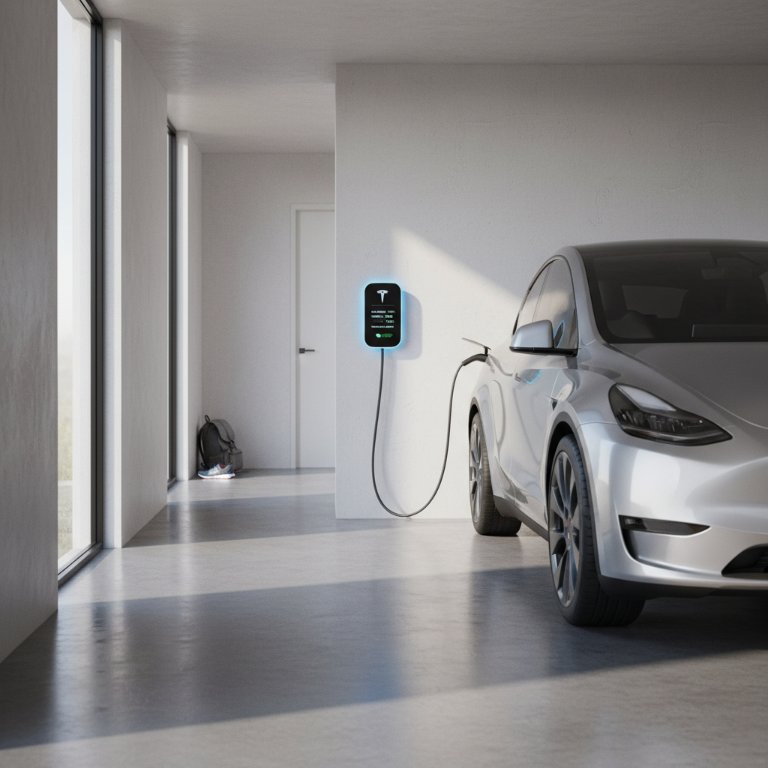
For years, the promise of electric vehicles hinged on a future free from gasoline stations and soaring fuel costs. In 2026, for Tesla owners, that future isn't just here—it's seamlessly integrated into daily life, transforming what was once seen as a charging chore into an invisible convenience. A quiet revolution is underway in the garages and driveways of Tesla owners, demonstrating that the true 'life hack' of EV ownership lies in the power of a single home charger.
The Unseen Power of Daily Replenishment
The most profound shift in the 2026 Tesla ownership experience is the simple act of plugging in at home. Owners are waking up each morning to a vehicle fully charged and ready for the day's demands, much like a smartphone. This isn't merely about convenience; it's a fundamental change in how we interact with our personal transportation. Gone are the days of scheduling gas station stops or fretting over a low fuel gauge. Instead, the vehicle's energy replenishment becomes an effortless background process, akin to how we charge our mobile devices overnight.
- Seamless Integration: Charging simply becomes part of the nightly routine, requiring no extra trips or time commitment.
- Eliminated Range Anxiety: The constant availability of a full 'tank' negates one of the earliest and most significant psychological barriers to EV adoption.
- Optimized Battery Health: Smart charging schedules often allow for charging to optimal daily levels (e.g., 80-90%), promoting long-term battery longevity.
The Economics of Electrification: Real Savings, Real Impact
While the convenience factor is undeniable, the financial benefits solidify the case for daily home charging. Tesla owners report daily charging costs typically ranging from a mere $1 to $3. When juxtaposed against the volatile and often exorbitant costs of gasoline, this translates into savings of hundreds of dollars annually—a significant incentive that directly impacts household budgets.
Beyond fuel, the inherent simplicity of an electric powertrain dramatically reduces maintenance expenses. Compared to the hundreds of intricate, moving parts in a traditional internal combustion engine (ICE) vehicle requiring regular oil changes, spark plug replacements, and complex exhaust system checks, EVs demand far less. This translates to fewer service appointments and lower bills, further sweetening the ownership proposition.
- Direct Fuel Savings: Daily costs of $1-$3 drastically undercut gasoline expenses, especially with fluctuating market prices.
- Reduced Maintenance: Fewer moving parts mean less wear and tear, leading to fewer preventative maintenance tasks and unexpected repairs.
- Lower Total Cost of Ownership: The combination of cheaper 'fuel' and reduced upkeep positions EVs as a more economically sound choice over their lifespan.
While home charging serves as the backbone of daily energy replenishment, Tesla's extensive Supercharger network remains a critical component for longer journeys or situations demanding a rapid top-up. These readily available fast chargers provide a crucial safety net, ensuring that even when venturing beyond the typical daily range, drivers have access to quick and reliable charging options. They are a supplement, not a replacement, for the quiet efficiency of home charging.
Why This Matters:
This evolution in daily EV charging fundamentally reshapes the automotive landscape. For Tesla and the broader EV industry, it’s not just about incremental improvements; it’s about solidifying the electric vehicle as the inherently superior daily driver experience. This emphasis on 'invisible' convenience and undeniable cost savings signals a critical maturation of the EV market.
Who Wins? Tesla owners, unequivocally. They gain unparalleled convenience and significant financial relief. More broadly, the entire EV ecosystem benefits as this daily reality becomes more widely understood and adopted, accelerating the shift away from fossil fuels. Utility companies also win with more predictable, off-peak charging loads.
Who Loses? Traditional gasoline stations face an increasingly irrelevant future. Internal combustion engine manufacturers, particularly those slow to embrace robust EV platforms and comprehensive charging solutions, risk being left behind as the perceived 'hassle' of gas vehicles grows.
What Does This Signal to the Market? This isn't merely a feature; it's a lifestyle shift. It signals that EVs are no longer a compromise but a superior choice that offers tangible, daily benefits. For competitors, this highlights the urgent need to not only build compelling EVs but also to replicate and simplify the charging experience. Ignoring the 'home charging advantage' is a do-or-die misstep, as consumers increasingly prioritize convenience and cost in their vehicle choices.
The convenience of waking to a full charge, combined with compelling cost savings, is moving beyond a mere 'life hack' for Tesla owners in 2026. It's becoming the new standard for automotive ownership, cementing the EV's place as the intelligent, effortless choice for the future of personal transportation. This seamless integration into daily life will undoubtedly accelerate mainstream EV adoption, making the concept of a dedicated 'fueling stop' a relic of the past for a growing number of drivers.