Belgian Green Light Accelerates Tesla FSD's Europe-Wide Ambitions
Tesla's highly anticipated supervised self-driving software is officially hitting public roads in Belgium, marking a pivotal moment in the EV giant's ...
Editorial Team
World Of EV
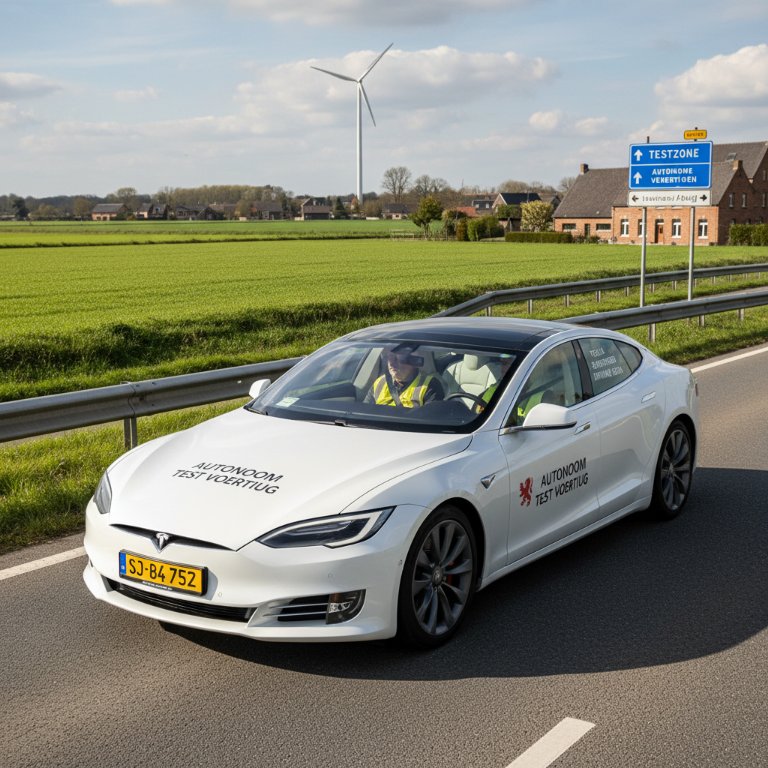
Tesla's highly anticipated supervised self-driving software is officially hitting public roads in Belgium, marking a pivotal moment in the EV giant's quest for Europe-wide adoption. The Flanders region has granted approval for a single Tesla vehicle to commence a critical 5,000-kilometer test, a move that could significantly fast-track the system's provisional type approval across the entire continent. This development sent TSLA stock soaring by over 3%, reflecting robust investor confidence in Tesla's expanding European footprint and the potential for a new revenue stream.
This isn't just another test; it's a strategic maneuver in a region historically cautious about autonomous vehicle technology. Europe has long presented a more formidable regulatory landscape for advanced driver-assistance systems (ADAS) compared to North America, where Tesla's Full Self-Driving (FSD) has seen broader, albeit sometimes controversial, deployment. The EU's strict regulations and the need for extensive validation have meant that FSD Supervised is only recently gaining momentum, with the Netherlands granting the first-ever EU type approval in April after 18 months of rigorous testing.
Strategic Testing in Flanders Paves the Way
The approval from Belgium's Flanders region specifically targets a comparison between Belgian and Dutch road conditions. The Netherlands’ provisional approval for FSD Supervised, allowing its use on all Dutch roads after mandatory safety training, set a precedent that other countries, including Belgium, are now reportedly fast-tracking. This 5,000-kilometer data collection effort is designed to address the nuances of local infrastructure and driving behaviors, a crucial step given the diverse road networks across Europe. The Flemish administration had previously deemed Tesla's existing FSD file insufficient for direct homologation, requiring this targeted, limited additional testing.
The Path to Europe-Wide Type Approval
A successful outcome in Belgium could significantly expedite a provisional Europe-wide type approval for FSD Supervised. The Dutch vehicle authority (RDW) has already presented its Article 39 file—a request for an exemption to deploy new technologies not yet fully covered by existing rules—for Tesla's FSD Supervised to the European Commission's Technical Committee on Motor Vehicles (TCMV). While some member states, particularly Nordic countries, have raised concerns regarding the system's name and performance in certain conditions, the RDW's thorough process and advocacy position the Dutch decision as a potential template for the bloc. This Belgian test directly contributes to building the comprehensive data set needed to satisfy varied European regulatory demands. The EU has been actively working to harmonize AV testing regulations, with efforts to streamline approval processes by 2025-2026.
Why This Matters:
For Tesla: A successful validation in Belgium, building on the Dutch precedent, unlocks a massive new market for FSD subscriptions and purchases. With over a million FSD Supervised users globally, predominantly in North America, expanding into Europe offers a significant growth trajectory and diversifies its data collection for further system refinement. This move signals Tesla's serious commitment to navigating Europe's complex regulatory environment, aiming to establish FSD as a global standard, potentially paving the way for future robotaxi services.
For European Consumers: This development brings advanced (supervised) driver assistance closer to a broader European audience. While still requiring human supervision, FSD Supervised can handle complex traffic situations, offering enhanced convenience and potentially improved safety, as demonstrated by internal Tesla safety reports. This represents a tangible step towards more automated driving experiences on European roads.
For the Industry and Competitors: This could put pressure on traditional OEMs and other autonomous vehicle developers in Europe to accelerate their own Level 2+ and Level 3 deployments. While some European manufacturers like Mercedes and BMW have made strides in Level 3 systems, Tesla's camera-centric, neural-network approach, validated across diverse conditions, could set a competitive benchmark. The European Commission's push for harmonized regulations means that success for one player could accelerate the path for others, but also highlights the need for robust, region-specific validation.
Market Signal: The immediate surge in TSLA stock underscores investor belief that Europe is the next major frontier for FSD monetization. It signals that regulatory hurdles, while challenging, are not insurmountable and that the long-term vision for autonomous driving is moving closer to reality, even in tightly regulated markets.
The Road Ahead: Scrutiny and Standardization
As the Belgian test commences, the automotive world will be watching closely. The results will undergo intense scrutiny by both national authorities and the European Commission. Success could fundamentally alter the timeline for widespread FSD Supervised adoption across the continent, solidifying Tesla's position in the global autonomous driving race. This test is a testament to the ongoing evolution of regulatory frameworks across the EU, emphasizing a collective move towards embracing advanced automotive technologies while maintaining stringent safety standards. If the Dutch model, bolstered by Belgian data, gains wider traction, Summer 2026 could indeed mark a transformative chapter for advanced driver assistance on European roads.