Aptera Cracks the Service Conundrum: Nationwide RepairPal Network Solves the Solar EV 'Service Desert'
As Aptera Motors edges closer to delivering its highly anticipated, ultra-efficient solar electric vehicle (sEV), the California-based startup has sol...
Editorial Team
World Of EV
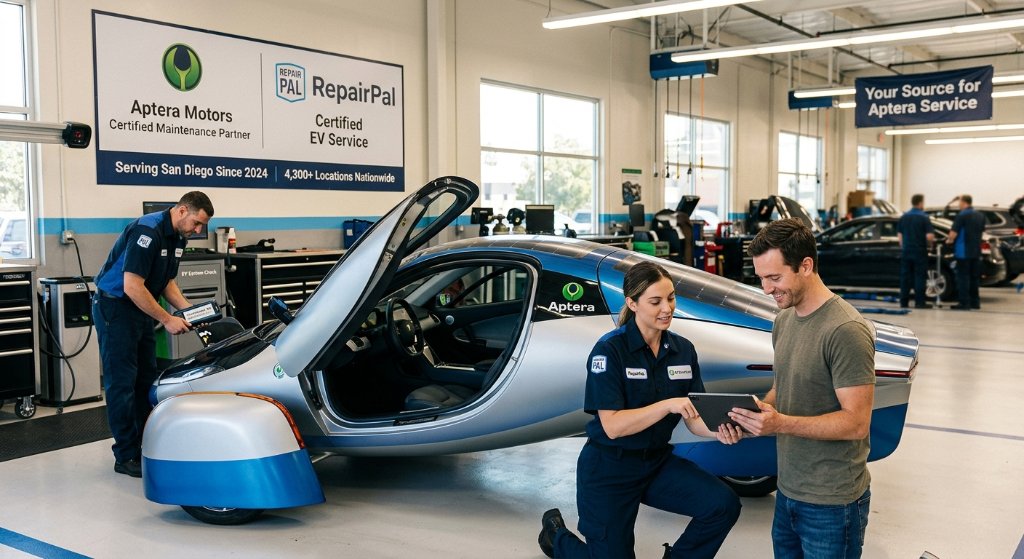
As Aptera Motors edges closer to delivering its highly anticipated, ultra-efficient solar electric vehicle (sEV), the California-based startup has solved one of the biggest hurdles facing any direct-to-consumer auto brand: how to fix the cars. In a major move to build confidence among early reservation holders, Aptera has partnered with RepairPal, unlocking a massive network of over 4,300 certified service locations across the United States.
For a company whose history is defined by ambitious promises and prolonged timelines—including a 2011 bankruptcy, a 2019 resurrection, and years of prototyping—this infrastructure deal is a massive step toward legitimacy. Fresh off securing its EPA Certificate of Conformity for the 2026 Launch Edition, Aptera is moving from a quirky science project to a viable commercial automaker backed by a mature nationwide repair network.
Scaling Without the Dealership Tax
Unlike legacy automotive giants with expansive dealer networks, or premium EV makers like Tesla and Rivian that built proprietary service centers from scratch, Aptera is leveraging existing infrastructure to support its rollout. Direct-to-consumer startups routinely struggle with "service deserts," where early adopters must tow broken vehicles hundreds of miles to the nearest certified facility. By teaming up with RepairPal, Aptera immediately bypasses this multi-million-dollar capital bottleneck.
Key highlights of the partnership include:
- Immediate Nationwide Scale: Aptera owners gain access to more than 4,300 RepairPal Certified locations across the country.
- High-Voltage Readiness: Over 200 of these locations are already fully certified to perform complex high-voltage EV repairs, with more slated to receive specialized training.
- Custom-Tailored Training: RepairPal technicians will receive Aptera-specific service manuals, procedures, and specialized training to handle the vehicle's unique carbon fiber composite architecture and solar integration.
- Routine Maintenance & Accessories: For non-high-voltage issues, lower-voltage repairs, general maintenance, and accessory installations can be completed at any of the 4,300+ certified shops.
Bridging Right-to-Repair and Mainstream Peace of Mind
Historically, Aptera has championed a strict "Right-to-Repair" ethos, promising to open-source its service manuals and sell parts directly to consumers so they can work on their own three-wheelers. While that DIY-friendly approach endears the brand to engineering geeks and hardcore EV enthusiasts, it has long been a major roadblock for mainstream buyers who have no interest in turning a wrench.
The RepairPal partnership bridges this gap perfectly. Mainstream consumers who love the idea of "never plugging in"—thanks to the car's ability to harvest up to 40 miles of range per day from built-in solar panels—but shudder at the thought of handling complex electrical architectures now have a safety net. If something goes wrong, they can take their sEV to a trusted, certified local mechanic rather than attempting a high-voltage DIY repair.
Why This Matters:
This partnership is a classic "do-or-die" enabler for Aptera. As a startup on the precipice of its first commercial deliveries, any major service bottleneck or horror story of a stranded customer would have been a public relations death sentence. By securing a nationwide service footprint overnight, Aptera has effectively neutralized the "what if it breaks?" argument that keeps casual buyers from hitting the reserve button.
The Winners:
- Aptera and Its Investors: By outsourcing its service footprint, Aptera preserves precious capital that would otherwise be eaten up by building physical brick-and-mortar service centers. This keeps the company lean as it tries to scale production in Carlsbad.
- Early Adopters: Consumers get the peace of mind of a local safety net, making the decision to buy a three-wheeled solar vehicle far less risky.
The Losers:
- Legacy Dealers: This partnership highlights a growing trend of startups successfully bypassing the traditional dealership model. If independent networks like RepairPal can service advanced high-voltage sEVs, the argument for franchised dealer service monopolies weakens further.
The Strategic Signal:
Ultimately, this partnership signals that Aptera is no longer just aiming to build a vehicle; it is building an ecosystem. Combined with its recent EPA regulatory approval, this is the strongest signal yet that Aptera is transitioning from a perpetual crowdfunding darling to a real, operational car company ready for primetime.
Moving Toward a Plug-Free Future
While Aptera still faces the monumental task of ramping up physical assembly-line manufacturing and delivering cars in volume, the RepairPal deal successfully removes one of the most significant barriers to mass adoption. For the EV industry, it is a fascinating case study in how to scale a niche product using smart, decentralized partnerships. If Aptera can execute on its production timeline, the days of the "service desert" for startup EV owners may finally be coming to an end.