A €30,000 Game-Changer: Stellantis-Backed Leapmotor B10 Powers Entire Home for 24 Hours in Real-World Test
Vehicle-to-Load (V2L) technology is no longer a luxury feature reserved exclusively for high-end electric trucks and premium SUVs. In a striking demon...
Editorial Team
World Of EV
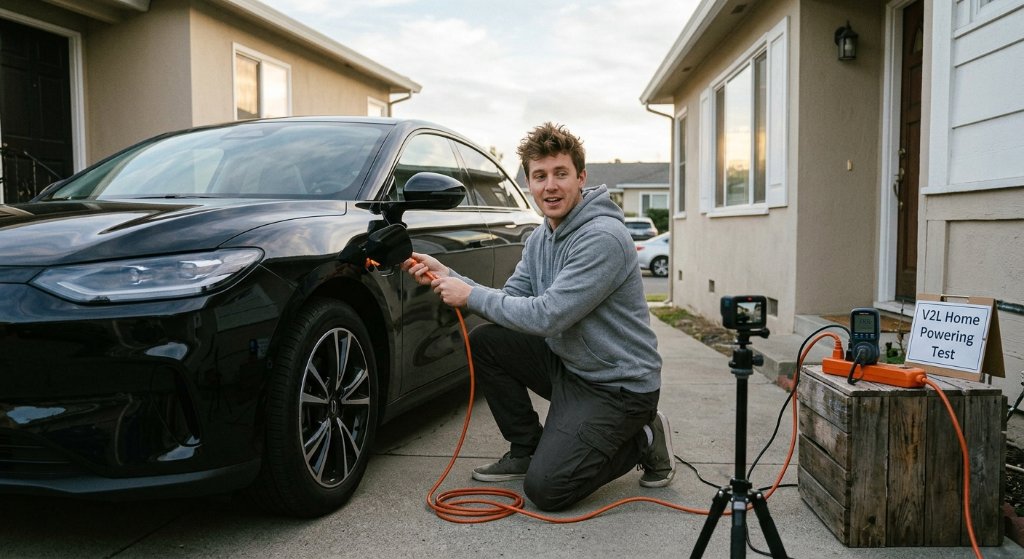
Vehicle-to-Load (V2L) technology is no longer a luxury feature reserved exclusively for high-end electric trucks and premium SUVs. In a striking demonstration of real-world utility, YouTuber Alex successfully powered his entire home's electricity for 24 hours using a single charge from a 2026 Leapmotor B10. By routing his home's essential appliances through the compact SUV's V2L port, Alex managed cooking, cleaning, and entertainment without a single hiccup, highlighting how modern EVs can serve as indispensable mobile generators during blackouts.
This milestone is particularly significant because of what the Leapmotor B10 represents. Developed by Zhejiang Leapmotor Technology and aggressively backed by automotive titan Stellantis—which holds a major stake in the brand to spearhead its global expansion—the B10 is poised to be one of the most affordable global EVs on the market. Historically, budget EVs have cut corners on bidirectional charging. However, this demonstration proves that Leapmotor is bringing resilient, grid-independent tech to mass-market buyers at an ultra-competitive price point.
Putting V2L to the Ultimate Test
Alex’s real-world trial pushed the Leapmotor B10's 3.3 kW bidirectional capabilities to their practical limit. Rather than just running a single laptop or camping light, the B10's V2L system was hooked up directly to power a standard household's daily demand.
Key details of the test include:
- 24-Hour Continuous Operation: The vehicle successfully maintained stable power delivery to the home for a full day.
- Heavy Appliance Management: The system successfully powered high-draw appliances used for daily cooking and cleaning, alongside lower-draw devices like entertainment systems and home networking.
- Minimal Battery Drain: Despite powering a variety of household tasks, the B10’s battery retained ample charge, showcasing the high efficiency of LFP chemistry under continuous low-to-medium AC load.
Under the Hood: The Tech Powering the B10
The 2026 Leapmotor B10 is built on the automaker's highly integrated LEAP 3.5 architecture. This dedicated platform is engineered to deliver premium features at a fraction of the cost, directly challenging legacy competitors.
Here is how the B10's key specifications stack up:
- V2L Power Output: 3.3 kW AC maximum output via a Type 2 adapter. This matches the bidirectional capabilities of rivals like the Hyundai Ioniq 5 and BYD Atto 3, but at a fraction of the price.
- Battery Capacities: Available in 56.2 kWh and 67.1 kWh Lithium Iron Phosphate (LFP) configurations, delivering up to 434 km (270 miles) of WLTP range.
- Pricing Disruption: Set to launch in Europe with an aggressive starting price of roughly €29,900, undercutting almost every V2L-capable mid-sized SUV on the market.
- Global Support: Distributed internationally through the joint venture 'Leapmotor International,' leveraging Stellantis’s robust dealer and after-sales service network.
Why This Matters:
This is a watershed moment for the mass adoption of electric vehicles, signaling a massive shift in how consumers value their cars. For years, bidirectional power—whether V2L or the more integrated Vehicle-to-Home (V2H)—was gatekept by premium brands. To get V2H capabilities, buyers were forced to look at $80,000 electric trucks like the Ford F-150 Lightning or premium, heavy-duty setups from Tesla.
The Leapmotor B10 changes the narrative entirely. By delivering a robust 3.3 kW V2L output in a package priced under €30,000, Leapmotor and Stellantis are democratizing home energy resilience.
Who wins? Budget-conscious buyers who live in storm-prone regions or areas with unreliable grids. They no longer have to purchase expensive, noisy gas generators or a $10,000 home battery wall; their affordable daily driver serves the exact same purpose. Stellantis also wins big, securing a massive competitive advantage over legacy rivals like Volkswagen and Renault, who have struggled to offer similar high-tech feature parity at this price tier.
Who loses? Legacy automakers who continue to strip basic bidirectional capability from their entry-level trims. If a budget-friendly Chinese-engineered SUV can effortlessly power a home for 24 hours, consumers will start demanding this feature as a standard baseline, putting intense pressure on the rest of the industry to adapt or get left behind.
Conclusion
Alex's 24-hour home power experiment proves that the transition to electric mobility isn't just about reducing tailpipe emissions—it’s about reshaping our relationship with energy. The 2026 Leapmotor B10, armed with the LEAP 3.5 architecture and backed by Stellantis's global footprint, is no longer just a budget commuter car. It is a highly capable, mobile power station that offers unprecedented peace of mind. As extreme weather events and grid instability become more common, vehicles like the B10 will transition from a smart purchase to a vital household necessity.