Zero-Disengagement Odyssey: Tesla's FSD AI Reaches New Heights on Cross-Country Trek
In a profound demonstration of rapidly advancing autonomous vehicle technology, a 2024 Tesla Model S, equipped with the cutting-edge Full Self-Driving...
Editorial Team
World Of EV
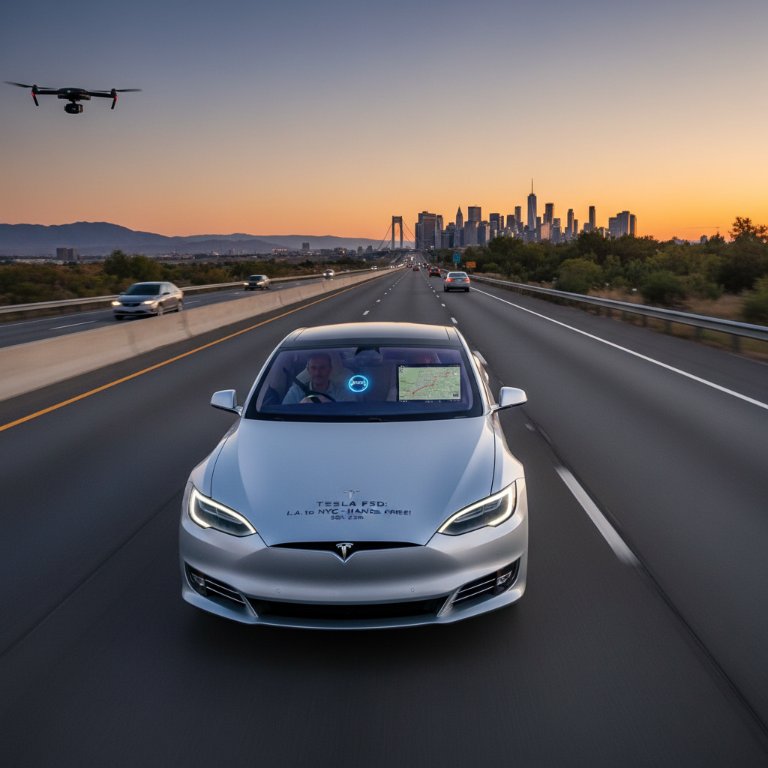
In a profound demonstration of rapidly advancing autonomous vehicle technology, a 2024 Tesla Model S, equipped with the cutting-edge Full Self-Driving (FSD) software version 14.2.2.3, recently completed an epic coast-to-coast journey from Los Angeles to New York without a single human intervention. This monumental achievement, marking the second such zero-disengagement FSD drive this month, underscores Tesla's relentless pursuit of true self-driving capabilities and offers a tantalizing glimpse into the future of mobility.
For years, Tesla's Full Self-Driving project has been a beacon of ambition and a lightning rod for debate. While initial iterations faced skepticism and highlighted the immense challenges of real-world autonomy, this latest feat, spearheaded by Tesla owner and autonomy enthusiast Alex Roy and his dedicated team, showcases a significant leap forward. The seamless integration of driving and charging stops across approximately 3,081 miles in a remarkable 58 hours and 22 minutes is not merely a record but a powerful validation of Tesla's AI-driven approach, distancing it from competitors who have struggled to move beyond limited Level 2 driver assistance systems.
The Marathon of Autonomy: Key Details of the Journey
The cross-country journey was an exhaustive test of FSD's capabilities, covering a diverse range of driving conditions and scenarios. The successful completion without any human intervention highlights several critical advancements:
- Uninterrupted Autonomy: The FSD system independently managed all aspects of driving, from highway navigation and lane changes to complex urban environments and construction zones, eliminating the need for any human takeovers.
- Integrated Charging Strategy: The vehicle autonomously navigated to and managed charging at Supercharger stations, demonstrating a crucial capability for long-distance EV travel.
- Version 14.2.2.3's Robustness: This specific FSD software iteration showcased enhanced decision-making, improved perception, and greater reliability across varying road conditions, a significant evolution from earlier, more tentative versions.
- Repeatable Success: This marks the second zero-disengagement cross-country FSD drive this month, suggesting a growing consistency and maturity in the software's performance, moving beyond anecdotal successes.
Beyond the Hype: What FSD 14.2.2.3 Delivers
While previous FSD versions often felt like a beta program requiring constant vigilance, version 14.2.2.3 appears to represent a pivotal shift. Tesla's iterative development, leveraging millions of miles of real-world driving data, is clearly paying dividends. The system's ability to handle intricate maneuvers, anticipate traffic flows, and reliably execute navigation commands across thousands of miles without a single human intervention indicates a level of sophistication that was once the realm of science fiction. This isn't just about staying in a lane; it's about making complex, real-time decisions on a dynamic road network, integrating seamlessly with vehicle charging, and ultimately, providing a genuine glimpse into an autonomous future. It stands in stark contrast to the often-conservative rollouts and limited operational design domains of some competing systems, which struggle to provide consistent, hands-off experiences even on simpler routes.
Why This Matters:
- Tesla's Unassailable Lead in AI: This achievement solidifies Tesla's position as the undisputed leader in AI-driven autonomous vehicle development. While traditional automakers and tech giants pour billions into their own systems, Tesla’s fleet learning and rapid software iterations appear to be creating an insurmountable advantage, particularly in real-world application. This could force competitors to re-evaluate their strategies, potentially leading to more partnerships or increased pressure to accelerate their own AI development, lest they be left behind in the emerging robotaxi and autonomous delivery markets.
- Shifting Consumer Expectations: For prospective EV buyers, particularly those considering Tesla, this milestone provides powerful evidence of the tangible benefits of FSD. It transforms the perception from a futuristic promise to a nearing reality, influencing purchasing decisions and potentially increasing demand for higher-tier FSD packages. The prospect of genuine autonomous road trips fundamentally changes the value proposition of owning a Tesla.
- Regulatory Scrutiny and Future Frameworks: The repeatable success of zero-disengagement drives will undoubtedly intensify discussions around regulatory frameworks for autonomous vehicles. As the technology matures, governments worldwide will face increased pressure to establish clear guidelines for deployment, liability, and safety, potentially accelerating the path toward broader public adoption of Level 4 and Level 5 autonomous systems.
- The Robotaxi Era Edges Closer: This demonstration moves Tesla significantly closer to its long-stated goal of deploying a vast network of robotaxis. The capability to autonomously navigate long distances and manage charging independently is a foundational requirement for such a service, signaling a potential disruption to traditional ride-sharing and logistics industries.
This latest cross-country journey with FSD 14.2.2.3 is far more than just a successful road trip; it's a powerful statement about the maturity of Tesla's autonomous driving technology. It serves as a compelling indicator of what's next for personal transportation, accelerating the conversation around true self-driving and solidifying Tesla's trajectory towards a future defined by AI-powered mobility.