Washington State Cracks Open Direct Sales Market, Ending Tesla's Exclusive Hold
Washington state is on the cusp of a landmark shift in its automotive retail landscape, as legislators overwhelmingly approved Senate Bill 6354. This ...
Editorial Team
World Of EV
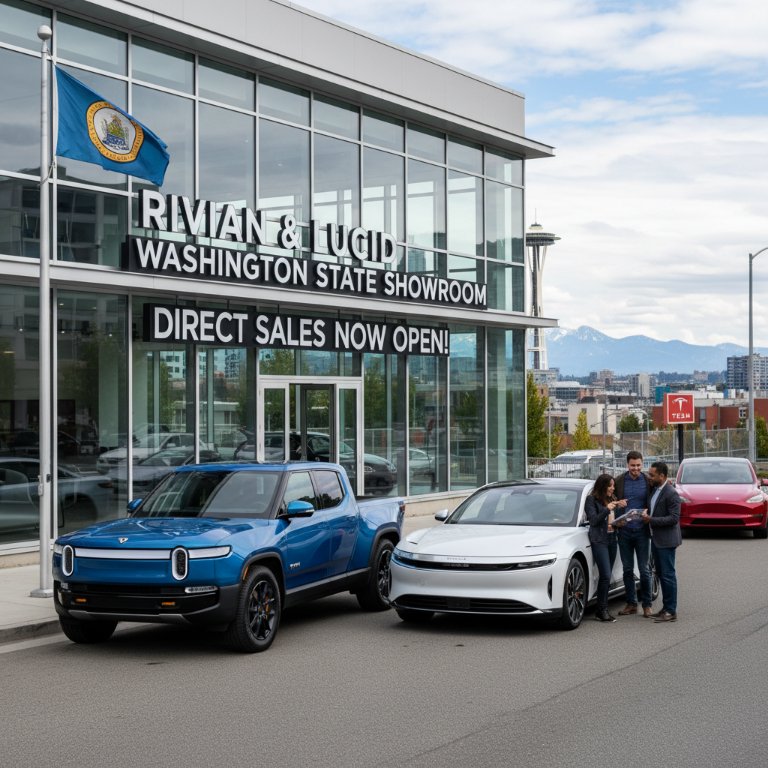
Washington State Embraces Direct-to-Consumer EV Sales for Rivian and Lucid
Washington state is on the cusp of a landmark shift in its automotive retail landscape, as legislators overwhelmingly approved Senate Bill 6354. This pivotal legislation will empower electric vehicle innovators Rivian and Lucid Motors to sell their cutting-edge vehicles directly to consumers within the state, a right previously held exclusively by Tesla for over a decade. The bipartisan passage, with a commanding 84-9 vote in the House and a near-unanimous 47-2 in the Senate, signals a profound challenge to the entrenched franchise dealership model and is now awaiting Governor Bob Ferguson's signature to become law.
The End of an Exclusive Era
For 12 years, Tesla enjoyed a unique carve-out in Washington, allowing it to bypass the traditional dealership network and sell directly to buyers. This arrangement, a testament to Tesla's pioneering spirit and the nascent stage of the EV market at the time, positioned the company as the sole direct-to-consumer player in the state. While this granted Tesla a significant competitive advantage, it also highlighted the regulatory hurdles faced by other EV startups seeking to emulate its successful sales model. The passage of SB 6354 levels the playing field, offering Rivian and Lucid the same operational flexibility and direct engagement with their customer base that has proven so effective for Tesla.
What This Means for Rivian, Lucid, and Consumers
This legislative victory is a game-changer for Rivian and Lucid, two premium EV manufacturers poised for significant growth. Previously, potential buyers in Washington state interested in a Rivian R1T pickup or a Lucid Air sedan faced the inconvenience of traveling out of state or navigating indirect purchasing processes. With direct sales now permitted, both companies can establish official showrooms, service centers, and directly manage the entire customer journey, from initial inquiry to delivery and after-sales support. For consumers, this translates into:
- Greater Choice: Direct access to a broader range of innovative EV models.
- Enhanced Customer Experience: A streamlined, manufacturer-controlled sales process often preferred by luxury and tech-focused buyers.
- Local Support: The establishment of dedicated service infrastructure within Washington state.
This move not only benefits these specific brands but also validates the direct sales model as a viable and increasingly necessary pathway for specialized automakers, particularly those in the rapidly evolving electric vehicle sector.
Why This Matters: The Shifting Sands of Automotive Retail
The approval of SB 6354 isn't just about two EV companies gaining market access; it's a significant ripple in the broader automotive industry's retail structure. This bipartisan legislative action in Washington reflects a growing recognition that the traditional franchise dealership model, while deeply rooted, may not be universally suited for all manufacturers, especially those disrupting the status quo with new technologies and sales approaches.
Who Wins?
Rivian and Lucid are clear winners, immediately gaining direct access to a key EV market. Washington consumers benefit from increased choice and potentially better service directly from the manufacturer. Moreover, the direct-to-consumer model itself gains further legitimacy, potentially encouraging other states to reconsider similar restrictive laws.
Who Loses?
Traditional franchise dealerships, particularly those representing brands that might eventually seek direct sales, face a continued chipping away at their long-held exclusive distribution rights. While Tesla loses its unique exclusivity, its established market presence and brand loyalty in Washington mean the impact is more symbolic than detrimental.
What Does This Signal?
This legislation signals a forward-thinking approach to automotive retail, acknowledging the unique needs of the EV market and the preferences of modern consumers. It suggests a growing willingness among lawmakers to adapt outdated regulations to foster competition and innovation within the rapidly expanding electric vehicle ecosystem. This move could inspire similar legislative efforts in other states, gradually eroding the stronghold of the traditional dealership lobby and paving the way for a more diverse retail landscape across the nation.
Washington's decision to embrace direct sales for Rivian and Lucid represents a crucial step towards a more dynamic and consumer-centric electric vehicle market. As the industry continues its rapid evolution, expect more states to grapple with the tension between established retail models and the innovative approaches favored by the next generation of automakers. This isn't just about selling cars; it's about reshaping how we buy them, and Washington has just sent a strong message that the future is direct.