Unveiling the Truth: New Study Confirms EV Batteries Far Exceed Longevity Expectations
For years, a pervasive shadow of doubt has loomed over electric vehicle adoption: battery degradation. Prospective buyers and even industry pundits ha...
Editorial Team
World Of EV
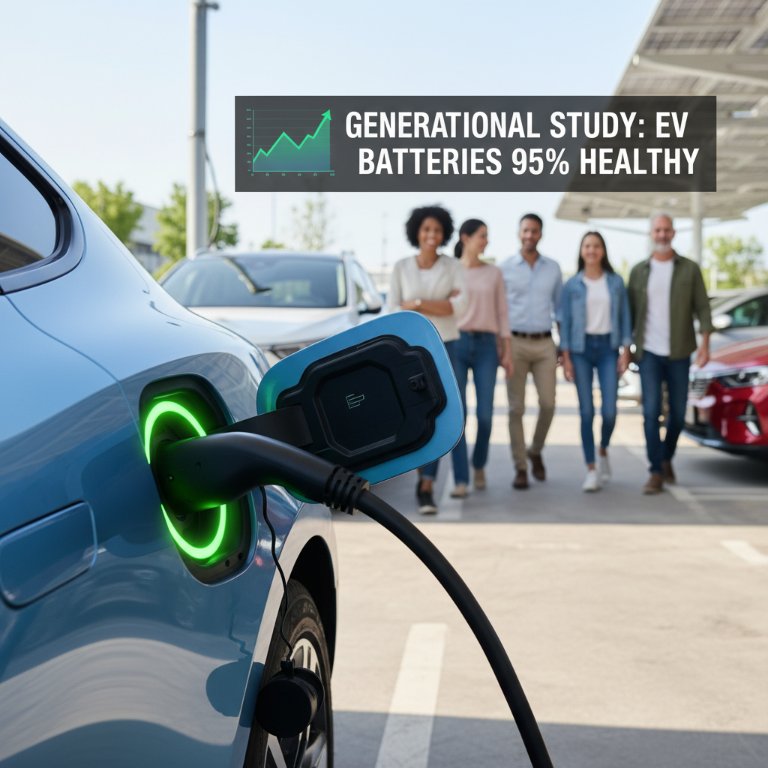
For years, a pervasive shadow of doubt has loomed over electric vehicle adoption: battery degradation. Prospective buyers and even industry pundits have worried about the long-term health and replacement costs of EV battery packs, often citing vague concerns about rapidly diminishing range and hefty repair bills. This widespread anxiety, often fueled by misinformation, has demonstrably impacted resale values and slowed the transition to electric mobility. However, a groundbreaking new study from Generational, a London-based analytics firm, decisively shatters these myths, revealing that EV batteries are performing significantly better than most believe.
The comprehensive UK study, which analyzed an expansive dataset of 8,000 electric vehicles across 36 brands, presents compelling evidence of robust battery longevity. The findings challenge conventional wisdom, showcasing an average battery State of Health (SoH) of a remarkable 95% – a figure that dramatically surpasses the typical 70% threshold widely used for warranty replacements. This isn't just a minor improvement; it's a fundamental recalibration of what we understand about EV battery durability.
Busting the Battery Degradation Myth
Generational's analysis delved into vehicles up to 12 years old and with odometers reading over 160,000 miles, providing a robust long-term perspective. The results are nothing short of astonishing:
- Overall SoH: The average battery SoH across all vehicles studied clocked in at an impressive 95%.
- Oldest Fleet Performance: Even the oldest vehicles in the study, those between 8 and 12 years old, maintained a median battery health of 85%. This clearly demonstrates that degradation is a far slower and more predictable process than often feared.
- Mileage as an Indicator: The study explicitly highlights that mileage alone is not a reliable indicator of battery condition. Factors like charging habits, climate, and battery management systems play a more significant role in preserving battery health, rather than simply the distance covered.
These figures directly contradict the narrative that EV batteries are a ticking time bomb destined for expensive replacement. Instead, they paint a picture of highly durable, long-lasting components that are built to withstand years of rigorous use.
Beyond the Warranty Threshold: A New Benchmark
Automotive manufacturers typically offer warranties that guarantee battery capacity will remain above 70% to 80% for 8 years or 100,000 miles. This study's finding of a 95% average SoH, and even 85% for the oldest cars, fundamentally redefines expectations. It suggests that a significant majority of EV owners will likely never encounter a scenario where their battery capacity drops below warranty thresholds during their ownership period, let alone require a costly replacement. This data provides crucial peace of mind, directly addressing one of the most persistent concerns among potential EV buyers and existing owners alike.
Why This Matters:
This study isn't just an interesting data point; it's a seismic shift in the understanding of EV ownership and market dynamics. Here's why this matters to you, the savvy EV enthusiast, prospective buyer, and industry professional:
- For Consumers (Current & Prospective): This is a massive win for consumer confidence. The fear of significant battery degradation has been a major barrier to entry for many. This research strongly suggests lower long-term maintenance concerns for EV owners, leading to better residual values and a more predictable cost of ownership. Your EV purchase is a more durable investment than previously assumed, reducing anxiety around depreciation and future costs.
- For the Used EV Market: The used EV market has historically struggled with lower valuations due to battery health uncertainties. This study provides robust data to support higher resale values for older EVs, making them more attractive and affordable options, and significantly expanding the market for pre-owned electric vehicles.
- For Manufacturers: While they've known their batteries are good, this independent validation offers powerful marketing ammunition. It may also prompt a re-evaluation of warranty terms and conditions, potentially leading to longer guarantees as confidence in battery longevity grows. Those who have invested heavily in advanced battery management systems (BMS) and robust cell technology are clearly winning.
- For the Industry at Large: This report further accelerates the shift towards electrification. It disarms a key argument used by EV skeptics and provides solid ground for policy makers and infrastructure planners to continue their investment in a future of sustainable transportation.
In essence, this study signals that the underlying technology of EVs – particularly their batteries – is more robust and long-lasting than many have dared to believe. The narrative around EV battery degradation needs a serious update, and this research provides the definitive proof point.
This landmark study firmly establishes electric vehicle batteries as remarkably resilient, dispelling long-held fears and underscoring the growing maturity of EV technology. As the industry moves forward, this data will undoubtedly bolster consumer confidence, strengthen the used EV market, and further cement the electric vehicle's position as a wise, long-term investment. The future for EVs looks brighter, and longer-lasting, than ever before.