Unprecedented Loyalty: 97% of EV Owners Vow to Stay Electric, Reshaping Automotive Future
The electric vehicle revolution has reached a pivotal milestone, as a groundbreaking report reveals an astonishing 97% of current EV owners intend to ...
Editorial Team
World Of EV
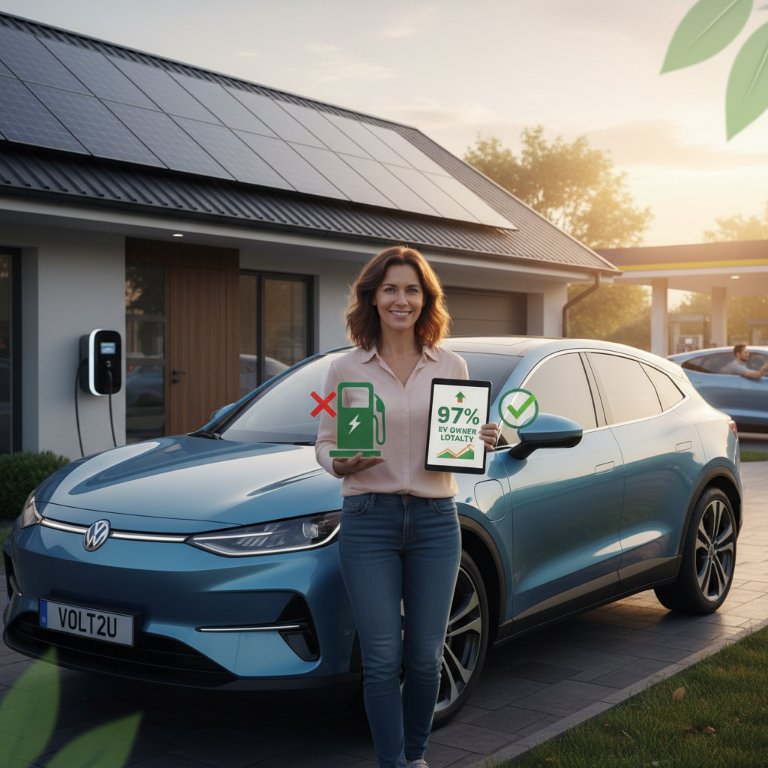
The electric vehicle revolution has reached a pivotal milestone, as a groundbreaking report reveals an astonishing 97% of current EV owners intend to purchase another electric vehicle when replacing their current one. This nearly universal satisfaction among EV drivers isn't just a trend; it's a resounding endorsement that signals a profound and potentially irreversible shift in consumer preference, fundamentally reshaping the global automotive landscape.
For years, skeptics questioned the long-term appeal of electric vehicles, citing concerns over range anxiety, charging infrastructure, and initial purchase costs. However, this new data decisively refutes those doubts, illustrating that once drivers experience the electric lifestyle, few are willing to return to internal combustion engines (ICE). This level of owner loyalty far surpasses typical repurchase rates seen in the traditional automotive sector, positioning EVs as the undisputed future of personal transportation.
The Irresistible Drivers Behind Unwavering Loyalty
The report meticulously unpacks the core reasons fueling this exceptional loyalty, highlighting a combination of economic, experiential, and ethical advantages that resonate deeply with owners. These aren't merely minor improvements; they represent fundamental shifts in vehicle ownership:
- Unmatched Operating Cost Savings: Electric vehicle owners consistently benefit from significantly lower 'fuel' costs, as electricity often proves far cheaper per mile than gasoline. This advantage is amplified by reduced maintenance requirements, eliminating expensive oil changes, spark plug replacements, and complex exhaust system repairs inherent to ICE vehicles.
- Superior Drivability and Performance: The instantaneous torque delivery characteristic of electric motors provides a remarkably smooth, quiet, and responsive driving experience. EVs offer exhilarating acceleration and a lower center of gravity, thanks to their battery placement, which often translates to superior handling dynamics compared to their ICE counterparts.
- Tangible Environmental Benefits: For many EV owners, the decision is driven by a commitment to sustainability. Driving a zero-tailpipe-emission vehicle contributes directly to cleaner air and a reduced carbon footprint, aligning with growing global environmental consciousness. While the source of electricity varies, the overall lifecycle emissions of EVs are generally lower than equivalent gasoline cars.
- Reduced Maintenance Burden: With fewer moving parts and the absence of a traditional engine, transmission, and associated fluids, EVs inherently require less frequent and less intensive maintenance. This translates to fewer trips to the service center and lower long-term ownership costs, enhancing the overall ownership experience.
Beyond the Hype: A Mature Market Emerges
This extraordinary loyalty figure suggests the EV market has matured beyond the early adopter phase. The initial hesitations surrounding range and infrastructure are increasingly being overcome by continuous advancements in battery technology, expanding charging networks, and a wider array of compelling EV models from nearly every major automaker. Consumers are no longer just buying into a concept; they are embracing a refined and demonstrably superior product that delivers on its promises of efficiency, performance, and environmental responsibility. This evolution has led to a market where the benefits are not theoretical, but a daily reality for millions.
Why This Matters:
This 97% loyalty rate is nothing short of a seismic event for the automotive industry and beyond. It signals an unstoppable momentum for electrification, with profound implications:
- Winners: EV manufacturers with robust product pipelines and reliable charging solutions (e.g., Tesla, BYD, Hyundai-Kia, Ford, GM's Ultium platform) stand to gain immensely, securing repeat business and attracting new converts. Consumers win with lower total cost of ownership, a superior driving experience, and a cleaner environment. The charging infrastructure sector will see accelerated investment.
- Losers: Automakers clinging to outdated ICE strategies or offering uninspired, compliance-car EVs face an existential threat. Their ability to retain customers will plummet as the vast majority of current EV owners simply won't consider returning to gasoline. The traditional fossil fuel industry will face long-term demand erosion.
- Market Signals: This data sends an unequivocal message to investors and policymakers: the transition to electric is not only inevitable but is accelerating faster than many anticipated. Expect intensified R&D in battery technology, charging innovation, and diversified EV segments. Policy support for charging infrastructure and consumer incentives will likely strengthen to meet this undeniable demand.
- A 'Do-or-Die' Moment: For legacy automakers, this isn't merely a challenge; it's a critical inflection point. Companies that fail to pivot decisively and deliver truly competitive, desirable EVs will find themselves marginalized in a rapidly transforming market where customer loyalty to the electric powertrain is now the dominant force.
The overwhelming intent of current EV owners to remain electric underscores a fundamental shift in consumer values and expectations. The electric vehicle is no longer a niche product but a preferred choice for a rapidly growing segment of the population. As technology advances and infrastructure expands, this high loyalty will only solidify, ensuring that the future of personal transportation is definitively electric.