Unprecedented EV Owner Loyalty: 96% Ready for Another Electric Drive as Charging Networks Expand and Savings Mount
Electric vehicle ownership is reaching a pivotal moment, as new studies from both New Zealand and the United States reveal an overwhelming wave of own...
Editorial Team
World Of EV
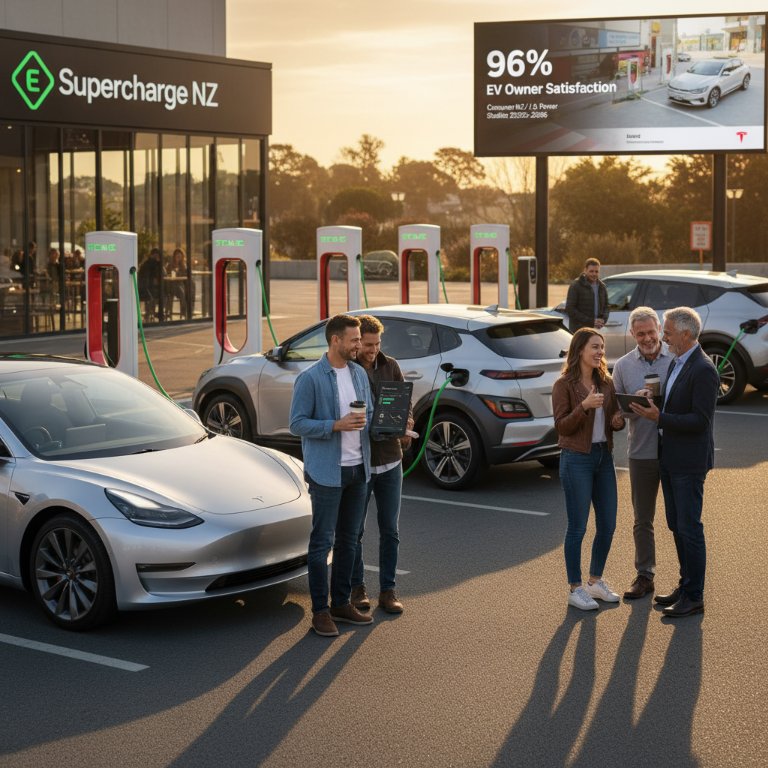
Electric vehicle ownership is reaching a pivotal moment, as new studies from both New Zealand and the United States reveal an overwhelming wave of owner satisfaction. A remarkable 96% of current EV owners are so pleased with their vehicles that they plan to purchase another electric vehicle for their next ride. This isn't just a marginal uptick; it signals a profound shift in consumer confidence, largely driven by significant improvements in public charging infrastructure and undeniable economic advantages.
After years of initial skepticism, range anxiety, and a nascent charging ecosystem, the electric vehicle market has clearly matured. This near-unanimous endorsement from diverse markets like New Zealand and the U.S. demonstrates that EVs are not just a niche product for early adopters, but a compelling and satisfying choice for the mainstream.
Global Satisfaction Echoes a Resounding 'Yes'
The strong sentiment is consistent across continents. A Consumer NZ study, surveying 5,791 members and supporters in November and December 2025, found that 96% of New Zealand EV owners would opt for another EV, underscoring robust satisfaction. Similarly, the J.D. Power 2026 U.S. Electric Vehicle Experience Ownership Study reported record-high owner satisfaction among Battery Electric Vehicle (BEV) drivers in the U.S., with an identical 96% considering an EV for their next vehicle. This consistency across different geographies highlights a universal appeal as the EV ecosystem evolves.
The Charging Revolution: Broader Access and Improved Reliability
One of the most critical factors fueling this surge in satisfaction is the dramatically improved public charging experience. The J.D. Power study explicitly cites broader access to the Tesla Supercharger network as a significant contributor. For years, the proprietary nature of Tesla's Supercharger network was a competitive advantage, often leaving non-Tesla owners with a fragmented and less reliable charging experience. However, Tesla's strategic decision to open its extensive and highly reliable network to other EV manufacturers has been a game-changer.
This expansion means more readily available, faster, and more dependable charging options for a wider array of EV drivers. What was once a source of significant anxiety – the fear of being stranded or encountering non-functional chargers – is rapidly becoming a memory. This enhanced accessibility and reliability directly addresses a primary historical barrier to EV adoption.
The Economic Imperative: Lower Running Costs Drive Loyalty
Beyond convenience, the undeniable financial benefits solidify owner loyalty. Both studies highlight lower running costs as a major driver for switching to and sticking with electric vehicles. A staggering 81% of EV owners reported experiencing much cheaper operating costs compared to internal combustion engine (ICE) vehicles. This translates to tangible savings on fuel and often maintenance, making the long-term ownership proposition of an EV incredibly attractive. These economic advantages are proving to be a powerful incentive, especially in a volatile energy market.
Why This Matters:
This unprecedented level of owner satisfaction and loyalty signals a critical inflection point for the global automotive industry. It validates the immense investments EV manufacturers have poured into battery technology, vehicle performance, and—crucially—charging infrastructure. The narrative around EVs has definitively shifted from one of compromise and nascent technology to one of superior ownership experience and tangible benefits.
- Who Wins? EV manufacturers, especially those who have invested in robust products and, critically, fostered charging partnerships (or opened their networks like Tesla). Consumers win through lower operating costs and a rapidly improving, seamless charging experience. Charging network providers will also see increased utilization and justification for further expansion. This data empowers policymakers to push forward with electrification initiatives, knowing public sentiment is strongly in favor.
- Who Loses? Traditional automakers who remain hesitant in their transition to electric, or those whose EV offerings fail to deliver on charging convenience and long-term cost savings. The fossil fuel industry faces an accelerating decline in demand as more drivers commit to electric propulsion.
- Market Signal: This 96% loyalty rate is nearly unheard of in the automotive sector and sends an unequivocal message: the EV market is not just here to stay; it is poised for exponential growth. Consumer confidence, once fragile, is now a powerful tailwind. This signals a mainstream embrace of EVs that will accelerate production, innovation, and infrastructure development. The initial hurdles of range anxiety and charging woes are being effectively overcome, paving the way for mass adoption.
In conclusion, the resounding satisfaction among EV owners globally underscores a monumental shift in personal transportation. As charging infrastructure continues its rapid expansion and the economic advantages become ever clearer, the electric vehicle is firmly establishing itself as the preferred choice for the future. The road ahead for EVs looks not just promising, but overwhelmingly electric, driven by a deeply satisfied and loyal customer base.