Unlocking Value: Why 2026 is the Prime Year for Savvy Used EV Buyers
The electric vehicle market has matured beyond its early adopter phase, ushering in a golden era for used EV shoppers. A comprehensive 2026 guide for ...
Editorial Team
World Of EV
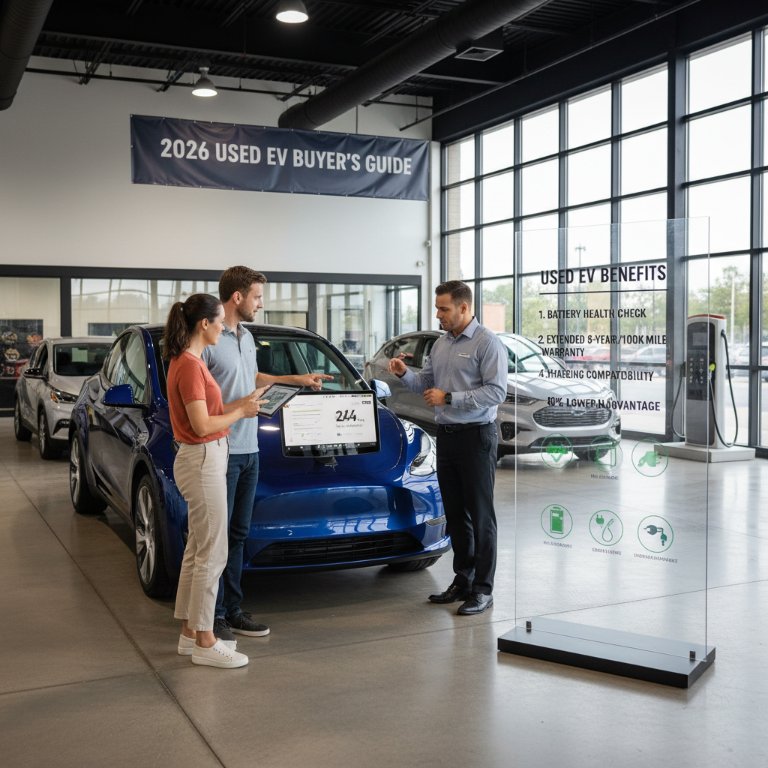
The electric vehicle market has matured beyond its early adopter phase, ushering in a golden era for used EV shoppers. A comprehensive 2026 guide for prospective buyers not only highlights the practical advantages of pre-owned EVs but also provides a clear roadmap for navigating this increasingly complex segment. For years, the narrative around EVs focused on cutting-edge technology and environmental impact, often overlooking the eventual financial benefits for second-hand owners. Now, with a growing inventory and evolving technology, understanding the nuances of a used EV purchase is paramount, offering significant savings and a gateway to sustainable motoring.
Battery Health & Warranty: Your EV's Lifeline
The battery remains the heart of any electric vehicle, and its health is the single most critical factor for used EV buyers. Unlike a traditional internal combustion engine, battery degradation is a natural process, influenced by charging habits, climate, and usage. Savvy buyers must prioritize models with robust battery management systems and access to diagnostic tools to assess the battery's State of Health (SOH). Crucially, most EV manufacturers provide an 8-year or 100,000-mile warranty specifically covering the battery and drive components. This industry-standard coverage acts as a vital safety net, mitigating concerns about potential expensive battery replacements, a fear that has historically deterred some potential EV owners. For example, early Nissan Leaf models, while pioneering, faced criticism for their passive battery cooling, which in some hotter climates led to accelerated degradation. Modern EVs, including popular used models like the Tesla Model 3 and Ford Mustang Mach-E, employ more sophisticated thermal management systems, offering greater long-term confidence.
Beyond the Hype: Understanding Charging and Range Realities
Charging infrastructure and real-world range are often subjects of confusion. The guide wisely stresses the difference between advertised and real-world range, influenced by factors like driving style, ambient temperature, terrain, and accessory use. What a vehicle achieves on the EPA cycle can significantly differ from daily experience, especially in colder climates or at highway speeds. Furthermore, charging compatibility is a rapidly shifting landscape. While CCS (Combined Charging System) has been prevalent, the industry is increasingly transitioning to NACS (North American Charging Standard), spearheaded by Tesla. Buyers of older models like the Chevrolet Bolt EV (typically CCS) or earlier Nissan Leafs (using CHAdeMO) must consider the current and future availability of compatible public charging stations. The good news is that adapters and infrastructure build-out are addressing these challenges, but an informed buyer plans for this.
The Hidden Cost Advantages: Fewer Parts, Faster Depreciation
One of the most compelling arguments for a used EV often goes unhighlighted: significantly lower maintenance costs. Electric vehicles inherently possess fewer moving parts—no engine, no complex multi-speed transmission, no exhaust system, and simpler braking due to regenerative braking. This translates directly to approximately 50% lower maintenance costs compared to their gasoline counterparts. Routine service primarily involves tire rotations, brake checks, and cabin air filter replacements. Beyond maintenance, EV depreciation offers a substantial financial boon to used car buyers. While rapid technological advancements and fluctuating market demand in the early years led to steeper depreciation for new EVs, this trend now presents an incredible opportunity. Models like the Chevrolet Bolt EV and Nissan Leaf, after initial depreciation, become remarkably affordable entry points into EV ownership, offering excellent value per mile.
Why This Matters:
This comprehensive guidance signals a pivotal moment for the electric vehicle market: it’s no longer solely about new car sales and aspirational technology, but about accessibility and long-term value. For consumers, this means the barrier to entry for EV ownership has significantly lowered, allowing a broader demographic to embrace electric mobility. Used EV buyers are the clear winners, gaining access to advanced, efficient vehicles at a fraction of their original price, often still under critical battery warranty. This trend puts pressure on manufacturers to consider the entire lifecycle value of their vehicles, including depreciation and battery longevity, as these factors increasingly influence future new car sales. We are seeing the market mature, moving past the early exuberance and into a phase where practicality, total cost of ownership, and sustained value are paramount. It’s a clear signal that the EV revolution is truly going mainstream, driven by affordability in the secondary market.
Looking ahead, the used EV market is poised for continued growth. As battery technology advances and initial purchase prices for new EVs stabilize, the used market will follow suit, offering an ever-increasing array of choices. Prospective buyers armed with this knowledge can confidently navigate the market, securing a smart, sustainable, and financially sound investment in their transportation future.