Unlocking EV Demand: Practicality and Peace of Mind Drive Adoption, Not Just Performance
For years, the electric vehicle industry has wrestled with how to convert curious onlookers into committed buyers. While sustainability and exhilarati...
Editorial Team
World Of EV
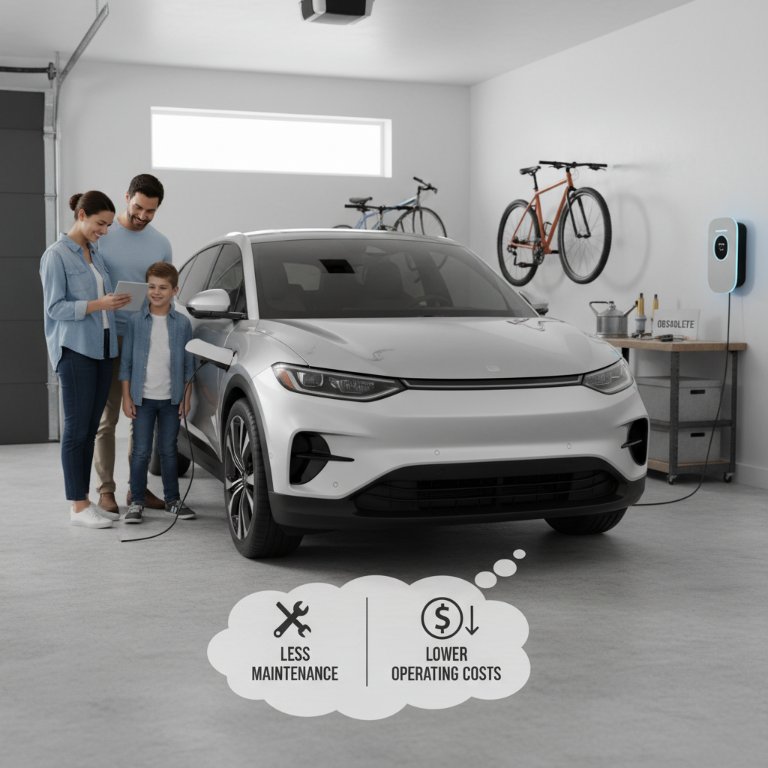
For years, the electric vehicle industry has wrestled with how to convert curious onlookers into committed buyers. While sustainability and exhilarating performance have often taken center stage in marketing narratives, a groundbreaking new national survey by Veloz and BSP Research definitively proves what many industry veterans have long suspected: practical information regarding real-world costs, convenient home charging, and everyday usability are the true catalysts for widespread EV adoption. This isn't just a slight adjustment; it's a fundamental recalibration of what moves the needle for prospective EV owners, signaling a critical pivot point for automakers and marketers alike.
The Data Speaks: Practicality Over Pedigree
The Veloz and BSP Research survey delivers a clear message: forget the 0-60 mph times and esoteric environmental impact statements. Non-EV drivers, the demographic crucial for expanding the market, are swayed by tangible, personal benefits. The research highlights several key motivators:
- Financial Advantage: Messages emphasizing significantly less maintenance (the absence of oil changes or tune-ups) and demonstrably lower operating costs dramatically increase a non-EV driver's willingness to purchase an electric vehicle.
- Convenience Reigns Supreme: The ability to charge at home overnight, transforming a mundane chore into a seamless aspect of daily life, and assurances of ample range were far more persuasive than raw horsepower figures or generalized sustainability claims.
- Everyday Usability: Understanding how an EV integrates into daily routines, from charging infrastructure to routine errands, is paramount. This contrasts sharply with prior assumptions that focused heavily on performance metrics or environmental altruism.
These findings provide crucial context for the industry. While enthusiasts and early adopters might prioritize cutting-edge technology or blistering acceleration—think Tesla's 'Ludicrous Mode' or Porsche Taycan's track capabilities—the mainstream consumer is clearly focused on a different set of values. Automakers like Rivian, with their adventure-focused trucks, or Lucid, pushing the boundaries of luxury range, still have their niche, but broader market penetration demands a different communication strategy.
Why This Matters:
This survey isn't just an interesting data point; it's a strategic roadmap for the next phase of EV market growth. The implications are profound for every stakeholder in the electric mobility ecosystem.
Who Wins?- Automakers prioritizing practicalities: Brands that can effectively communicate the total cost of ownership (TCO) benefits, robust home charging solutions, and reliable everyday range will see significant gains. Companies like Hyundai and Kia, which have consistently offered strong value propositions and practical features in their EVs, are well-positioned. Ford, with its F-150 Lightning emphasizing utility and the 'power-at-home' feature, directly addresses these practical concerns.
- Infrastructure providers: The emphasis on home charging convenience underscores the critical need for seamless, affordable, and accessible residential charging solutions. Companies simplifying this process stand to benefit immensely.
- Marketers with clear messaging: Campaigns that pivot from abstract ideals to concrete, personal benefits – 'wake up to a full tank every day,' 'save hundreds on maintenance annually,' 'fuel up for less than a cup of coffee' – will resonate most powerfully.
- Brands relying solely on performance or green credentials: Those continuing to lead with narratives centered on horsepower, rapid acceleration, or high-level environmentalism without grounding them in personal financial and convenience benefits will struggle to connect with the broader market.
- Policymakers ignoring practical barriers: Government initiatives that focus purely on mandates or aspirational goals without addressing the practical concerns of charging access and upfront costs risk alienating potential adopters.
This signals a crucial maturation of the EV market. The initial novelty has worn off, and consumers are now approaching EVs with the same discerning eye they apply to any major purchase. It’s no longer about being first or loudest, but about being most relevant to daily life. For instance, early entrants like the Mazda MX-30, which struggled with limited range and a niche appeal, could have seen greater success had its marketing focused more on the practicalities of its size and its urban usability rather than its unique 'freestyle' doors or abstract sustainability goals.
The Veloz/BSP Research findings compel the entire industry to recalibrate. Success in the coming years will hinge not on dazzling with raw specs, but on empowering consumers with clear, compelling evidence that an EV genuinely simplifies and enhances their everyday lives, offering tangible savings and unparalleled convenience. The future of EV adoption belongs to those who prioritize the practical over the aspirational, making the electric dream a practical reality for all.