UK Unleashes Major Grant Boost, Supercharging Urban EV Adoption
The UK government has made a decisive move to dismantle a persistent barrier to electric vehicle (EV) adoption, effectively supercharging the transiti...
Editorial Team
World Of EV
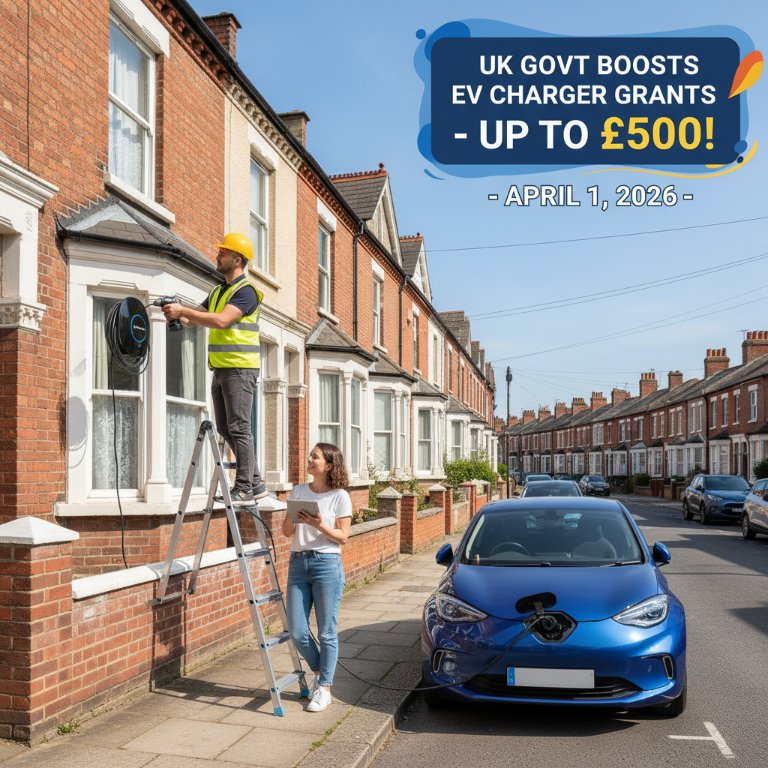
The UK government has made a decisive move to dismantle a persistent barrier to electric vehicle (EV) adoption, effectively supercharging the transition for millions of urban residents. Effective April 1, 2026, the grant for installing EV charge points has soared from £350 to a substantial £500, a critical uplift specifically engineered to benefit individuals who lack traditional off-street parking. This strategic funding injection, which now covers nearly half of the typical installation cost, directly targets renters, flat owners, landlords, homeowners without driveways, and businesses, signaling a clear intent to democratize EV ownership across the nation.
A Targeted Boost for Urbanites
For years, a significant demographic—those residing in flats or homes without private driveways—has faced a disproportionate hurdle in adopting EVs. While their counterparts with dedicated parking could easily install convenient home chargers, urban dwellers often grappled with the logistical and financial complexities of on-street or communal charging solutions. This hesitancy has stalled widespread EV uptake, creating a two-tiered system for potential buyers.
- Grant Increase: From £350 to £500.
- Effective Date: April 1, 2026.
- Target Audience: Renters, flat owners, landlords, homeowners without driveways, and businesses.
- Cost Coverage: Aims to cover almost half the typical installation cost, up from approximately 42% previously.
Keir Mather, the minister for decarbonisation, underscored the policy's intent, stating that the uplift directly addresses the cost barrier that has long deterred this crucial segment of the population. This isn't merely a minor adjustment; it’s a focused intervention designed to make home charging a viable reality for a broader spectrum of UK citizens, thereby accelerating the country's decarbonisation agenda.
Why This Matters:
This grant increase transcends mere financial aid; it's a pivotal moment for equitable EV adoption and signals a robust commitment from the UK government to its net-zero targets. Historically, the absence of off-street parking has been a critical choke point, creating a perception that EVs are primarily for suburban homeowners. This policy directly challenges that notion, extending the convenience and cost savings of home charging to a previously underserved, and substantial, market segment.
- Democratization of EVs: By removing a significant financial obstacle, the UK government is making EV ownership more accessible to urban populations, fostering a more inclusive transition away from internal combustion engines.
- Market Expansion for EVs: This policy unlocks a vast new customer base for EV manufacturers. The increased potential for home charging will undoubtedly influence purchasing decisions among flat and terrace house residents, leading to accelerated EV sales growth.
- Boost for Charging Infrastructure: Charge point installers will likely see a surge in demand, particularly for innovative solutions tailored to urban environments, such as lamppost chargers or smart communal charging hubs.
- Setting a Precedent: The UK's proactive approach could inspire other nations grappling with similar urban charging challenges to implement comparable grant schemes, accelerating the global EV transition.
While the grant won't solve every urban charging puzzle—challenges like grid capacity and planning permission for communal installations still exist—it significantly lowers the financial barrier for individual installations, making the path to EV ownership considerably smoother for millions.
This strategic uplift in charger grants represents a pragmatic and powerful step towards a fully electrified UK. By directly addressing the core concerns of urban dwellers, the government is not just funding infrastructure; it's investing in a more equitable, sustainable automotive future. We anticipate this move will catalyse a rapid acceleration of EV adoption in urban centres, transforming the landscape of personal transportation across the country.