UK Fleets Electrify: Maintenance & Reliability Trump Government Targets as EVs Prove Their Mettle
The transition to electric vehicles (EVs) in the UK’s commercial sector is gaining undeniable momentum, driven not purely by government mandates, but ...
Editorial Team
World Of EV
The transition to electric vehicles (EVs) in the UK’s commercial sector is gaining undeniable momentum, driven not purely by government mandates, but by the tangible, bottom-line benefits these vehicles offer. While the broader market struggles to hit ambitious Zero Emission Vehicle (ZEV) targets, large commercial fleets are quietly — and effectively — demonstrating the overwhelming advantages of electric vans, particularly in areas critical to operational efficiency: maintenance and reliability.
This trend stands in stark contrast to the challenges faced by the UK government's ZEV mandate, which aimed for 16% of new vans sold in Great Britain to be electric in 2025, a target manufacturers missed, achieving only 9.5%. Despite these broader market struggles and a recent review of targets, major fleet operators are pushing ahead, proving that for those with predictable routes and depot charging capabilities, the business case for electrification is already robust.
The Reliability Revolution: Fleets Lead the Charge
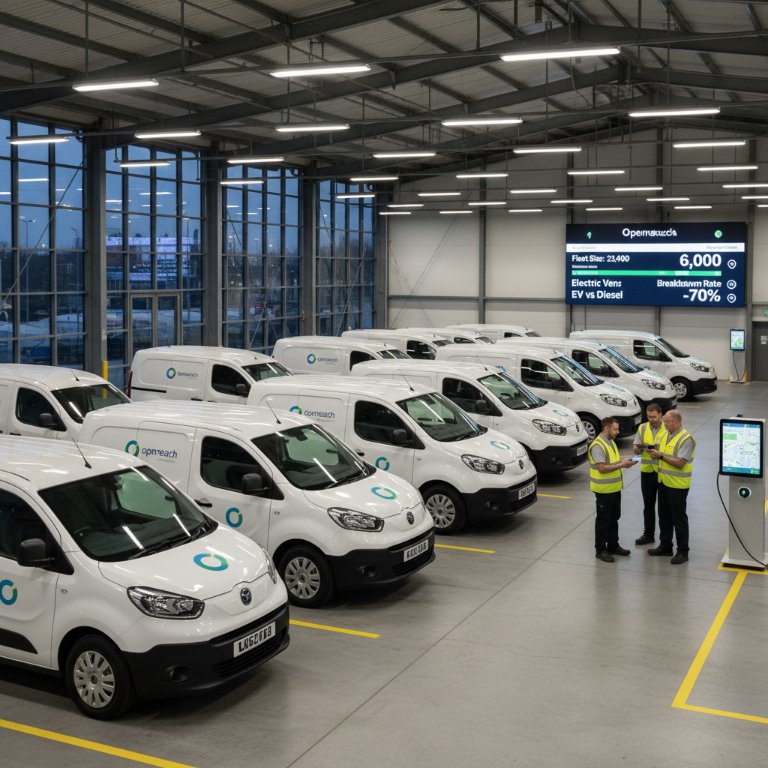
Openreach, the UK's second-largest commercial fleet, stands as a prime example. The telecommunications giant currently operates an impressive 6,000 electric vans out of its total 23,400-vehicle fleet and plans to integrate an additional 1,000 by March. This isn't just about environmental responsibility; it's about operational superiority. An Openreach official unequivocally stated that electric vans are 'way more reliable' with 'breakdowns, being left on the side of the road at night, significantly down.' The conclusion is clear: 'long term, the EV is the right way to go in terms of maintenance and servicing alone.'
Beyond the Purchase Price: Unpacking the Total Cost of Ownership
This real-world validation from Openreach highlights a critical understanding within the fleet industry: the Total Cost of Ownership (TCO) for EVs often outshines that of their internal combustion engine (ICE) counterparts. While the upfront purchase price of electric vans can sometimes be higher, the long-term savings are substantial. Electric vehicles possess significantly fewer moving parts, drastically reducing maintenance requirements and associated costs. Fewer breakdowns translate directly into less downtime, improved service delivery, and a healthier bottom line for businesses like Openreach. These savings extend beyond just maintenance, encompassing lower fuel costs due to cheaper electricity compared to diesel or petrol, especially when charging during off-peak hours at company depots.
Addressing the Range Reality: A Persistent Hurdle
Despite the clear advantages, the transition isn't without its challenges. Range anxiety, the fear of an EV running out of charge before reaching its destination or a charging point, remains a concern for some engineers within these fleets. While EV ranges have steadily improved (with many now offering 200-400 miles on a single charge) and charging infrastructure expands, the logistical complexities of diverse routes and unpredictable situations still weigh on some drivers. Fleet operators are actively working to mitigate this through robust charging infrastructure deployment at depots and strategic route planning, but it remains a psychological, and sometimes practical, hurdle that the industry must continue to address.
Why This Matters:
This groundswell of commercial fleet adoption, epitomized by Openreach's success, signals a profound shift in the EV market. It demonstrates that beyond environmental mandates and early adopter enthusiasm, the pure economic rationale for commercial EVs is now unassailable for many use cases. Businesses win through reduced operating costs, increased vehicle uptime, and a more predictable fleet. EV manufacturers with robust, reliable commercial offerings are poised to dominate this segment, accelerating innovation in purpose-built electric vans rather than adapted passenger platforms. Conversely, traditional ICE van manufacturers who fail to pivot rapidly risk being left behind as their core fleet customers seek more efficient and reliable alternatives. This organic, business-driven adoption creates a powerful, self-reinforcing cycle that will inevitably accelerate the development of charging infrastructure and specialized fleet management solutions, ultimately benefiting the entire EV ecosystem and pushing the UK closer to its net-zero ambitions, irrespective of initial governmental target shortfalls.
Conclusion:
The UK's commercial fleet sector is not just dabbling in electrification; it is actively embracing it, driven by compelling improvements in reliability and maintenance. As pioneers like Openreach continue to expand their electric footprint, they provide irrefutable evidence that, for many businesses, the 'electric van is the right way to go.' This practical validation from the frontline of commerce will be far more influential than any government target in driving the widespread adoption of electric vans across the nation, paving the way for a more efficient, quieter, and ultimately greener future for British business.