The Unseen Cost of Instant Torque: Heavy EVs Flunk First MOTs on Tires
Electric vehicles (EVs), lauded for their silent power and environmental benefits, are encountering an unexpected hurdle in their journey towards main...
Editorial Team
World Of EV
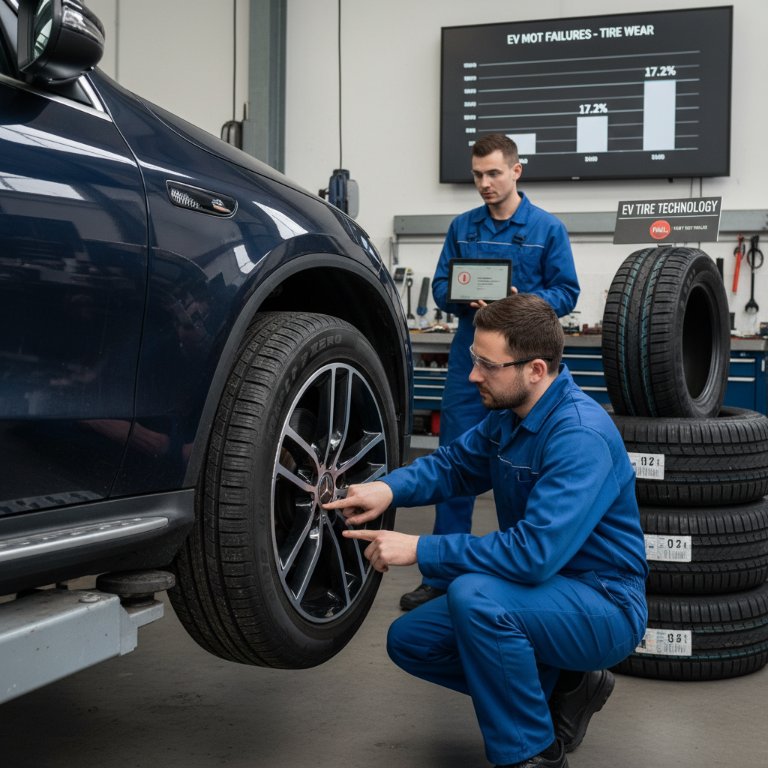
Electric vehicles (EVs), lauded for their silent power and environmental benefits, are encountering an unexpected hurdle in their journey towards mainstream adoption: surprisingly high failure rates in their initial MOT tests. New data from the DVSA reveals a significant concern, with some premium models, such as the Mercedes EQC, exhibiting a startling 17.2% failure rate in their first mandatory roadworthiness assessment. This isn't merely a minor oversight; it points to fundamental characteristics of EV design clashing with established maintenance protocols and consumer expectations.
The Startling DVSA Data
The figures paint a clear picture: EVs are struggling where their internal combustion engine (ICE) counterparts traditionally excel. The 17.2% failure rate observed in certain premium EVs is a wake-up call, suggesting that the industry and consumers alike may be underestimating the unique maintenance demands of these advanced machines. This isn't an isolated incident affecting budget models; it's impacting vehicles from established luxury manufacturers, challenging the perception of EV ownership as a uniformly lower-maintenance proposition.
The Root Cause: Heavy EVs and Instant Torque
The primary culprit behind these elevated failure rates is rapid and excessive tire wear. EVs, by their very nature, carry substantial battery packs, contributing significantly to their overall weight. This increased mass places greater strain on tires, accelerating their degradation. Compounding this issue is the instant, prodigious torque delivery characteristic of electric powertrains. Unlike ICE vehicles, which build torque progressively, EVs unleash their full pulling power from a standstill, leading to greater stress on the tire contact patch during acceleration and cornering. This combination makes electric cars a staggering 40% more likely to fail on tires compared to petrol or diesel vehicles, with tire-related issues accounting for nearly half of all EV MOT failures in the UK.
Evolving Roadworthiness Assessments
Recognizing these emerging challenges, discussions are already underway regarding the evolution of EV roadworthiness assessments. The current MOT test, largely designed for ICE vehicles, may not fully encompass the critical aspects of an EV's health. Future assessments are likely to incorporate comprehensive checks on battery health – a vehicle's most expensive component – and software integrity, which plays an ever-increasing role in an EV's safety and performance. This necessary adaptation underscores the rapid technological shift occurring in the automotive sector and the regulatory framework's struggle to keep pace.
Why This Matters:
This data represents more than just a statistic; it signals a critical inflection point for the EV market. For EV owners, it translates directly into higher running costs and potentially unexpected maintenance bills, challenging the long-held belief that EVs are inherently cheaper to maintain. The need for more frequent tire replacements can significantly offset fuel savings, impacting the total cost of ownership. For tire manufacturers, this presents a massive opportunity, driving demand for specialized EV-specific tires designed to cope with increased weight and torque, offering enhanced durability and efficiency. Conversely, EV manufacturers face the imperative to better educate consumers, refine suspension tuning, and potentially collaborate more closely with tire companies to mitigate this issue, which could otherwise dent consumer confidence and reputation. This situation is not a 'do-or-die' moment, but a critical lesson in the nuances of mass EV adoption, highlighting that while the powertrain is revolutionary, the laws of physics – particularly friction and mass – remain immutable. It signals a maturation of the EV market, where the focus must broaden from range and charging to holistic ownership experience, including unexpected wear patterns and evolving maintenance standards. Who loses? Uninformed consumers and manufacturers who fail to adapt quickly enough. Who wins? Savvy tire companies, forward-thinking service centers, and, ultimately, a more robust and realistic EV ecosystem.
Conclusion:
The DVSA's findings serve as a potent reminder that the transition to electric vehicles is not without its unique challenges. While the benefits of EVs remain undeniable, addressing issues like accelerated tire wear through improved vehicle design, targeted tire development, and informed consumer education is paramount. As regulatory bodies adapt their assessments to encompass battery health and software integrity, the industry must proactively evolve its approach to EV maintenance, ensuring that the promise of sustainable mobility is matched by a truly sustainable and predictable ownership experience. The road ahead for EVs is undoubtedly electric, but it also demands a closer look at the rubber meeting that road.