The Phoenix Rises: 2026 Nissan Leaf Transforms into a Game-Changing EV Crossover
For over a decade, the Nissan Leaf stood as a pioneering force in the nascent electric vehicle market, offering an accessible entry point to zero-emis...
Editorial Team
World Of EV
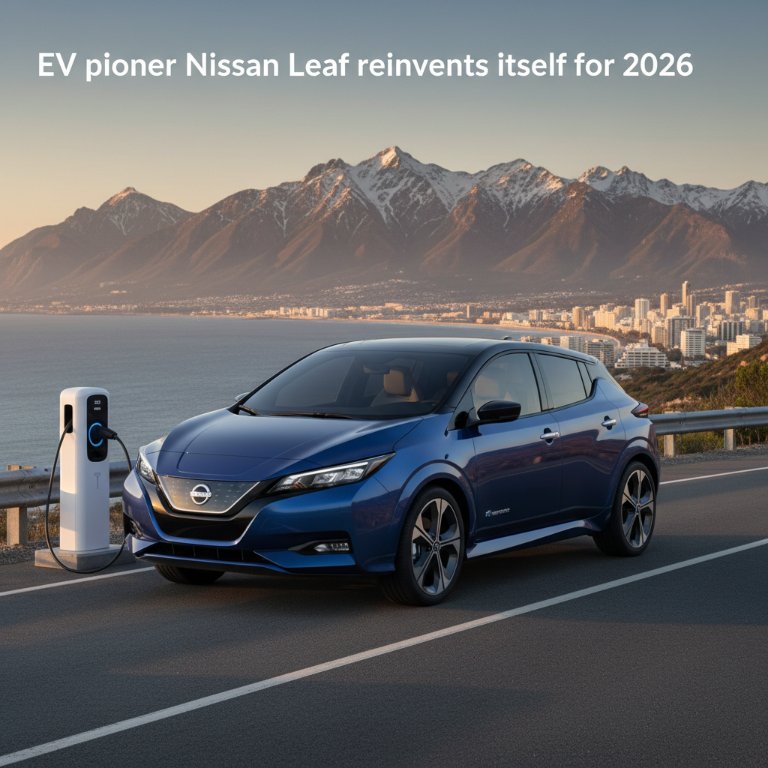
For over a decade, the Nissan Leaf stood as a pioneering force in the nascent electric vehicle market, offering an accessible entry point to zero-emission driving. However, as the EV landscape rapidly evolved, the Leaf, with its hatchback form factor, limited range, and crucially, its passively air-cooled battery and reliance on the CHAdeMO charging standard, began to lag significantly behind more modern competitors. Now, Nissan has unveiled a genuinely new 2026 Leaf, shedding its hatchback skin to emerge as a formidable crossover, signaling a serious intent to reclaim its relevance in the fiercely competitive EV arena.
This isn't merely a facelift; it's a complete metamorphosis. The 2026 Leaf boasts a wider, more powerful stance, an arching roofline, and a rear-end design that surprisingly evokes the athletic lines of Nissan's Z sports car. This bold aesthetic shift moves the Leaf from a practical commuter into a vehicle with broader appeal and utility, directly addressing consumer demand for crossover body styles.
Unleashing Performance and Range
The most critical upgrades lie beneath the surface, transforming the Leaf's capabilities from a city-centric EV to a genuine road-trip contender. Key advancements include:
- Extended Range: An estimated 303 miles of range per charge, a monumental leap from the 2024 Leaf's 149 to 212 miles, depending on the trim. This new range moves the Leaf squarely into road-trip territory, alleviating a long-standing constraint that relegated previous models primarily to local commutes.
- Advanced Battery Technology: A new 75-kWh liquid-cooled lithium-ion battery pack powers the 2026 Leaf. This is a game-changer; previous Leaf generations famously lacked active liquid cooling, which contributed to accelerated battery degradation, particularly in hot climates or under repeated DC fast charging, an issue widely documented. The adoption of liquid cooling brings the Leaf's battery thermal management up to industry standards, promising improved longevity and consistent performance.
- Enhanced Power: A robust 214-horsepower electric motor ensures more spirited acceleration and a more engaging driving experience, a significant bump from the base 2024 Leaf's 147 hp.
- Rapid Charging & Universal Compatibility: The ability to recharge to 80 percent in just 35 minutes, coupled with NACS (North American Charging Standard) compatibility, is a pivotal move. This not only significantly reduces downtime during longer journeys but, more importantly, grants access to Tesla's extensive Supercharger network, a critical advantage for any new EV entering the market. This marks a definitive shift away from the outgoing model's reliance on the increasingly obsolete CHAdeMO standard.
Why This Matters:
This redesigned 2026 Nissan Leaf isn't just another new model; it's a strategic declaration from a company that pioneered the mass-market EV. For years, Nissan, despite its early lead, appeared content to let the Leaf stagnate, leaving a void that was quickly filled by more competitive offerings from Hyundai, Kia, Tesla, and others. This new Leaf signals Nissan's determined effort to re-establish itself as a serious player in the mainstream EV market. The transition to a crossover body style taps directly into surging consumer demand, while the significantly improved range, modern liquid-cooled battery, faster charging, and NACS integration directly address virtually every major criticism leveled against its predecessors. This is a crucial moment for Nissan; a successful launch of this new Leaf could re-energize its EV strategy and win back a loyal but increasingly frustrated customer base. It intensifies competition, offering consumers a compelling, fully modern alternative in the popular compact EV crossover segment, forcing other manufacturers to remain innovative.
With its dramatic transformation, the 2026 Nissan Leaf stands poised to shed its commuter car image and embrace a future as a versatile, long-range EV. This bold move underscores Nissan's renewed commitment to electric mobility, promising a more competitive and compelling option for savvy EV enthusiasts and prospective buyers alike.