The EV Tsunami Hits the Service Bay: Specialization is the New Imperative for Auto Repair
The global automotive repair and maintenance service market is undergoing a seismic shift, and the driving force is unequivocally the electric vehicle...
Editorial Team
World Of EV
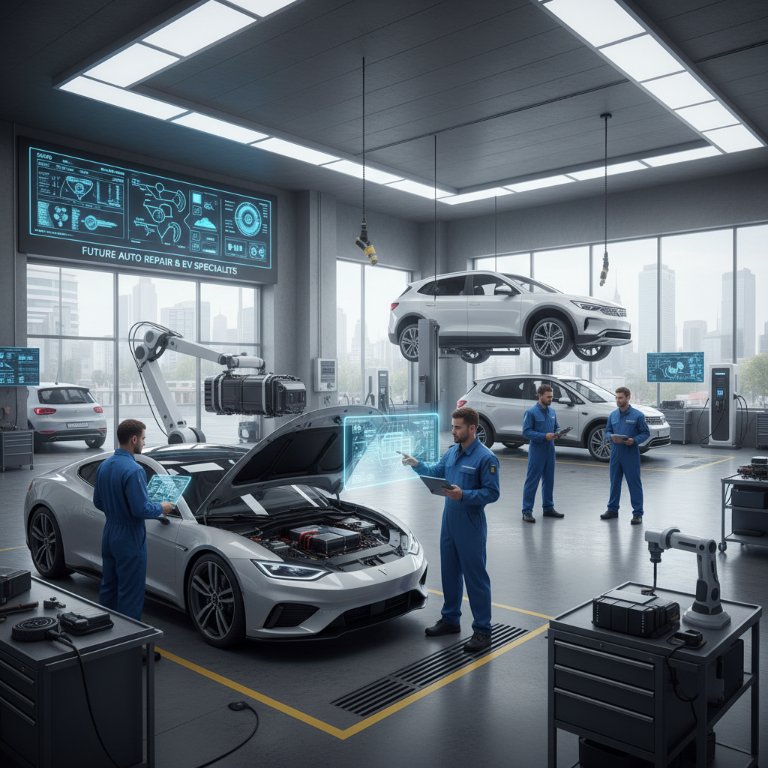
The global automotive repair and maintenance service market is undergoing a seismic shift, and the driving force is unequivocally the electric vehicle (EV) revolution. After decades of mechanics honed on internal combustion engines (ICE), the industry faces a profound redefinition of its services, creating both unprecedented opportunities and significant hurdles for service providers worldwide.
This isn't just about incremental growth; it's a fundamental recalibration. As EVs rapidly gain market share, the demand for specialized repair and maintenance services, from high-voltage battery diagnostics to intricate software interventions and modular component replacements, is skyrocketing. This trend mandates an urgent and comprehensive overhaul of industry skills, tools, and infrastructure, heralding a new era for automotive service.
The Electric Shift in the Service Bay
Unlike their fossil-fueled predecessors, EVs require a different kind of care. Gone are the days of routine oil changes, spark plug replacements, and complex exhaust system repairs that have been the bread and butter of auto shops for generations. Instead, EV maintenance often centers on:
- Software updates and diagnostic interventions
- High-voltage battery health checks and module replacements
- Electric motor and power electronics diagnostics
- Brake system inspections (less wear due to regenerative braking)
- Thermal management system checks for batteries and power electronics
This shift means that while the overall frequency of certain maintenance tasks might decrease, the complexity and specialization required for others intensifies dramatically. The market is not just growing in volume; it’s growing in technical depth.
New Demands, New Skills, and Significant Investment
For independent garages and dealership service centers alike, this burgeoning demand for specialized EV repair services translates into a critical need for substantial investment. Technicians require extensive retraining to safely and effectively work on high-voltage systems and sophisticated EV architectures. This includes:
- High-Voltage Safety Training: Essential for avoiding severe injury or death when working on EV powertrains.
- Diagnostic Software Proficiency: Mastering proprietary diagnostic tools and software often unique to EV platforms.
- Battery System Expertise: Understanding battery chemistry, thermal management, and module-level repair.
- Power Electronics Knowledge: Familiarity with inverters, converters, and onboard charging systems.
- Specialized Tooling: Acquiring insulated tools, battery lifting equipment, and advanced diagnostic hardware.
Those who embrace this transformation early stand to gain a significant competitive edge, while those who cling to traditional methods risk being left behind in a rapidly evolving market.
Why This Matters:
This tectonic shift in the automotive service industry carries far-reaching implications for everyone from the average EV owner to major industry players. Who wins? Early adopters of EV service specialization – both independent shops and forward-thinking dealership networks – will capture a growing, high-value segment of the market. Training institutions that develop robust EV technician programs will see surging demand. Tool manufacturers and diagnostic software developers tailored for EVs are also poised for substantial growth. Ultimately, EV owners stand to benefit from a growing network of qualified professionals, ensuring the longevity and reliability of their vehicles.
Who loses? Traditional mechanics and service centers unwilling or unable to invest in the requisite training and equipment face an existential threat. Their core business, once sustained by ICE vehicles, will dwindle, pushing them towards obsolescence. Automakers that fail to adequately support their service networks with training and parts for their burgeoning EV fleets will alienate customers and undermine their brand’s reputation. This signals a critical investment window for the entire automotive aftermarket. For many, this isn't merely an opportunity; it's a 'do-or-die' moment, demanding strategic pivots and significant capital allocation to remain relevant.
In conclusion, the rapid expansion of the EV sector is not just transforming how we drive, but fundamentally altering the very backbone of automotive service. The imperative for specialization, advanced training, and significant investment in new tools is undeniable. As the industry races towards an all-electric future, the ability to expertly service these sophisticated machines will define the leaders from the laggards in the lucrative automotive repair and maintenance market.