The Bolt's Swan Song: GM's Tariff Strategy Sacrifices a Reimagined EV
Just as the 'all-new' 2027 Chevrolet Bolt was beginning to find its stride, General Motors has reportedly decided to pull the plug, concluding its pro...
Editorial Team
World Of EV
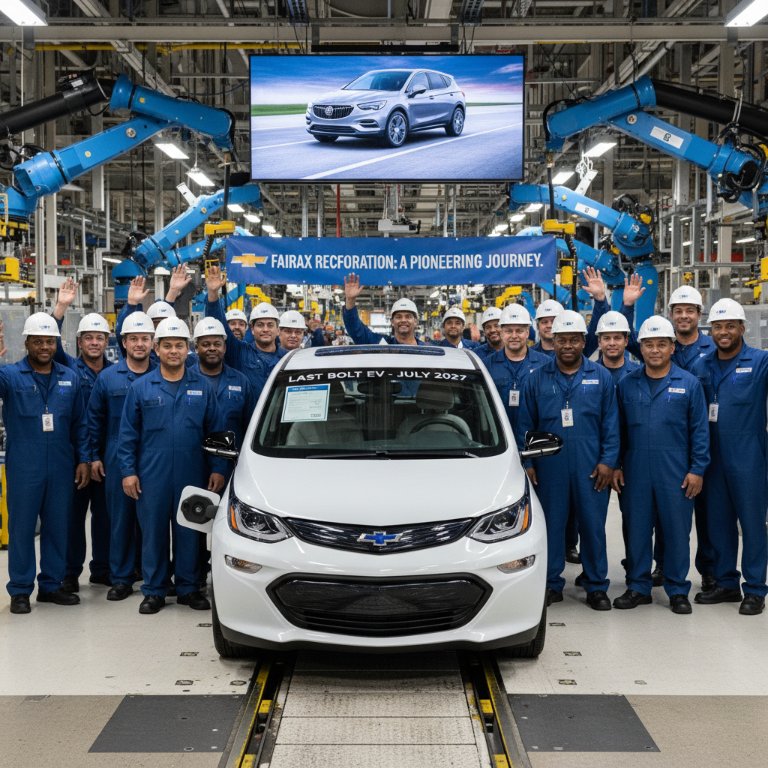
Just as the 'all-new' 2027 Chevrolet Bolt was beginning to find its stride, General Motors has reportedly decided to pull the plug, concluding its production by mid-2027. This abrupt cancellation, mere months after the vehicle entered production in November 2024, underscores the escalating complexities and geopolitical pressures shaping the automotive industry's electrification journey. It's a significant development that demands deep analysis, especially for those tracking GM's often-tumultuous path in the EV space.
After years of carving out a niche as an affordable and practical electric vehicle, the original Chevrolet Bolt EV and EUV unexpectedly ceased production in late 2023. GM quickly assuaged concerns, promising an 'all-new' Bolt, built on an updated platform and featuring the industry-standard NACS charging port, signaling a strong commitment to the nameplate's future. Its brief return, however, now highlights the company's challenging balancing act between ambitious EV targets and the harsh realities of global manufacturing and trade.
A Brief, Bright Flame: The 2027 Bolt's Features
The 'all-new' 2027 Chevrolet Bolt, which only recently began rolling off production lines in November 2024, aimed to continue the legacy of its popular predecessor. While specific platform details for this latest iteration were eagerly anticipated, its stated features indicated a competitive package:
- Native NACS Charging Port: A crucial upgrade, aligning with the industry's shift towards Tesla's North American Charging Standard and promising seamless charging infrastructure access for future owners. This move was a clear signal of GM's commitment to NACS integration across its lineup.
- EPA-Estimated Range of 262 Miles: A strong, practical range that positioned it well against other compact EVs and made it suitable for most daily commutes and even longer trips.
- Limited Production Period: From its late 2024 start to its projected mid-2027 end, the 2027 Bolt will have an exceptionally short run, making it a rare, albeit brief, sight on roads.
The Tariff Tango: Why Fairfax Shifts Gears
The decision to halt the 2027 Bolt’s production is rooted in a strategic reorientation of GM’s Fairfax Assembly plant in Kansas City, Kansas. The facility will undergo retooling to prioritize the production of internal combustion engine (ICE) vehicles, specifically the popular Buick Envision and Chevrolet Equinox. This pivotal shift is a direct response to the imperative of mitigating 'high tariffs'.
This move illuminates a critical facet of global automotive economics. The Buick Envision, in particular, has historically been imported into the U.S. from China. Faced with potential or existing hefty tariffs on these imports, GM is making a calculated move to onshore its production. By bringing the manufacturing of high-volume, profitable ICE models like the Envision and Equinox to American soil, GM aims to circumvent these financial penalties, secure its supply chain, and maintain competitive pricing in a crucial market. It's a pragmatic, if painful, acknowledgment that geopolitical trade policies can directly dictate product lifecycles and manufacturing allocations, even for newly introduced electric vehicles.
Why This Matters:
- GM's Pragmatic EV Strategy: This move signals a potential recalibration of GM's aggressive 'all-EV' future by 2035. While the company remains committed to Ultium-powered EVs, the cancellation of a newly launched electric model for tariff-driven ICE production suggests a willingness to de-prioritize certain EV programs when economic and geopolitical pressures intensify. It underscores the immense capital and logistical challenges of transforming a legacy automaker into an EV powerhouse, especially when faced with external trade headwinds.
- Impact on Affordable EVs: The Bolt has long been a champion of accessible electric mobility. Its repeated cancellation, even in its 'new' form, leaves a void in the affordable EV segment, potentially frustrating prospective buyers looking for value. While GM has promised future entry-level Ultium EVs, the immediate loss of a known, competent option is a setback for consumers and the broader push for EV adoption.
- The Power of Tariffs: This scenario vividly illustrates how international trade policies are not abstract economic concepts but direct determinants of what vehicles are produced, where, and for how long. The decision to reallocate Fairfax to ICE vehicles to avoid tariffs on Chinese-made cars demonstrates the potent influence of protectionist measures on global manufacturing strategies. Other automakers are undoubtedly watching closely, potentially accelerating their own plans to onshore production to mitigate similar risks.
- Fairfax's Future: While the plant retools for ICE production, securing jobs in the short term, it also postpones or potentially cancels any immediate plans for Fairfax to become a dedicated Ultium EV manufacturing hub. This decision prioritizes immediate profitability and risk mitigation over accelerating the EV transition at this specific facility.
General Motors’ decision to conclude production of the all-new 2027 Chevrolet Bolt by mid-2027 is a stark reminder that the road to an all-electric future is anything but straight. Driven by the critical need to navigate high tariffs and protect core ICE profitability, GM has made a strategic choice that sacrifices a promising, albeit short-lived, EV. While the 'Bolt' nameplate’s future is once again uncertain, this move firmly plants the company’s focus on safeguarding its market position against geopolitical currents. The question remains: when and how will GM effectively re-enter the affordable EV segment with a truly dedicated, long-term solution that can withstand such external pressures?