The All-EV Household Reality Check: Ioniq 5 & EV9 Owners Ponder a Hybrid Future
In a revealing snapshot of the current state of electric vehicle adoption, a dedicated all-EV household in Michigan, owners of a 2024 Hyundai Ioniq 5 ...
Editorial Team
World Of EV
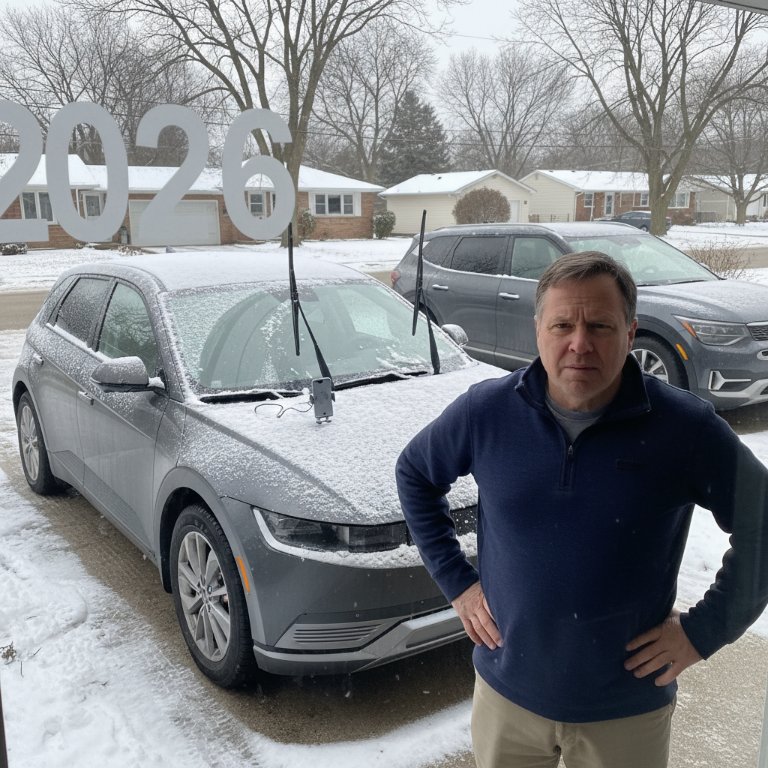
In a revealing snapshot of the current state of electric vehicle adoption, a dedicated all-EV household in Michigan, owners of a 2024 Hyundai Ioniq 5 and a Kia EV9, has shared a sobering reality: despite their enthusiasm, their next vehicle will likely be a hybrid. This candid account cuts through the marketing gloss, exposing the persistent practical challenges that can erode even the most committed EV advocacy, especially in regions grappling with nascent infrastructure and specific environmental demands. For an industry accelerating towards an electrified future, this owner's experience serves as a crucial reality check on what it truly takes for mass market adoption.
The Reality Check from an EV Advocate
The owner, a self-proclaimed EV advocate, highlighted several significant annoyances that collectively made their all-electric lifestyle nearly untenable without 'significant lifestyle adjustments.' Key among these was the glaring omission of a rear wiper on their Hyundai Ioniq 5, a design choice often justified by aerodynamics or aesthetics but proving impractical in real-world driving conditions, particularly in regions prone to adverse weather. Compounding this, both vehicles suffered from what the owner described as 'poor front wipers,' a fundamental safety and convenience flaw. Beyond these basic visibility issues, the technological experience also fell short, with the Ioniq 5 offering only wired Apple CarPlay, lacking both the convenience of wireless connectivity and a secure, integrated phone storage solution. These are not minor quibbles; they are daily frustrations that chip away at the premium ownership experience modern EVs promise.
The Michigan Context: A Glimpse into Regional EV Challenges
While the source material doesn't explicitly detail the specific charging infrastructure challenges faced, the owner's statement regarding the difficulty of managing an all-EV household in their region by 2026, without 'significant lifestyle adjustments,' speaks volumes. Michigan, with its often harsh winters and vast rural expanses, represents a microcosm of the challenges facing EV adoption outside of urban centers with robust charging networks. These are regions where range anxiety, charging reliability, and the sheer inconvenience of public charging can become daily hurdles, pushing even the most ardent supporters to reconsider their pure EV commitment. This experience sharply contrasts with the seamless, often suburban, EV narratives frequently portrayed, reminding us that real-world conditions for EV ownership vary dramatically across geographies.
Why This Matters:
This single owner's pivot from an all-EV household to considering a hybrid for their next purchase is far more than an anecdotal complaint; it's a critical bellwether for the automotive industry and the broader EV transition. For Hyundai and Kia, brands that have otherwise excelled in bringing compelling EVs to market with their dedicated E-GMP platform, it underscores the danger of overlooking seemingly minor user experience details. The absence of a rear wiper on a vehicle like the Ioniq 5 becomes a major safety and convenience flaw in real-world scenarios, particularly in regions with inclement weather. Similarly, subpar front wipers or a clunky infotainment integration erode the premium experience these modern EVs aim to deliver. These are not just design choices; they are potential deal-breakers for mainstream consumers.
Who wins in this scenario? Primarily, the hybrid and plug-in hybrid segments. As mainstream consumers evaluate the practicalities of EV ownership, the 'best of both worlds' appeal of a hybrid becomes increasingly compelling. It offers reduced emissions and fuel costs for daily commutes while mitigating range anxiety and charging infrastructure woes for longer trips or in less EV-friendly regions. Automakers like Toyota, who have steadfastly championed hybrids alongside their BEV offerings, are likely to see their strategy validated. Conversely, the pace of pure EV adoption, especially in crucial 'middle America' markets, risks a slowdown if manufacturers don't address these fundamental user experience gaps and if charging infrastructure doesn't rapidly catch up. This experience signals a clear warning that raw performance and cutting-edge battery tech aren't enough; the entire ownership ecosystem must be seamless and practical. For companies pushing an aggressive, pure-EV-only agenda, this owner's decision is a stark reminder that the market is not monolithic, and 'lifestyle adjustments' have a limit. While not a 'do-or-die' moment for any single company, it is a clarion call for the entire EV ecosystem to mature beyond early adopter enthusiasm and deliver a truly effortless experience for the mass market.
The Michigan family's journey reflects a broader truth: while the allure of electric vehicles remains strong, the path to mass adoption is fraught with practical challenges that manufacturers must urgently address. Basic amenities, robust software integration, and reliable infrastructure are not luxuries; they are fundamental requirements for converting EV advocates into lifelong EV owners. As the industry races towards an electrified future, paying meticulous attention to these 'small' details and supporting varied consumer needs will be paramount to success.