The 500-Mile Breakthrough: 2026's Longest-Range EVs Eradicate Range Anxiety
For years, the specter of 'range anxiety' loomed large over the burgeoning electric vehicle market, a psychological barrier that often overshadowed th...
Editorial Team
World Of EV
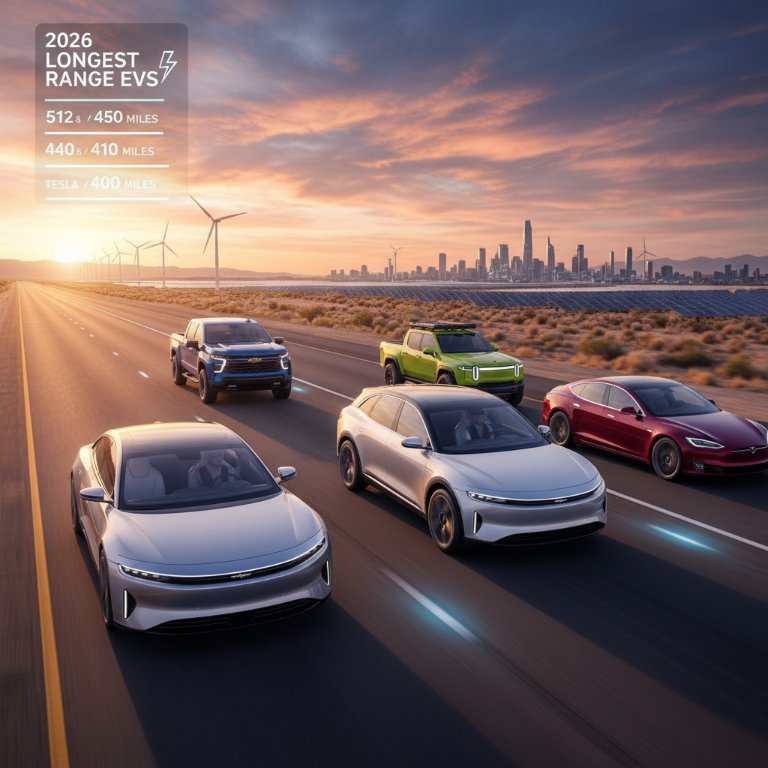
For years, the specter of 'range anxiety' loomed large over the burgeoning electric vehicle market, a psychological barrier that often overshadowed the inherent advantages of EV ownership. Prospective buyers frequently questioned whether an electric car could genuinely meet their long-distance needs, leading to cautious adoption. However, as we accelerate into 2026, a new breed of electric vehicles is not just addressing this concern—it's decisively shattering it, pushing past the symbolic 500-mile mark and fundamentally reshaping consumer expectations. Our latest analysis reveals the top contenders, led by Lucid and its astonishing Air, proving that the era of compromise is definitively over.
The New Standard: A Look at the Leaders
The 2026 landscape for electric vehicles with exceptional range is dominated by a few key players, showcasing the industry's rapid advancements. These vehicles represent the pinnacle of current EV engineering, offering distances that rival, and in some cases, surpass their internal combustion engine counterparts. The message is clear: long-distance EV travel is not just feasible, it's becoming the norm.
- Lucid Air: Leading the pack with an astounding 512 miles of range, the Lucid Air continues to set the benchmark for efficiency and endurance.
- Silverado EV: General Motors' entry into the electric truck segment demonstrates that utility doesn't have to sacrifice range, making it a formidable option for truck enthusiasts.
- Lucid Gravity: Following the Air's success, the Lucid Gravity SUV extends the brand's commitment to ultra-long-range luxury into a more versatile form factor.
- Rivian R1T: This adventurous electric pickup truck maintains its strong position, offering substantial range alongside its acclaimed off-road capabilities.
- Tesla Model S: A perennial favorite, the Model S continues to hold its own among the top-range EVs, a testament to Tesla's foundational engineering in battery technology and efficiency.
Engineering for Endurance: Battery Beasts vs. Aerodynamic Prowess
Achieving these impressive range figures isn't a singular feat; it's the result of sophisticated engineering choices. The industry largely employs two primary strategies to extend driving distances, each with its own benefits and challenges. Some manufacturers opt for massive battery packs, essentially brute-forcing range through sheer energy capacity. While effective, this often adds significant weight and can impact efficiency if not managed carefully. Think of it as carrying a larger fuel tank. Others, like Lucid, prioritize fuel-efficient design—a term we've adapted for EVs to mean hyper-efficient powertrains, advanced thermal management, and, critically, industry-leading aerodynamics. The Lucid Air, for instance, has long been lauded for its slippery shape and innovative powertrain, allowing it to extract maximum miles from its energy reserves.
Beyond just the ability to travel further, these top-tier EVs inherently offer the core benefits that have always defined electric propulsion: instantaneous torque for quick acceleration, a smooth and quiet ride thanks to fewer moving parts, and the enduring promise of low maintenance costs compared to complex gasoline engines.
Why This Matters:
This dramatic increase in available range for 2026 models signals a pivotal moment for the entire automotive industry and, more importantly, for the average consumer. For years, the perception of limited range was a greater impediment to EV adoption than the reality for most daily commutes. With multiple vehicles now comfortably clearing the 500-mile mark, that perception is irrevocably shattered.
Who Wins? Consumers, unequivocally. The sheer choice of long-range EVs means less compromise and greater confidence in making the switch. Lucid, in particular, solidifies its position as a luxury EV leader, proving its early bets on efficiency and range were prescient. Tesla reinforces its enduring competitiveness, while Rivian and the Silverado EV demonstrate that heavy-duty and adventure vehicles are no longer excluded from the long-range club. This market maturity also indirectly benefits charging infrastructure providers, as increased range reduces the frequency of charging stops, making the overall experience more seamless.
Who Loses? Legacy automakers who have lagged in developing dedicated, highly efficient EV platforms face increased pressure. Their reliance on adapted ICE platforms often results in less optimal packaging, higher weight, and subsequently, lower efficiency and range. This new benchmark highlights the competitive disadvantage for any manufacturer still hedging their bets on internal combustion engines or producing EVs that fall significantly short of these new range expectations.
What This Signals: This is a clear indicator that the EV market is moving beyond its nascent stage. Range anxiety, once a defining characteristic of the EV discourse, is now largely a historical footnote for top-tier vehicles. The battleground is shifting from 'can it go far enough?' to 'how quickly can it charge?', 'how luxurious is the interior?', and 'what advanced driver-assistance systems does it offer?'. It also signals a significant push towards greater energy density in batteries and relentless pursuit of aerodynamic and powertrain efficiency across the industry. For some, this represents a 'do-or-die' moment; failing to compete on range could relegate a brand to a niche player, or worse, render them irrelevant as consumer confidence in EVs soars.
As we look ahead, the 2026 long-range EV lineup paints a compelling picture of an electric future free from range constraints. With these impressive vehicles leading the charge, the transition to sustainable mobility isn't just a promise; it's a rapidly unfolding reality, making the electric choice easier and more compelling than ever before.