Thatcham's Bold Blueprint: Rescuing Older EVs from the Scrap Heap and Revolutionizing Repairability
The electric vehicle revolution, while undeniably green, has quietly harbored a significant challenge: the escalating costs of repair and insurance, o...
Editorial Team
World Of EV
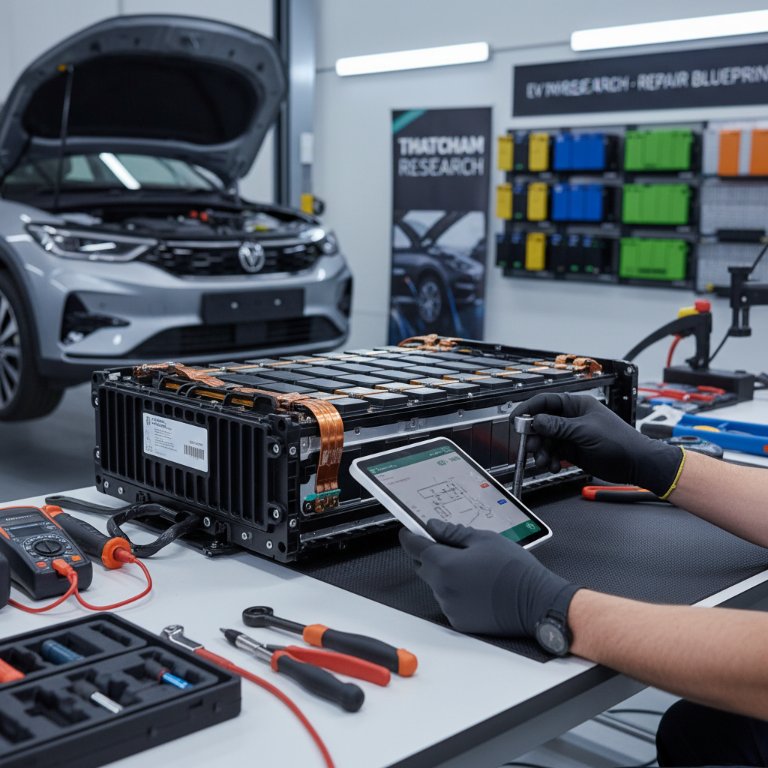
The electric vehicle revolution, while undeniably green, has quietly harbored a significant challenge: the escalating costs of repair and insurance, often leading to the premature write-off of otherwise functional older EVs. This trend has stifled the used EV market and inflated premiums for new buyers. Now, Thatcham Research, a leading authority in automotive risk, has unveiled a groundbreaking blueprint designed to tackle this issue head-on, championing economical battery repairs over costly full replacements and promising to make EV ownership more sustainable and affordable.
For years, the industry grappled with EV repair costs that were significantly higher than those for traditional internal combustion engine (ICE) vehicles. Reports indicate that EV repairs can cost up to 29% more, with parts being 48% more expensive, and overall insurance claims are 38% more severe than for conventional vehicles. A major culprit has been the high-voltage battery, which can account for up to 40% of a vehicle's total value. Even minor collision damage to a battery casing has frequently resulted in total loss declarations, simply because replacing an entire battery pack often exceeds the vehicle's depreciated value.
Thatcham's Game-Changing Blueprint for Repair and Sustainability
Thatcham Research's new EV Blueprint aims to reverse this unsustainable trend by establishing eight critical requirements for the automotive industry. The initiative focuses on ensuring EVs can be safely assessed, efficiently repaired, and economically maintained throughout their lifecycle. The core philosophy is to enable targeted battery repairs rather than mandating full-pack replacements, a crucial shift given that many modern EV batteries are proving to be remarkably durable.
Eight Critical Requirements to Transform EV Repair
The blueprint outlines a comprehensive set of demands for manufacturers, designed to ingrain repairability from the design phase:
- Resettable Emergency Safety Systems: Safety systems must be designed to be resettable without permanent damage or extensive component replacement.
- Safe and Simplified Battery Handling: Battery removal and reinstatement processes must be straightforward, avoiding complex, proprietary tools or subscription-based access that create barriers to efficient repairs.
- Vehicle Damage Assessment Guidelines: Clear, accessible methodologies for assessing battery damage after accidents must be available to all stakeholders, including independent repairers and insurers, to prevent unnecessary total loss determinations.
- Accessible Diagnostics: High-voltage system diagnostics should be standardized and accessible through widely available equipment, similar to conventional On-Board Diagnostics systems.
- Battery Damage Protection Against Impacts: Manufacturers must prioritize designs that better protect batteries from collision impacts.
- HV Battery Repair Strategies: This emphasizes the need for actual repair strategies for battery packs, rather than just replacement.
- Serviceability of HV Batteries: Designs should facilitate the serviceability of high-voltage batteries, including modular construction that allows individual components or cells to be replaced.
- HV System Component Design: Critical components, such as charge ports, should be positioned in less vulnerable locations to minimize damage in minor collisions.
This proactive approach is bolstered by compelling real-world data. A report by Generational, which analyzed over 8,000 EVs, revealed that eight- to nine-year-old EVs retain a median of 85% battery capacity, significantly above the 70% threshold where most OEM warranties typically trigger. This demonstrates that EV batteries have a much longer usable life than previously assumed, making repair-focused strategies not just environmentally sound but economically sensible.
Why This Matters: A New Dawn for EV Ownership and the Industry
Thatcham's blueprint is more than just a set of recommendations; it's a critical inflection point for the entire EV ecosystem. For consumers, this signals a future of potentially lower insurance premiums and a significantly extended lifespan for their electric vehicles. The fear of a minor fender bender leading to a total write-off, particularly for older models, has been a major deterrent to used EV adoption. By enabling cost-effective repairs, this initiative protects residual values and makes second-hand EVs a far more attractive and viable option, democratizing access to electric mobility.
Insurers stand to gain immensely by reducing the financial severity of EV claims, fostering a more stable and predictable underwriting environment. This could translate directly into more competitive insurance products for EV owners. For vehicle manufacturers, this is a clear call to action. Those who embrace these design principles—prioritizing modularity, repairability, and accessible diagnostics—will gain a significant competitive advantage. Brands that continue with proprietary, difficult-to-repair designs risk alienating consumers and facing higher insurance ratings on their vehicles, potentially impacting sales and brand perception. This is a "do-or-die" moment for manufacturers to align with sustainable, consumer-friendly practices.
Ultimately, this blueprint signals a maturation of the EV industry, shifting focus from initial adoption to the long-term sustainability and economic viability of electric transportation. It's a powerful endorsement of the circular economy within automotive, promoting resource efficiency and significantly reducing the environmental impact associated with unnecessary vehicle disposal and new battery production.
Conclusion
Thatcham Research's EV Blueprint offers a clear, actionable roadmap to address the pressing issues of EV insurability and repair costs. By advocating for design changes that prioritize economical battery repair and overall vehicle serviceability, the industry can unlock the full potential of electric vehicles, ensuring they remain a sustainable, affordable, and accessible option for years to come. The path forward is clear: collaborate, innovate, and build for repair, not replacement.