Thatcham Research Demands EV Repair Revolution: A Call to Halt Escalating Insurance Costs and Write-Offs
The electric vehicle revolution, while promising a greener future, has inadvertently driven up a hidden cost for owners: insurance premiums. This week...
Editorial Team
World Of EV
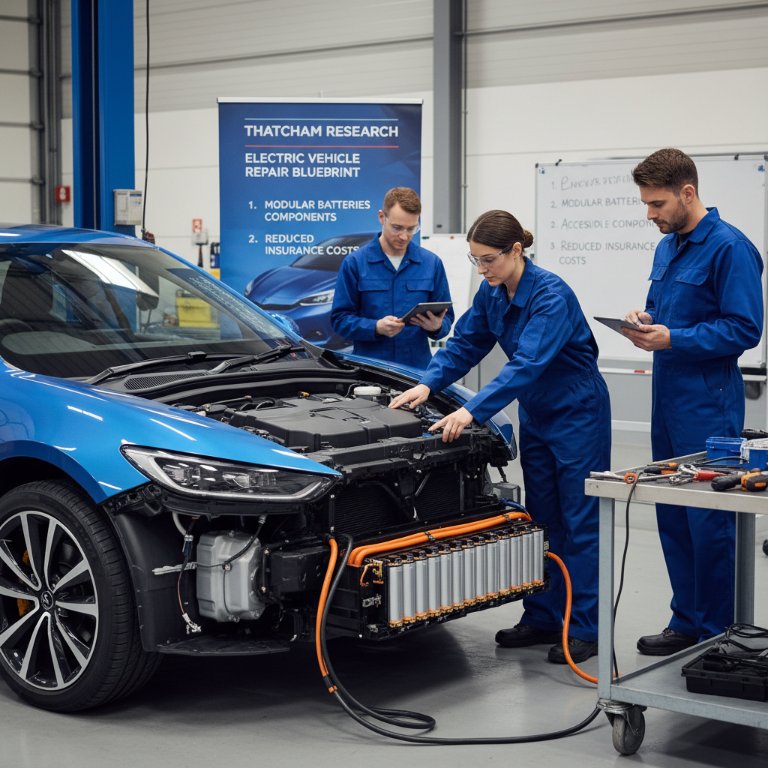
The electric vehicle revolution, while promising a greener future, has inadvertently driven up a hidden cost for owners: insurance premiums. This week, Thatcham Research, the U.K.'s preeminent vehicle assessment body, unveiled its groundbreaking New Electric Vehicle Blueprint paper, a bold initiative aimed squarely at tackling the soaring insurance costs plaguing the EV market. The core message is unequivocal: electric vehicles must be as repairable as their internal combustion engine (ICE) counterparts to ensure their long-term affordability and sustainability.
For too long, the industry has wrestled with the inconvenient truth that even minor collisions can render an EV a total write-off, primarily due to complex, often inaccessible battery packs. Thatcham's blueprint isn't merely a suggestion; it's a direct challenge to car manufacturers to fundamentally rethink EV design, prioritizing repairability, sustainability, and overall affordability from the drawing board onward.
The Repairability Challenge: A Hidden Hurdle to EV Adoption
The current state of EV repair is a significant barrier to broader adoption. Early electric vehicle designs often prioritized range and performance, sometimes at the expense of modularity and ease of repair. This has led to a situation where a minor shunt, particularly one affecting the battery housing or related components, can deem an otherwise salvageable vehicle economically unviable to fix. Insurers, faced with the high cost and complexity of battery repairs or replacements, often opt for a total write-off, pushing up premiums for all EV owners. This cycle directly undermines the environmental and economic benefits EVs promise.
Thatcham's Blueprint for Change: Designing for a Sustainable Future
Thatcham Research's New Electric Vehicle Blueprint outlines critical steps the automotive industry must take. The paper specifically advocates for:
- Design for Repairability: Manufacturers must engineer EVs with easier access to critical components, especially battery packs, allowing for localized repairs rather than full unit replacements.
- New Battery Standards: The blueprint calls for the establishment of new industry standards that facilitate service access and allow for the economic repair of individual battery modules or components, rather than dictating the costly replacement of an entire pack.
- Sustainability and Affordability: By making EVs easier and cheaper to repair, the initiative aims to extend vehicle lifespans, reduce waste, and ultimately lower the total cost of ownership for consumers, making EVs a more attractive and viable option.
Battery Concerns: The Heart of the Matter
At the crux of the issue are EV batteries, which represent a staggering 40% of a car's total value. A Thatcham Research survey, conducted in partnership with the Centre for Economics and Business Research (CEBR), starkly revealed that battery-related issues are the primary concern for roughly 45% of insurers and 42% of repair professionals. This data underscores the urgent need for a paradigm shift in how batteries are designed, protected, and serviced. Currently, the prohibitive cost and technical difficulty associated with battery repair often mean a minor incident can result in the disposal of a battery pack that is largely functional, a practice that is neither environmentally sound nor economically sensible.
Why This Matters:
Thatcham's blueprint is more than a policy paper; it's a seismic call for accountability from an industry accelerating towards an electric future. This initiative carries profound implications for every stakeholder in the EV ecosystem.
Who Wins? Consumers stand to gain significantly from lower insurance premiums, reduced ownership costs, and a more robust second-hand EV market. Repair professionals will see new opportunities for specialized training and business growth as the focus shifts from replacement to repair. Forward-thinking manufacturers who embrace these design principles early will gain a competitive advantage, attracting cost-conscious buyers and demonstrating a commitment to genuine sustainability beyond tailpipe emissions.
Who Loses? Manufacturers who cling to current design philosophies that prioritize manufacturing simplicity over repairability risk alienating customers and facing increased regulatory pressure. Insurers who fail to adapt their assessment models and repair networks will continue to struggle with profitability in the EV segment.
What This Signals: This is a clear signal that the nascent EV market is maturing. The initial scramble for range and performance is giving way to a more holistic understanding of vehicle lifecycle costs and environmental impact. Thatcham's intervention marks a critical moment, pushing the industry to address a significant friction point that has hindered mass adoption. It's a 'do-or-die moment' for manufacturers to prove their commitment to making EVs truly sustainable and affordable, not just for the environment, but for the wallets of everyday drivers. The blueprint effectively demands that EVs evolve beyond being mere technological marvels to become practical, maintainable, and economically viable assets throughout their entire lifespan.
Thatcham Research's New Electric Vehicle Blueprint serves as a crucial inflection point for the global automotive industry. By championing repairability and sustainability, the initiative promises to unlock the full potential of electric vehicles, making them not only a cleaner choice but also a more affordable and sensible one for drivers worldwide. The ball is now firmly in the court of car manufacturers to respond with innovative designs that prioritize the longevity and economic viability of the electric fleet.