Tesla's Rocky Start to 2026: Global Sales Slump Ignites Market Concerns
Tesla, the undisputed pioneer and often dominant force in the electric vehicle (EV) market, has stumbled out of the gate in 2026, reporting a challeng...
Editorial Team
World Of EV
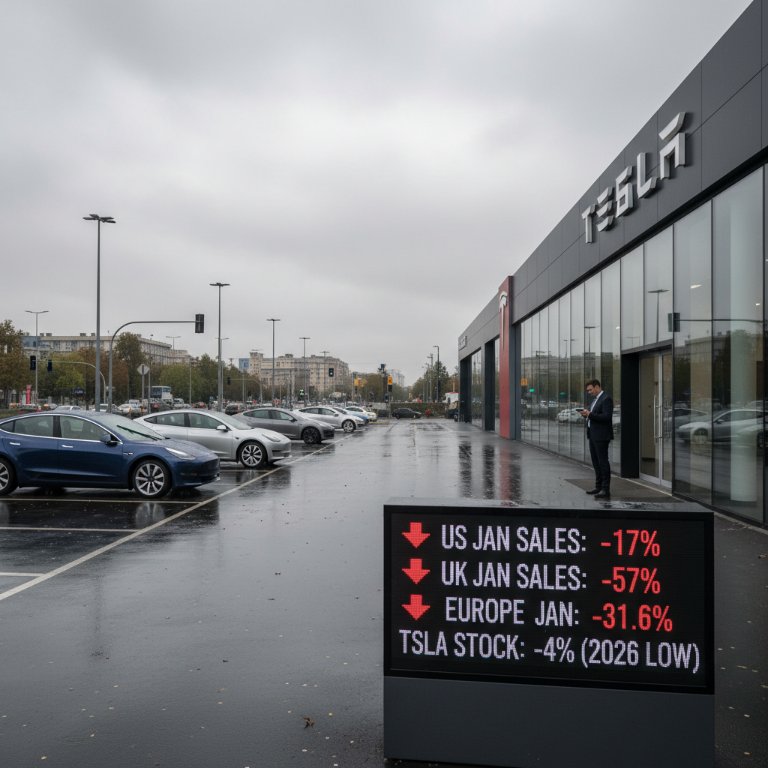
Tesla, the undisputed pioneer and often dominant force in the electric vehicle (EV) market, has stumbled out of the gate in 2026, reporting a challenging January across key global markets. This concerning performance has immediately reverberated through financial circles, leading to a significant dip in the company's stock value and raising critical questions about its market trajectory amidst intensifying competition and evolving consumer demands.
The initial figures for January reveal a distinct cooling of Tesla’s sales momentum, particularly in established Western markets. After years of seemingly unstoppable growth and market leadership, these latest results serve as a stark reminder that even the most innovative companies are not immune to market pressures and the relentless pace of automotive competition.
North American Headwinds Persist
In its crucial home market, the United States, Tesla experienced a 17% year-over-year decline in January sales. This marks the fourth consecutive month of falling domestic registrations, a trend that warrants serious scrutiny for a brand that has historically enjoyed robust demand. The sustained downturn suggests a potential saturation in the early adopter segment or a growing reluctance among consumers to commit to current models without significant updates or price adjustments.
European Market Takes a Significant Hit
The situation across the Atlantic is even more pronounced. In the United Kingdom, Tesla’s sales plummeted by over 57% to a mere 647 vehicles for the month. This drastic drop is echoed across the continent, with overall Tesla registrations in 10 major European markets falling by a substantial 31.6%. Europe, a region with ambitious EV adoption targets and a diverse array of compelling local and international EV offerings, appears to be moving past its initial fascination with Tesla, as buyers increasingly consider alternatives.
China's Complex Narrative
While China presented a more mixed picture, it still highlights underlying challenges. Tesla's wholesale volumes in China saw a 9.3% annual increase, demonstrating some underlying growth from the previous year. However, this figure was significantly overshadowed by a sharp 28.9% decline from December's robust performance, indicating significant month-over-month volatility and intense competitive pressures from formidable local players like BYD and Nio.
Market Reaction Signals Unease
These collective sales figures triggered an immediate and negative reaction from investors, with Tesla's stock dropping by more than 4% on February 4th, reaching a new 2026 low. This market response underscores investor sensitivity to growth metrics and serves as a bellwether for how the financial community views Tesla’s near-term prospects and its ability to maintain its premium valuation.
Why This Matters:
This challenging start to 2026 is more than just a blip for Tesla; it signals a potential inflection point for the company and the broader EV market. For Tesla, these numbers highlight the critical need for new product innovation beyond the Cybertruck, which has yet to significantly impact mass-market sales. The sustained decline in the US and the sharp drop in Europe suggest that the era of relying on an established model lineup and brand cachet alone is over. Competitors, both legacy automakers like Volkswagen and Hyundai, and nimble EV-only brands such as BYD, are rapidly catching up, offering compelling alternatives with competitive pricing, advanced technology, and increasingly robust charging infrastructure.
This trend also matters profoundly for the entire EV industry. It suggests that the initial wave of early adopters, who might have been more brand-loyal to Tesla, is largely satisfied. The market is now transitioning to mainstream buyers who are more price-sensitive, demand greater choice, and prioritize factors like range, charging speed, and perceived value for money over brand prestige alone. Who wins? Competitors who can rapidly bring diverse, affordable, and high-quality EVs to market. Who loses? Potentially, any automaker, including Tesla, that fails to adapt quickly to these evolving consumer preferences and the maturing competitive landscape. This is a clear signal that the EV market is no longer a growth-at-any-cost arena but a fierce battleground where product strategy, pricing, and market responsiveness will determine long-term success.
Tesla’s January performance is a stark reminder that the global EV market is maturing rapidly, bringing with it increased competition and a more discerning customer base. While one month doesn't define a year, these figures set a concerning precedent that Tesla must address with strategic urgency, whether through aggressive pricing, accelerated product refreshes, or innovative new offerings, if it aims to reverse this trend and reaffirm its leadership position in the dynamic world of electric vehicles.