Tesla's Middle East Expansion Hits Geopolitical Crosshairs as IRGC Threat Looms
A direct and explicit threat from Iran's Islamic Revolutionary Guard Corps (IRGC) has placed Tesla, a titan of the electric vehicle industry, squarely...
Editorial Team
World Of EV
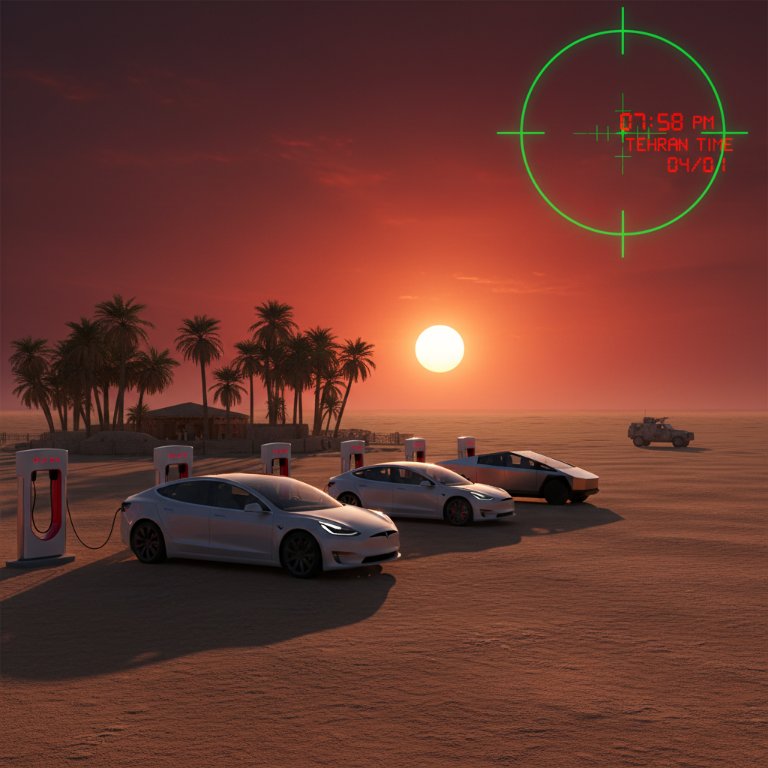
A direct and explicit threat from Iran's Islamic Revolutionary Guard Corps (IRGC) has placed Tesla, a titan of the electric vehicle industry, squarely in the path of escalating geopolitical tensions in the Middle East. With an unambiguous deadline of 8:00 PM Tehran time on April 1, the IRGC has named Tesla among 18 U.S. companies targeted for potential attack, citing retaliation for the killings of Iranian military leaders. This development sends a chilling message to global corporations and casts a long shadow over Tesla's ambitious and rapidly expanding footprint across the lucrative Gulf region.
Escalating Tensions and Accusations
The IRGC's declaration is not merely a verbal warning; it's a pointed accusation. The Iranian military body claims that these technology companies, including Tesla, are playing a direct role in 'planning and tracking targets' for U.S.-Israeli military strikes. While the specifics of these allegations remain unsubstantiated and highly contested, the threat itself is undeniably real and carries significant weight given the volatile geopolitical landscape. It forces companies to confront the uncomfortable reality of being caught in the crossfire of international disputes.
Tesla's Rapid Gulf Expansion Now a Vulnerability
For Tesla, this threat directly imperils years of strategic investment and growth in a key emerging market. The company has aggressively expanded its presence throughout the United Arab Emirates, Saudi Arabia, and Qatar, establishing a robust infrastructure designed to capture a significant share of the region's affluent and tech-forward consumer base. This expansion includes:
- Showrooms and Service Centers: Building out essential sales and support networks.
- Supercharger Network: Deploying over 30 Supercharger stations, creating a critical backbone for EV adoption across these nations.
This extensive physical presence, once a testament to Tesla's global ambitions, now becomes a direct vulnerability in the face of targeted threats. It highlights the complex risks associated with operating high-profile American brands in regions marked by deep political fissures.
Why This Matters:
This isn't merely a headline; it's a stark reminder of the intricate interplay between global business, technology, and geopolitical realities. For "World Of EV" readers, the implications are profound:
- Operational Disruption and Brand Trust: A direct attack or even prolonged security concerns could severely disrupt Tesla's operations, jeopardize employees' safety, and fundamentally erode consumer confidence in a region where brand loyalty is often tied to reliability and security. This could force a re-evaluation of its growth strategy in the entire Middle East, potentially ceding ground to competitors.
- The Broader EV Market: While focused on Tesla, this incident serves as a crucial warning to all international EV manufacturers looking to expand into politically sensitive areas. It elevates the importance of comprehensive risk assessments that go beyond market demand and regulatory frameworks, incorporating complex geopolitical analyses.
- Competitive Landscape Shift: Should Tesla face significant operational setbacks or withdraw from the region, it could create an unprecedented opening for European (e.g., Mercedes-Benz, BMW), Chinese (e.g., BYD, Nio), or even other American (e.g., Lucid, Rivian) EV brands that may be perceived as less politically exposed. This could fundamentally alter the competitive dynamics of one of the world's most promising luxury EV markets.
- Investor Sentiment: For industry professionals, the situation underscores the inherent risks of international expansion, especially for a company like Tesla, whose valuation often hinges on its projected global growth. This event could trigger concerns about the predictability and security of investments in emerging markets.
The IRGC's threat against Tesla is more than just a political maneuver; it’s a direct challenge to the safety and security of a global technology leader operating in a highly volatile region. As the April 1 deadline approaches, the global EV community watches closely, not just for the immediate outcome, but for the long-term ramifications on how businesses navigate an increasingly complex and interconnected world. The incident serves as a sobering reminder that even the most innovative companies are not immune to the harsh realities of international conflict.