Tesla's Legal Firewall Cracks: Judge Upholds Massive Autopilot Verdict, Setting Ominous Precedent
A U.S. District Judge in Miami has delivered a significant blow to Tesla's legal defenses, firmly rejecting the automaker's attempt to overturn a stag...
Editorial Team
World Of EV
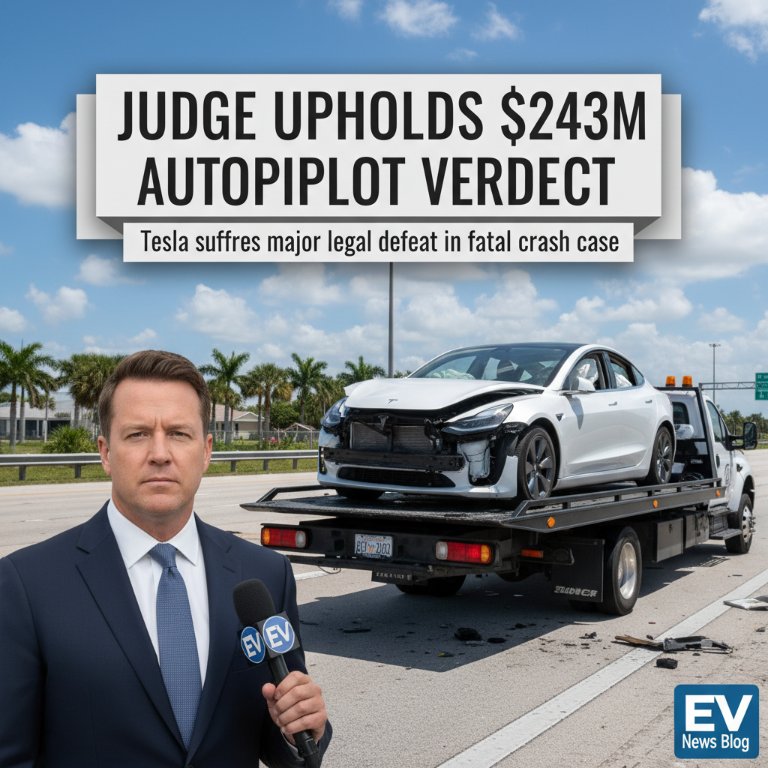
A U.S. District Judge in Miami has delivered a significant blow to Tesla's legal defenses, firmly rejecting the automaker's attempt to overturn a staggering $243 million jury verdict. The judgment stems from a fatal 2019 Autopilot-involved crash in Florida, a ruling that could fundamentally reshape Tesla's legal landscape as it grapples with an escalating number of lawsuits concerning its advanced driver-assistance systems. This decisive judicial action underscores a critical moment for Tesla, signaling that courts are increasingly prepared to hold the EV pioneer accountable for its technology.
The Verdict Affirmed: A Deep Dive into the Damages
The judge’s decision was unequivocal: the evidence presented during the trial was deemed robust enough to support the jury's original findings. This isn't merely a procedural setback; it's a substantive affirmation of the plaintiffs' case. The verdict is composed of two critical components: $43 million in compensatory damages, intended to cover the direct losses and suffering of the victims, and a substantial $200 million in punitive damages. The punitive sum is particularly telling, indicating that the jury – and now the judge – found Tesla's conduct to be sufficiently egregious to warrant punishment beyond mere compensation, suggesting a perceived element of negligence or reckless disregard concerning its Autopilot system.
Why This Matters: The Expert Analysis
This judicial upholding of the $243 million verdict is far more than an isolated legal outcome; it's a seismic event that reverberates throughout the automotive industry, particularly for Tesla and the broader EV sector. For years, Tesla has walked a tightrope, aggressively marketing its Autopilot and Full Self-Driving (FSD) capabilities while maintaining that these systems require active driver supervision. This ruling severely challenges that narrative.
- A Dangerous Precedent: This decision creates a powerful precedent. Other plaintiffs in the growing docket of Autopilot-related lawsuits against Tesla now have a stronger legal foundation to pursue similar outcomes. It effectively lowers the barrier for proving liability and could embolden more litigants.
- Punitive Damages Signal: The confirmation of $200 million in punitive damages sends an unmistakable message. It suggests that the court views Tesla's actions, or inactions, regarding Autopilot’s safety and marketing as more than just an unfortunate accident, potentially bordering on a disregard for safety. This is a stark warning sign for Tesla, which is also reportedly under investigation by the Department of Justice for its FSD claims.
- Escalating Legal and Financial Risk: While Tesla's balance sheet can absorb a single $243 million judgment, the increasing frequency and size of these verdicts represent a significant and growing financial drain. More importantly, it signals an elevated reputational risk. Consumers, prospective buyers, and even industry professionals are watching closely, and repeated judgments against Tesla’s foundational ADAS technology could erode trust.
- Regulatory Scrutiny Intensified: This ruling will undoubtedly intensify the scrutiny from regulatory bodies like the National Highway Traffic Safety Administration (NHTSA), which has already been investigating numerous Tesla crashes involving Autopilot. A series of adverse court decisions could accelerate calls for stricter regulation or even recalls of Tesla's driver-assistance systems.
- Industry-Wide Repercussions: Other automakers developing advanced driver-assistance systems will be watching this case closely. The clear message is that marketing and the actual capabilities of these systems must align perfectly, and companies bear significant responsibility for how their technology is deployed and understood by users.
The Road Ahead: An Uncertain Future for Autopilot
The affirmation of this verdict is a critical turning point for Tesla. It underscores the growing legal challenges stemming from its Autopilot technology and the scrutiny surrounding its capabilities and marketing. While Tesla remains a dominant force in the EV market, its legal battles are escalating, posing significant financial and reputational risks. The company will now face increased pressure to not only defend itself against future claims but also potentially re-evaluate its approach to ADAS development, testing, and, crucially, how it communicates the limitations of its technology to the public. The coming months will be pivotal in determining the long-term impact of this decision on Tesla's trajectory and the future of autonomous driving.