Tesla's Grok AI Finally Conquers Europe's Regulatory Wall, Arrives via OTA
After a protracted regulatory dance, Tesla has officially launched its Grok AI Assistant in Europe, rolling out the advanced conversational AI to cust...
Editorial Team
World Of EV
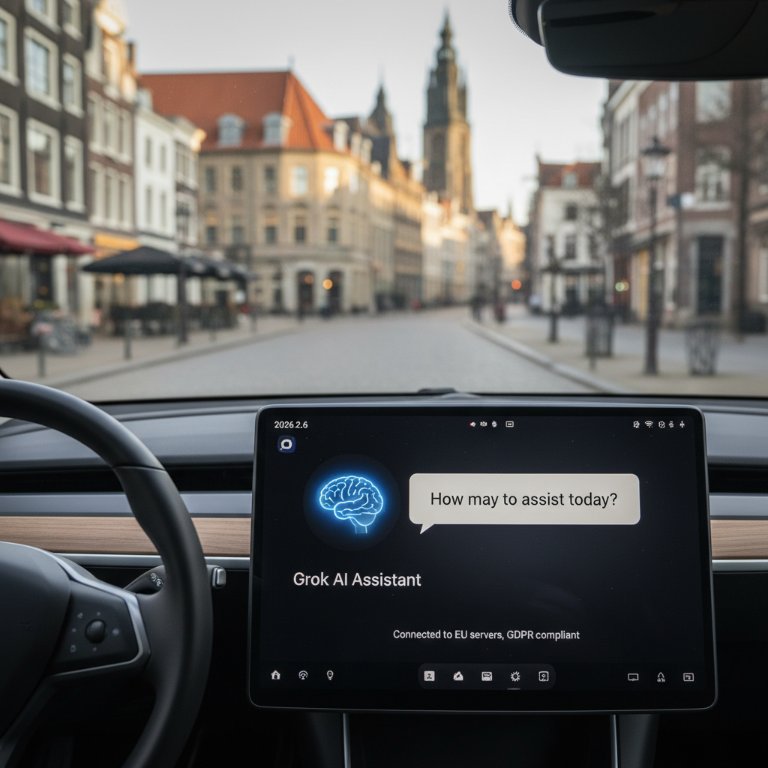
After a protracted regulatory dance, Tesla has officially launched its Grok AI Assistant in Europe, rolling out the advanced conversational AI to customer vehicles through the 2026.2.6 over-the-air (OTA) software update. This significant deployment marks a crucial milestone for Tesla, bringing its cutting-edge AI capabilities to one of the world's most rigorously regulated digital markets.
The Long-Awaited European Arrival
The arrival of Grok in European Tesla vehicles has been eagerly anticipated by the continent's tech-savvy owners. Unlike its relatively swift deployment in other markets, Grok's European debut faced considerable delays. The primary hurdle? Europe's stringent data privacy and digital governance frameworks, including the General Data Protection Regulation (GDPR), the Digital Services Act (DSA), and the nascent EU AI Act. These comprehensive regulations necessitate multiple levels of approval and compliance, compelling Tesla to navigate a complex legal and ethical landscape before activating Grok for its European clientele.
Owners of Tesla vehicles in Europe equipped with an AMD Ryzen GPU and a Premium Connectivity package are now gaining access to Grok. This ensures that only vehicles with the necessary processing power and the subscription service providing enhanced data capabilities can leverage the AI's functionalities. Grok, developed by Elon Musk's xAI, is known for its distinct personality – often described as witty, slightly rebellious, and capable of accessing real-time information from the X platform, offering a more dynamic and engaging in-car AI experience than many traditional voice assistants.
Why This Matters:
This rollout is far more than just a software update; it’s a strategic victory for Tesla and a bellwether for the future of AI in automotive. For Tesla, overcoming Europe's formidable regulatory environment signifies a proven capability to adapt its advanced technologies to the highest global standards of privacy and ethical AI use. It reinforces the company's commitment to its European market and paves the way for deeper integration of xAI's offerings into the Tesla ecosystem. This move strengthens Tesla's competitive edge by offering a unique, powerful, and now regulatory-compliant in-car AI experience that competitors, many of whom rely on more traditional or third-party AI solutions, will struggle to match quickly.
For European EV enthusiasts and prospective buyers, the impact is twofold. Those with compatible vehicles and Premium Connectivity gain a genuinely intelligent assistant that could transform their driving and ownership experience, offering enhanced information, entertainment, and potentially even more intuitive control. However, the hardware and subscription requirements highlight a potential digital divide, leaving owners of older Tesla models or those without Premium Connectivity on the sidelines for now. This also subtly signals to the market that cutting-edge features will increasingly demand specific hardware configurations.
From a broader industry perspective, Tesla's successful navigation of European regulations provides a critical blueprint – or a stark warning – for other global tech and automotive companies. The EU continues to lead the world in setting standards for digital governance and AI ethics. Tesla's achievement demonstrates that while challenging, compliance is achievable, setting a precedent for how advanced AI can be ethically deployed in mass-market consumer products within highly regulated jurisdictions. This moment underscores that innovation in AI must now walk hand-in-hand with robust regulatory adherence.
Tesla's Grok AI's arrival in Europe represents a pivotal moment, showcasing the company's resilience in adapting to complex global requirements while simultaneously elevating the in-car AI experience for a significant portion of its customer base. As the digital and automotive worlds continue to converge, Tesla's ability to deploy such advanced, regulation-compliant AI will be a key differentiator in the evolving landscape of intelligent vehicles.