Tesla's 'Full Self-Driving' Legal Battle Intensifies in California, Signaling Broader Industry Reckoning
Tesla is locked in a high-stakes legal battle in California, pushing back against a state administrative judge’s decisive ruling that the EV giant del...
Editorial Team
World Of EV
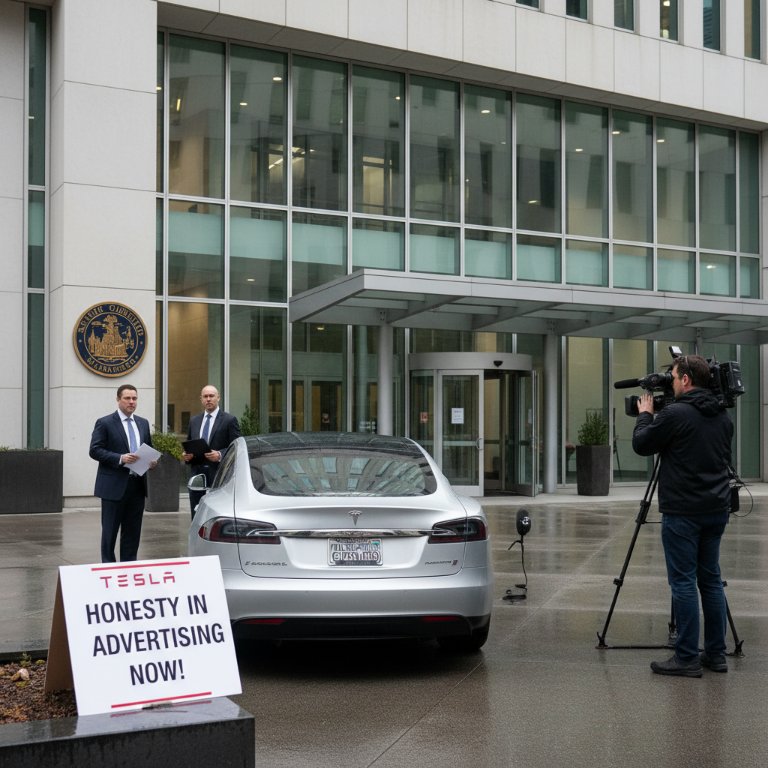
Tesla is locked in a high-stakes legal battle in California, pushing back against a state administrative judge’s decisive ruling that the EV giant deliberately misled consumers with its evocative ‘Autopilot’ and ‘Full Self-Driving’ terminology. This escalating dispute arrives hot on the heels of Tesla’s February agreement to rebrand its FSD subscription to ‘Full Self-Driving (Supervised),’ a concession made to mollify the California Department of Motor Vehicles (DMV) and its persistent concerns over misleading marketing. The ongoing legal challenge, however, suggests Tesla is far from willing to capitulate on the core issue of its branding and the implicit capabilities it suggests.
The Heart of the Dispute: Misleading Terminology
For years, Tesla has been a trailblazer in electric vehicles, but its advanced driver-assistance systems (ADAS) have consistently courted controversy, primarily due to their ambitious nomenclature. The terms ‘Autopilot’ and ‘Full Self-Driving’ have long been criticized by safety advocates, regulators, and even some consumers for implying a level of autonomy that the systems simply do not possess. Drivers are still required to remain attentive and ready to take control, a stark contrast to the fully autonomous operation suggested by the branding.
The California administrative judge’s ruling underscores this fundamental disconnect, asserting that Tesla’s marketing claims created an illusion of greater capability than the technology could deliver. This isn't merely a semantic squabble; it cuts to the core of consumer trust and safety. Unlike traditional automakers who often use more conservative terms like 'driver assist' or 'adaptive cruise control,' Tesla's branding strategy has always been aggressive, pushing the boundaries of what is acceptable in marketing nascent autonomous technologies.
A Concession, Not a Retreat: The 'Supervised' Rebrand
While Tesla’s February agreement to append ‘(Supervised)’ to its FSD subscription initially appeared to be a significant step towards regulatory compliance, the continued legal challenge reveals a deeper strategic resistance. This rebranding, a direct response to California DMV pressure, acknowledged the need for clearer communication regarding driver responsibility. However, the subsequent move to fight the administrative judge’s ruling indicates that Tesla views this as a targeted regulatory attack on its branding, rather than an outright admission of wrongdoing regarding its past marketing practices. This legal maneuver highlights Tesla’s determination to defend its long-held marketing approach, even as it navigates increasing scrutiny from state and federal bodies.
Why This Matters:
For Tesla: This legal battle represents a critical test of its ability to define the narrative around its ADAS technology. A definitive loss could force a more fundamental overhaul of its branding strategies globally, potentially impacting sales and subscriber growth if consumers perceive a downgrade in capability or trustworthiness. It also adds another layer of regulatory overhead and legal expense to a company already facing numerous legal challenges and recalls.
For Consumers: This dispute directly addresses the safety and transparency of ADAS marketing. A ruling that upholds the misleading claim will empower consumers with clearer expectations, potentially preventing dangerous misuse of technology. It underscores the importance of understanding that, despite aspirational names, these systems are aids, not replacements for human drivers. This saga reiterates the need for vigilance and education, reminding us that even the most advanced systems still require human supervision.
For the Industry: The outcome will set a precedent for how autonomous driving features are named, marketed, and regulated, particularly in the critical California market. Other automakers, who have largely adopted a more conservative approach to ADAS branding, will watch closely. If California successfully enforces stricter guidelines, it could lead to a domino effect, prompting other states and even federal regulators to demand similar clarity, potentially standardizing ADAS terminology across the industry. This could be a do-or-die moment for Tesla’s long-standing, aggressive marketing strategy, signaling a broader industry shift towards greater transparency and accountability in the race for autonomy.
Tesla’s ongoing legal fight in California over its 'Autopilot' and 'Full Self-Driving' branding underscores a critical juncture for both the company and the broader autonomous vehicle landscape. While the 'Supervised' rebrand offered a temporary peace, the deeper legal challenge reveals Tesla's unwavering commitment to its marketing narrative. The resolution of this dispute will undoubtedly shape future regulatory approaches, influence consumer perception, and ultimately dictate the language we use to describe the path to true self-driving cars.