Tesla's FSD Transfer Reversal Sparks 'Bait-and-Switch' Outcry, Leaving Cybertruck Buyers Stranded
Tesla, a company synonymous with pushing boundaries, has ignited a firestorm within its dedicated fanbase and the broader EV community with a quiet bu...
Editorial Team
World Of EV
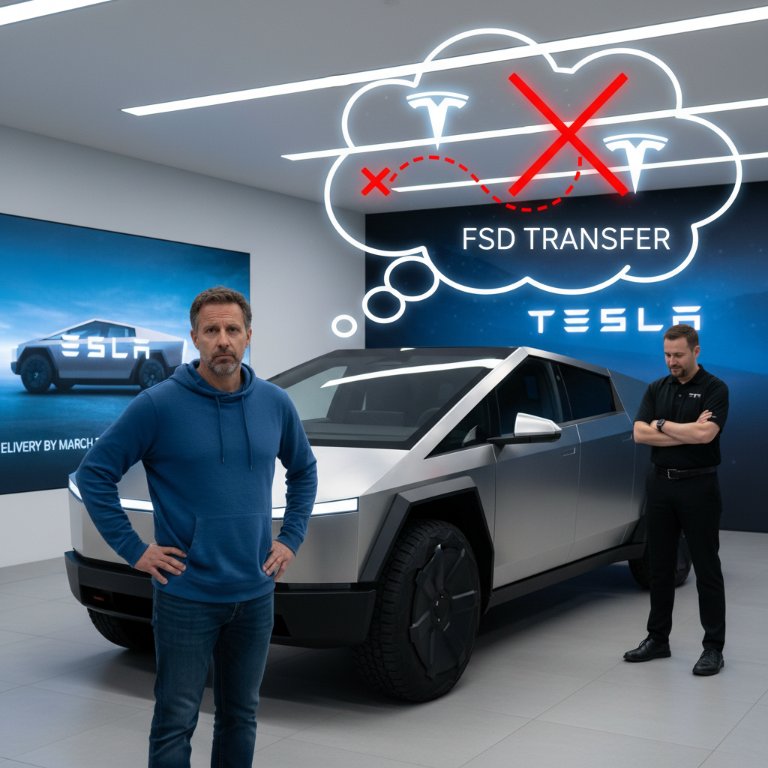
Tesla, a company synonymous with pushing boundaries, has ignited a firestorm within its dedicated fanbase and the broader EV community with a quiet but impactful update to its Full Self-Driving (FSD) transfer program. This abrupt policy shift effectively rescinds a much-anticipated perk for thousands of Cybertruck All-Wheel Drive (AWD) reservation holders, drawing sharp criticism and reigniting debates around customer trust and corporate transparency.
In a move that has sent ripples of frustration through the enthusiast community, Tesla has revised the eligibility criteria for its FSD transfer initiative. The original promotion, rolled out in January 2026, permitted existing FSD license holders to transfer their costly software package to a new vehicle if they simply 'ordered by March 31, 2026.' This offer spurred a significant uptick in Cybertruck AWD orders, as many owners, keen to retain their investment in FSD, saw this as a golden opportunity to upgrade. Now, the goalposts have moved: the new, stringent requirement demands 'take delivery by March 31, 2026.' This reversal has left a substantial cohort of Cybertruck AWD buyers, whose delivery windows extend beyond the revised deadline, without the FSD transfer option they were promised.
The Shifting Sands of FSD Eligibility
The initial 'order by' deadline was a clear incentive for owners to commit to a new Tesla, particularly the highly anticipated Cybertruck. For many, the FSD transfer represented a substantial saving, considering the software's current market value. The implicit understanding was that placing an order solidified their eligibility, regardless of potential production delays that are, frankly, not uncommon in the automotive industry, especially with new models like the Cybertruck. The change to a 'take delivery by' stipulation places the onus and risk entirely on the customer, tying their eligibility to Tesla's production and logistical capabilities.
Cybertruck AWD Buyers Face the Brunt
This policy change disproportionately affects Cybertruck AWD buyers. The Cybertruck's rollout has been meticulous and somewhat staggered, with initial deliveries prioritizing the Foundation Series and higher trims. Many AWD buyers had patiently waited, often placing orders months ago, banking on the FSD transfer. Now, with delivery timelines for many AWD configurations stretching well into late 2026 or even 2027, the March 31, 2026, delivery cutoff is simply unattainable for them. This creates a situation where a promotional promise, instrumental in their purchasing decision, has been retroactively invalidated. Critics are vociferously labeling this a 'bait-and-switch,' arguing that the initial promotion enticed sales under false pretenses. While Tesla is offering refunds for order deposits, this does little to assuage the feeling of betrayal for those who strategically timed their purchase around the FSD transfer.
Why This Matters:
This isn't merely a logistical tweak; it's a significant moment for Tesla's brand perception and customer relations. The immediate fallout sees thousands of loyal FSD owners feeling short-changed, potentially eroding the goodwill and trust that Tesla has painstakingly built over the years. For a company that relies heavily on direct-to-consumer sales and a passionate community, alienating a segment of its most dedicated customers carries substantial risk. It also raises questions about the perceived value and stability of Tesla's FSD program itself. If terms can shift so dramatically and disadvantageously, how can customers feel confident in future FSD purchases or investments? This move could cool demand for future FSD promotions and potentially impact Cybertruck sales in the longer term, as prospective buyers weigh the risk of similar policy reversals. It signals to the market a potential financial pressure point for Tesla, perhaps indicating a stronger-than-anticipated need to generate new FSD revenue rather than facilitate transfers, or an internal struggle with the FSD valuation model. Ultimately, the biggest loser here is customer trust, which, once fractured, is incredibly difficult to repair.
Tesla's latest FSD transfer policy adjustment represents a critical misstep in customer engagement. While offering refunds is a standard recourse, it doesn't address the core issue of a perceived broken promise. The company must carefully consider the long-term implications of such moves on its relationship with its most fervent supporters and the broader EV market. The industry will be watching closely to see how this impacts future sales strategies and, crucially, how Tesla attempts to rebuild the trust that has undoubtedly been shaken.