Tesla's FSD Transfer Program: A Final Window Before the Subscription-Only Future Looms
Tesla is implementing a pivotal shift in its Full Self-Driving (FSD) program, dramatically altering the landscape for current owners looking to upgrad...
Editorial Team
World Of EV
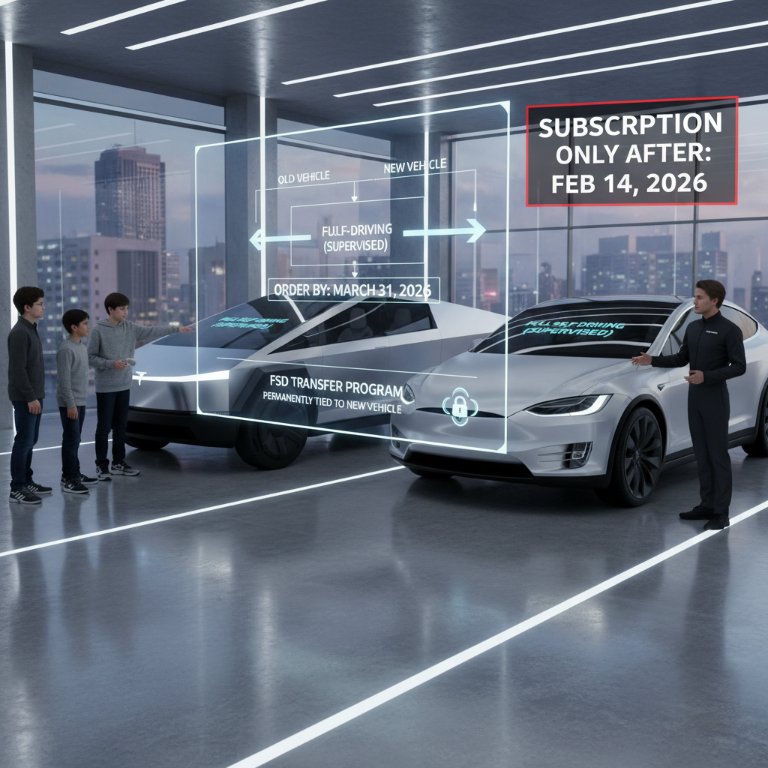
Tesla is implementing a pivotal shift in its Full Self-Driving (FSD) program, dramatically altering the landscape for current owners looking to upgrade and prospective buyers alike. This move signals a significant evolution in how the automaker monetizes its most ambitious software offering, transitioning from an outright purchase model to a subscription-based service. The FSD transfer program, a temporary concession offered by Tesla, is now receiving its final adjustments before being largely phased out, setting the stage for a new era of FSD ownership.
A Last Chance for FSD Ownership
For existing Tesla owners eager to carry their FSD capability to a new vehicle, the clock is ticking. Tesla has revised the qualification criteria for its popular FSD transfer program, offering a final lifeline to those looking to retain ownership before the shift to subscriptions. Previously, customers were required to take delivery of their new vehicle by March 31, 2026, to qualify for a free FSD transfer. The updated policy, however, provides a crucial grace period, now mandating that customers simply place an order for a new vehicle by that same date.
- Original Policy: Required vehicle delivery by March 31, 2026.
- Revised Policy: Now requires ordering a new vehicle by March 31, 2026.
This change offers a welcome degree of flexibility, acknowledging potential production and delivery delays, but unequivocally underscores the impending cessation of this valuable perk. For many, this represents the last opportunity to secure FSD as a owned asset rather than an ongoing subscription.
FSD Becomes a Permanent Asset, With a High-End Exception
Once transferred under the revised program, FSD is now permanently tied to the new vehicle. This is a crucial detail that significantly enhances the vehicle's long-term value, adding a premium feature that remains with the car through subsequent ownerships.
- Transferred FSD is now permanently attached to the new vehicle, boosting its long-term resale appeal.
However, Tesla has carved out a notable exception for specific high-end configurations. FSD (Supervised) from the Luxe Package on Cybertruck and 2026 Model S/X vehicles cannot be transferred. While this FSD capability is non-transferable, Tesla has confirmed that its value will still be considered in trade-in valuations through official Tesla channels. This distinction likely reflects unique hardware configurations or a strategic move to manage the resale market for its most premium offerings, ensuring these vehicles continue to flow through Tesla's ecosystem.
The End of Outright FSD Purchases: A Subscription-Only Future
The most monumental change looming is Tesla's definitive shift to a subscription-only model for FSD after February 14, 2026. This hard deadline marks the end of outright FSD purchases, fundamentally altering the cost structure and ownership model for future adopters. This strategic pivot aligns Tesla with a broader industry trend towards recurring revenue streams, mirroring the 'Software as a Service' (SaaS) models prevalent in tech.
Why This Matters:
Tesla's latest FSD program revisions are far more than mere policy tweaks; they represent a calculated move to solidify the company's financial model and redefine the value proposition of its most advanced software. This is a critical inflection point, not just for Tesla, but for the entire autonomous driving landscape.
- Who Wins? Tesla stands to gain significantly, securing a more predictable and recurring revenue stream from FSD subscriptions. This move encourages new vehicle sales by offering a final transfer incentive, while the permanent attachment of transferred FSD enhances used Tesla values, creating a more robust secondary market. Early adopters who seize the transfer opportunity also win, securing FSD ownership 'for free' with their new vehicle. The used Tesla market benefits, as vehicles with permanently attached FSD will likely command a premium.
- Who Loses? Prospective FSD buyers who miss the March 31, 2026 ordering deadline will lose the option to own FSD outright, committing to an ongoing subscription that could prove more expensive in the long run. Owners of Luxe Package Cybertrucks and 2026 Model S/X vehicles face limitations on transferring their specific FSD, potentially complicating their upgrade path outside of Tesla's trade-in program. Long-term, buyers entering the market after February 14, 2026, will only have a rental option, shifting the investment from an asset to a service.
- Market Signal: This is a resounding signal that Tesla is maturing its software monetization strategy. It elevates FSD from an optional, albeit expensive, feature to a core utility that generates continuous revenue. For Tesla, this is a strategic move to stabilize its finances and ensure ongoing investment in FSD development. It signals unwavering confidence in FSD's future value as a subscription service, pushing it from a 'buy it and own it' model to a 'subscribe and use it' paradigm. This is a do-or-die moment for the concept of FSD as a direct, one-time purchase, firmly embedding it into Tesla's long-term service ecosystem.
Conclusion:
Tesla is undeniably tightening the FSD transfer window and ushering in an era of subscription-only access. This strategic overhaul solidifies the company's position as a software-first automotive giant, leveraging recurring revenue to fuel its ambitious autonomous driving aspirations. While the changes offer a final opportunity for FSD ownership, the industry, and indeed Tesla's customer base, will be closely watching how this subscription-driven future reshapes the value and accessibility of Full Self-Driving technology.