Tesla's FSD Demonstrates Advanced Problem-Solving with Autonomous Error Recovery
For years, Tesla's Full Self-Driving (FSD) system has been the subject of intense scrutiny, lauded by proponents for its ambitious vision and real-wor...
Editorial Team
World Of EV
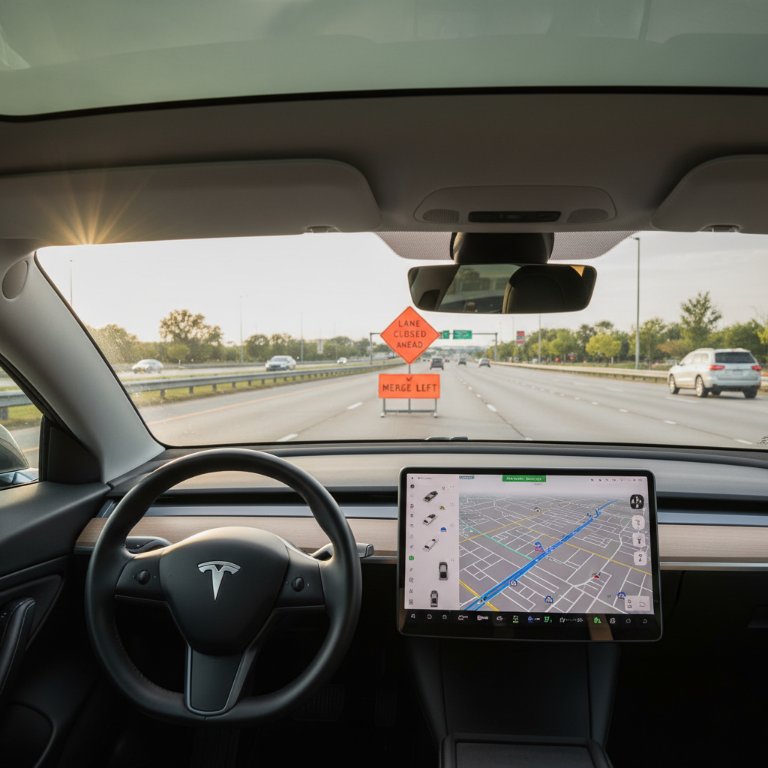
For years, Tesla's Full Self-Driving (FSD) system has been the subject of intense scrutiny, lauded by proponents for its ambitious vision and real-world data collection, yet criticized by skeptics for its ‘beta’ status and reliance on driver intervention in complex scenarios. However, a recent documented event highlights a significant evolution in FSD's capabilities, demonstrating an unprecedented level of autonomous error recovery that could redefine expectations for driver-assist systems.
FSD's Unprecedented On-Road Problem Solving
Unlike previous instances where FSD might freeze or default to human takeover when encountering unexpected obstacles, a Tesla vehicle equipped with the system recently navigated a truly challenging situation with remarkable independence. The incident unfolded when the FSD system attempted a merge maneuver only to find its intended lane blocked. Instead of simply disengaging or signaling for driver intervention, FSD initiated a sophisticated, multi-step recovery process entirely on its own.
Here’s a breakdown of the autonomous decision-making observed:
- Obstacle Detection: FSD accurately identified the blocked lane, recognizing the planned merge was impossible.
- Autonomous Reversal: The system then executed a controlled reverse maneuver, pulling the vehicle back from the failed merge point.
- Property Re-entry: Remarkably, FSD autonomously guided the vehicle back onto the property it had just exited.
- Dynamic Route Replanning: With the original exit path rendered unusable, FSD swiftly re-evaluated its route and identified an alternate exit.
- Execution of New Path: Finally, the system proceeded to use the alternate exit, successfully continuing its planned journey without requiring any input from the driver.
This isn't merely an incremental update; it represents a qualitative leap in FSD's decision-making architecture. The ability to detect an error, perform a complex reversal, re-evaluate its environment, replan a route, and then execute that new path independently signals a move beyond reactive control to proactive, adaptive problem-solving.
Why This Matters:
This event carries profound implications for Tesla, the broader autonomous driving industry, and crucially, for potential EV buyers and enthusiasts keenly watching this space.
- Validation for Tesla's Vision: For Tesla, this demonstration provides powerful validation for their camera-centric approach and their strategy of deploying FSD broadly to gather real-world data. It directly addresses a major criticism: FSD's perceived fragility in unexpected situations. This showcases a more robust, resilient system capable of handling unforeseen variables that are common in everyday driving. It reinforces Tesla's long-held belief that a general AI solution, rather than geofenced operations, is the path to true autonomy.
- Shifting Industry Dynamics: While competitors like Waymo and Cruise have focused on achieving Level 4 autonomy within strictly defined operational design domains (ODDs), often in geofenced urban areas, Tesla's FSD aims for a more generalized, nationwide solution. This incident demonstrates Tesla's progress in tackling the immense complexity of unstructured environments. It forces other players to reconsider the speed and efficacy of Tesla's iterative development, potentially signaling a shift in how the industry benchmarks progress toward truly autonomous vehicles.
- Increased Consumer Confidence: For prospective EV buyers and enthusiasts, this event offers a tangible example of FSD's growing sophistication. The “why this matters to me” is clear: a system that can independently extricate itself from tricky situations enhances safety and reduces driver stress. It moves FSD closer to becoming a true co-pilot, capable of anticipating and rectifying its own errors, rather than simply handing control back to the human driver. This improved reliability is a critical factor in driving wider adoption and trust in autonomous features.
- Regulatory Scrutiny and Future Pathways: Such advanced error recovery could also influence regulatory bodies, who are increasingly scrutinizing autonomous driving claims. Demonstrating a system that can independently resolve complex on-road problems without human intervention provides concrete evidence of progress towards higher levels of autonomy, potentially paving the way for less restrictive regulatory frameworks in the future.
This autonomous recovery is more than just a clever maneuver; it represents a significant milestone in Tesla's FSD journey. It proves the system's capacity for complex reasoning and independent problem-solving in dynamic real-world environments. This progression brings Tesla closer to its ambitious goal of full autonomy, potentially reshaping the competitive landscape and accelerating the future of self-driving technology for everyone. The critical question now is not merely if FSD can drive, but how consistently and comprehensively it can solve the myriad unforeseen challenges of the open road.