Tesla's FSD Data Delays: Regulatory Patience Wears Thin as Crucial Deadline Looms
In a move that underscores escalating scrutiny on autonomous driving technology, the National Highway Traffic Safety Administration (NHTSA) has grante...
Editorial Team
World Of EV
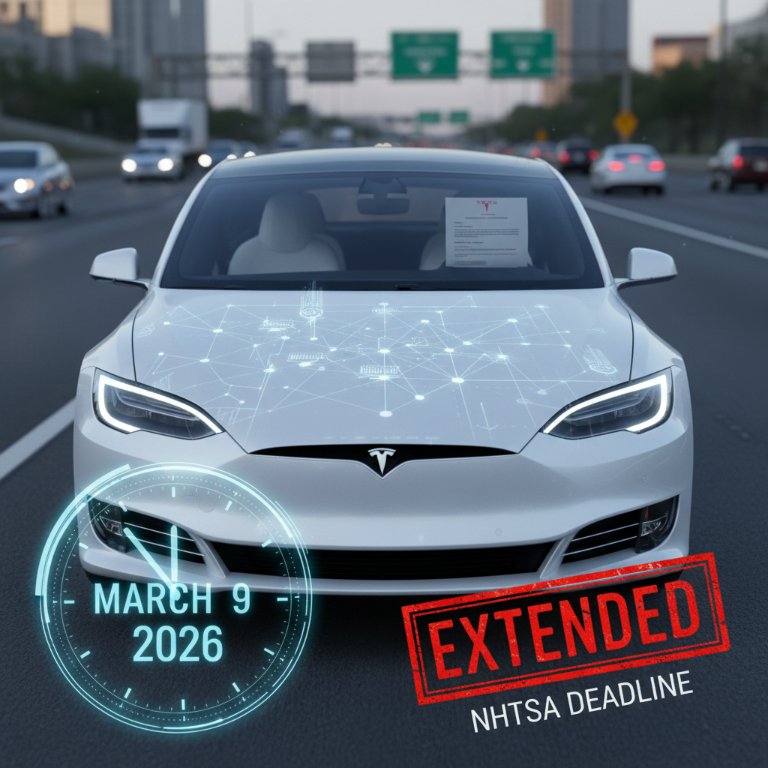
In a move that underscores escalating scrutiny on autonomous driving technology, the National Highway Traffic Safety Administration (NHTSA) has granted Tesla a second extension to submit critical crash data related to its 'Full Self-Driving' (FSD) system. The new deadline of March 9, 2026, for providing video, event data recorder (EDR), and CAN bus files is part of an ongoing investigation into FSD-related traffic violations. This latest delay comes as Tesla cites the immense undertaking of manually reviewing over 8,000 records and managing multiple concurrent NHTSA probes.
This isn't an isolated incident for the EV giant; it’s another chapter in a long-running narrative of regulatory challenges surrounding Tesla's ambitious autonomous driving aspirations. The NHTSA has been actively investigating Tesla's FSD and Autopilot systems for years, spurred by numerous incidents, including crashes and alleged traffic law violations. For context, the agency launched a preliminary evaluation (PE25012) on October 7, 2025, after identifying 58 incidents linked to FSD operation, encompassing vehicles running red lights and driving into opposing lanes of traffic. By December, that number had surged to 80 documented violations.
The Lingering Questions Behind the Delays
Tesla initially faced a January 19, 2026, deadline to provide the extensive data requested by NHTSA. However, the automaker requested and received a five-week extension, pushing the deadline to February 23, 2026. Just a day before that extended deadline, on February 19, Tesla sought yet another extension, which NHTSA granted on February 20. Tesla's justification for these delays centers on:
Voluminous Data Review: The company claims an overwhelming need for manual review of over 8,000 records.
Multiple NHTSA Probes: Tesla is simultaneously engaged in several other NHTSA investigations, including inquiries into delayed crash reporting and inoperative door handles, stretching its resources.
This particular investigation covers approximately 2.88 million Tesla vehicles equipped with FSD. The data requested is crucial for NHTSA to assess the scope, frequency, and potential safety consequences of FSD systems executing driving maneuvers that violate traffic safety laws. Understanding these parameters is essential for both consumer safety and regulatory oversight.
Why This Matters:
This repeated delay in providing critical safety data is far more than an administrative hiccup; it carries significant implications across the entire automotive landscape.
For Tesla's Autonomy Vision: These delays intensify the regulatory spotlight on Tesla's FSD system. With a critical March 9 deadline looming, failure to provide satisfactory data could lead to more severe actions from NHTSA, potentially including forced recalls or stricter operational limitations. This ongoing saga erodes consumer trust and adds a layer of uncertainty to Tesla's highly touted (and priced) FSD capability, which is a cornerstone of its future strategy, including robotaxi ambitions.
For Regulatory Oversight and Precedent: NHTSA's continued pursuit of this data, even with extensions, demonstrates its commitment to holding manufacturers accountable for the safety of advanced driver-assistance systems. This investigation sets a crucial precedent for how regulatory bodies worldwide will approach the oversight and certification of autonomous vehicle technology. It underscores the agency's vital role in establishing safety standards for a rapidly evolving industry.
For Consumers and the Broader EV Market: Prospective EV buyers and enthusiasts keenly follow these developments. The perceived reliability and safety of advanced ADAS features like FSD directly influence adoption rates. Consistent delays and ongoing investigations can sow doubt, potentially slowing the wider acceptance of autonomous technologies. For other automakers developing their own self-driving solutions, this serves as a stark reminder of the rigorous scrutiny and high bar for safety and transparency they must meet.
As the March 9 deadline approaches, the coming weeks will be pivotal. Tesla's ability to finally deliver comprehensive and satisfactory data will not only impact the fate of its FSD system but also significantly influence the regulatory framework for autonomous vehicles globally. The industry watches closely to see if Tesla can navigate these choppy regulatory waters, or if this marks a turning point for its autonomous ambitions.