Tesla's Cybertruck Powershare: A Game-Changer for V2G and Grid Resilience in Texas
Tesla is finally making good on its long-standing promise of bidirectional charging, rolling out its first true vehicle-to-grid (V2G) program in the U...
Editorial Team
World Of EV
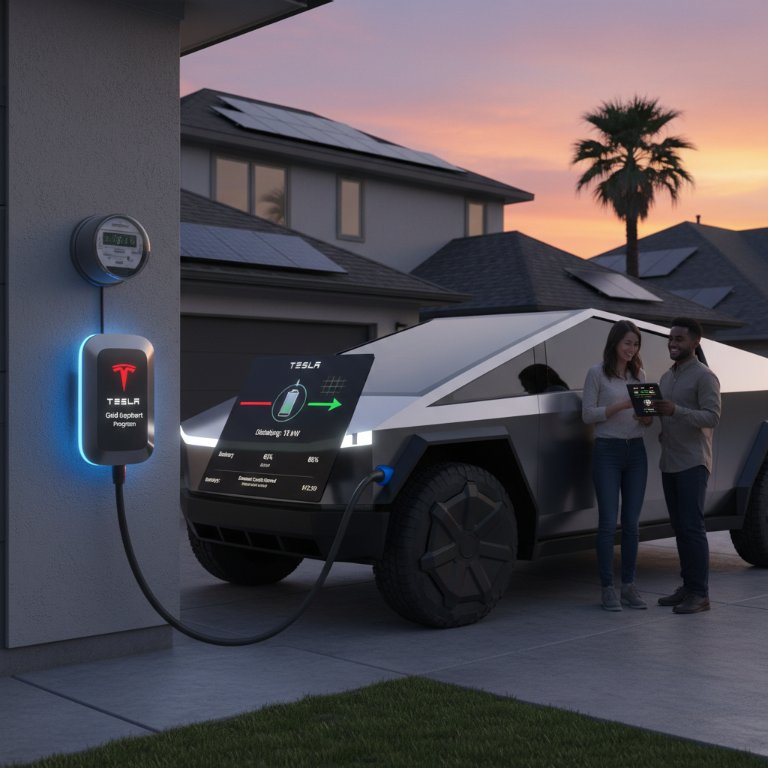
Tesla is finally making good on its long-standing promise of bidirectional charging, rolling out its first true vehicle-to-grid (V2G) program in the United States. Named 'Powershare Grid Support,' this pioneering initiative transforms the formidable Cybertruck from a mere mode of transport into a dynamic grid asset, initially in select Texas markets. This move is not just a feature addition; it's a strategic pivot that positions Tesla, and its owners, at the forefront of distributed energy solutions, offering substantial bill credits in return for bolstering grid stability.
After years of discussions and anticipation surrounding V2G technology, Tesla's entry with the Cybertruck marks a pivotal moment. While other manufacturers like Ford with its F-150 Lightning, Nissan with the Leaf, and Kia with the EV9 have explored V2G, Tesla's integrated ecosystem and sheer market influence lend a unique weight to this deployment. The program leverages the Cybertruck’s massive battery capacity, fundamentally reshaping the role an electric vehicle can play in our energy infrastructure.
Texas Leads the Charge: Powershare Details
The 'Powershare Grid Support' program allows eligible Cybertruck owners to discharge their truck's substantial 123 kWh battery back into the electrical grid during periods of peak demand. This capacity is roughly equivalent to nine Tesla Powerwall home batteries, underscoring the immense potential each Cybertruck holds as a mobile energy storage unit. Owners participating in the program receive bill credits as compensation, turning their parked vehicle into an income-generating asset.
Initially, the program is an invitation-only pilot targeting Cybertruck owners in areas served by CenterPoint Energy and Oncor, two major transmission and distribution utilities covering the Houston and Dallas metropolitan areas. To participate, owners require a Cybertruck equipped with Powershare Gateway hardware and a Universal Wall Connector, enabling the necessary bidirectional power flow. Enrollment takes place via Tesla's Electric Drive plan in the Tesla app, where owners can opt into the 'Powershare Grid Support' feature and set discharge limits to ensure they retain enough energy for their driving or home needs. Importantly, Tesla has confirmed that participating in this early adopter phase will not impact the Cybertruck's warranty.
Cybertruck: More Than Just a Truck
The choice of the Cybertruck as the launch vehicle for Tesla’s V2G program is strategic. It was the first Tesla vehicle to offer Vehicle-to-Load (V2L) capabilities directly from the factory, demonstrating its innate ability to deliver power. The transition from V2L (powering tools or appliances) and Vehicle-to-Home (V2H, powering a house during an outage) to full V2G (interacting with the broader grid) is a natural evolution for the Cybertruck's robust electrical architecture and substantial battery pack. Its large 123 kWh battery, composed of 4680 lithium-ion cells, makes it an ideal candidate to provide significant grid support.
Texas serves as the ideal proving ground for this technology. The state’s isolated grid, managed by ERCOT, is notoriously volatile and has faced multiple near-failures during extreme weather events. Tesla has actively built its Virtual Power Plant (VPP) presence in Texas since 2022, initially with stationary Powerwall systems, securing approval for two VPPs in August 2023. Integrating Cybertrucks, each carrying the energy equivalent of many Powerwalls, dramatically expands this distributed energy network, offering real-time, millisecond-level response to grid stress.
Why This Matters:
This move by Tesla is far more than a new feature; it's a foundational step towards a truly decentralized and resilient energy infrastructure. Tesla's Powershare Grid Support signals a significant shift in the utility of electric vehicles, making them active participants in grid management rather than mere consumers. Here’s why this matters:
- Empowering EV Owners: Cybertruck owners gain a tangible financial benefit through bill credits, creating a compelling economic incentive for V2G participation. This transforms the EV from a cost center into a potential revenue stream, directly answering the 'Why does this matter to me?' question for prospective buyers. Owners maintain control over discharge limits, alleviating range anxiety concerns.
- Enhancing Grid Resilience: The Texas grid, prone to stress events, desperately needs flexible energy resources. Each 123 kWh Cybertruck acts as a mini power plant, aggregating to a substantial virtual power plant that can quickly inject power during peak demand, reducing the risk of blackouts and stabilizing local utilities. This is crucial for states grappling with extreme weather and growing energy demands.
- Accelerating V2G Adoption: Tesla's market leadership lends immense credibility to V2G technology. This program will undoubtedly pressure other automakers to accelerate their own bidirectional charging capabilities and V2G initiatives, fostering a competitive environment that will drive innovation and broader adoption across the EV landscape. The expected expansion to California markets further solidifies this trajectory.
- Tesla's Energy Ecosystem Dominance: This move tightly integrates Tesla's vehicle division with its rapidly growing energy business. By offering a cohesive ecosystem of solar, Powerwall storage, and now V2G-enabled EVs, Tesla is carving out a dominant position as an end-to-end energy provider, not just an automaker. This strategy builds strong customer loyalty and opens new revenue streams for the company.
- Future-Proofing the Grid: The increasing penetration of renewable energy sources, while beneficial, introduces intermittency. V2G-enabled EVs offer a massive, distributed battery fleet that can store excess renewable energy and discharge it when needed, smoothing out supply and demand fluctuations and paving the way for a more sustainable and stable energy future.
Conclusion
Tesla's 'Powershare Grid Support' program, spearheaded by the Cybertruck in Texas, is a bold and necessary step toward integrating electric vehicles into the fabric of our energy grids. It’s a powerful demonstration of how EVs can evolve beyond transportation, becoming critical components of a smarter, more resilient, and sustainable power infrastructure. As this pilot expands, it will undoubtedly set a new standard for EV utility, offering a glimpse into a future where every plugged-in electric vehicle contributes to a stronger, more reliable energy network.