Tesla's Cybercab Ambitions Face Headwinds Amidst Critical Leadership Exodus
Tesla's highly anticipated Cybercab program, a cornerstone of its robotaxi future, is experiencing significant leadership turbulence. Mark Lupkey, who...
Editorial Team
World Of EV
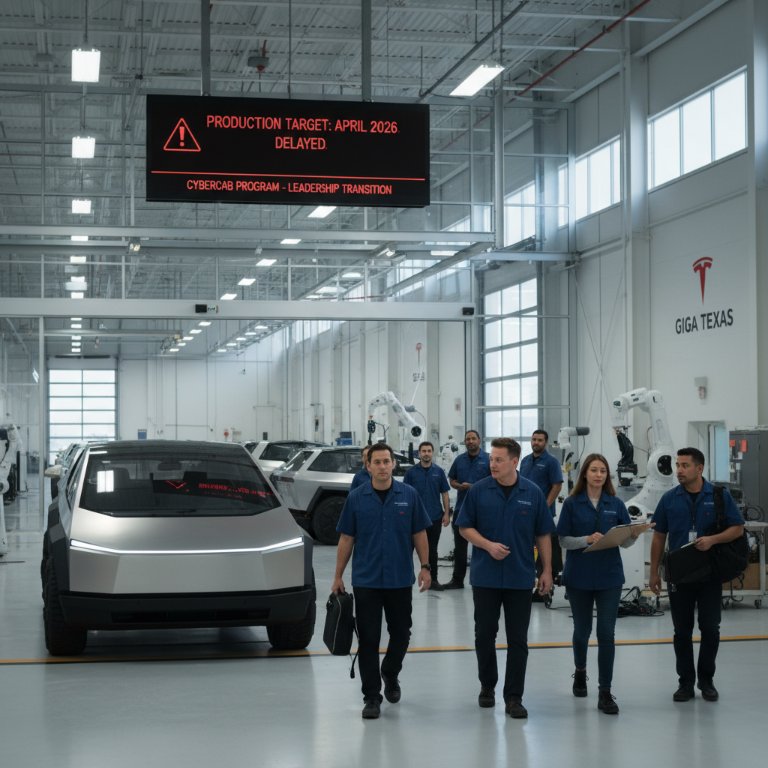
Tesla's highly anticipated Cybercab program, a cornerstone of its robotaxi future, is experiencing significant leadership turbulence. Mark Lupkey, who spearheaded Cybercab assembly and end-of-line ramp at Giga Texas, has reportedly exited the company. This marks a critical development, as Lupkey's departure is the third by a senior leader directly involved in the Cybercab initiative in just over a month. The exodus comes at an extraordinarily sensitive time, as Tesla publicly targets volume production of the Cybercab by April and aims to expand its robotaxi service by mid-2026.
The Brain Drain Threatens Key Initiative
Lupkey's role was far from minor; overseeing assembly and the crucial end-of-line ramp directly impacts the efficiency and quality of initial production runs. His departure, following two other key executives from the Cybercab team, signals a potentially troubling pattern. For a project as complex and foundational as the Cybercab – designed to leverage Tesla's Full Self-Driving (FSD) technology into a revenue-generating autonomous ride-hailing network – the loss of experienced leadership at such a rapid pace is a significant concern. This is not simply about replacing a manager; it’s about losing institutional knowledge and experienced hands at a pivotal moment.
Ambitious Timelines Under Scrutiny
Tesla has consistently projected an aggressive roadmap for its autonomous ventures. The target of volume Cybercab production by April is mere weeks away, with broader robotaxi service expansion planned for mid-2026. These timelines, already seen as ambitious by many industry observers given the complexities of autonomous technology deployment, now appear even more precarious. Developing a purpose-built autonomous vehicle platform, establishing a robust production line, and scaling a fully driverless ride-hailing service demands unwavering focus and stable leadership. The current instability within the Cybercab program introduces a formidable challenge to meeting these aggressive goals.
Why This Matters:
Execution Risk Intensifies: The loss of three senior leaders in a month suggests potential internal challenges within the Cybercab program, be it technical hurdles, strategic disagreements, or operational complexities. This directly increases the risk of delays in both Cybercab production and the broader robotaxi service rollout. For a company that often misses its self-imposed deadlines, this turnover adds another layer of skepticism.
Erosion of Investor Confidence: Tesla's valuation heavily relies on its future growth pillars, with robotaxis and AI being primary drivers. Leadership instability at the core of these initiatives can signal to investors that these ambitious plans may be facing more significant obstacles than previously disclosed, potentially impacting market sentiment and the stock's future trajectory.
Competitive Disadvantage: While Tesla aims to launch its robotaxi service, competitors like Waymo and Cruise (despite its recent setbacks) have accumulated significant real-world miles and operational experience in autonomous ride-hailing. Any delays or operational hitches for Tesla due to leadership changes could further widen this experience gap, making it harder for Tesla to catch up in a fiercely competitive and capital-intensive sector.
Impact on FSD Development: The Cybercab is designed to be the ultimate test and deployment platform for Tesla's FSD. If the hardware and operational aspects of the Cybercab program stumble, it could indirectly affect the perceived readiness and reliability of the FSD software itself, undermining the entire robotaxi premise.
The departure of key personnel at this critical juncture casts a shadow over Tesla's immediate autonomous aspirations. While Tesla has a history of overcoming challenges, the rapid succession of these high-profile exits demands close scrutiny from investors and enthusiasts alike. The coming months will be crucial in determining if Tesla can effectively stabilize its Cybercab program and deliver on its ambitious robotaxi vision, or if this leadership drain signals deeper, more systemic issues.