Tesla's California Robotaxi Ambitions Grind to a Halt: Zero Autonomous Miles Logged in 2025
For years, Tesla CEO Elon Musk has painted a vivid vision of a vast, profitable robotaxi network, promising that fully driverless vehicles would revol...
Editorial Team
World Of EV
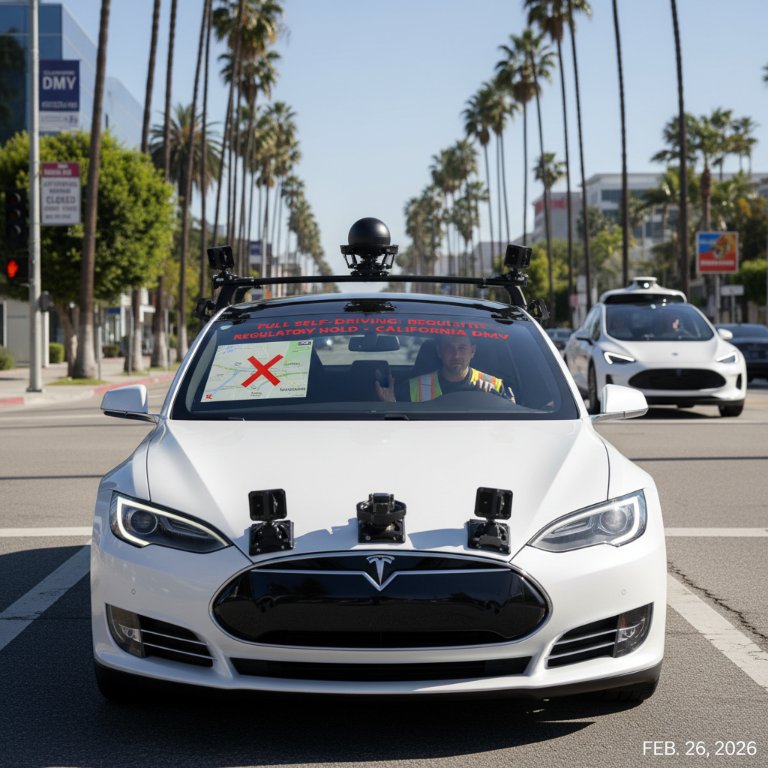
For years, Tesla CEO Elon Musk has painted a vivid vision of a vast, profitable robotaxi network, promising that fully driverless vehicles would revolutionize urban transport and unlock immense value for shareholders. Yet, a stark reality check has emerged from California, the very crucible of automotive innovation. Recent reports from February 26, 2026, confirm a deeply concerning statistic: Tesla recorded a staggering zero miles of autonomous test driving in the Golden State throughout 2025.
This isn't just a minor blip; it represents a significant roadblock for a company whose future valuation is increasingly tied to its autonomous driving ambitions, especially when competitors are already ferrying passengers without human intervention.
California's Stalled Progress
The details from the California Department of Motor Vehicles (DMV) paint a clear picture of Tesla's inertia. While the automaker does possess an entry-level permit, which allows for testing autonomous vehicles with a human safety driver present, it conspicuously failed to apply for the crucial additional permits necessary to operate fully driverless robotaxi services. This regulatory hurdle is not merely bureaucratic; it signifies a fundamental gap in Tesla's ability to demonstrate the safety and reliability required by one of the nation's most stringent regulatory bodies. Meanwhile, rivals like Waymo have successfully navigated this landscape, operating fully autonomous services in various Californian cities, highlighting the chasm between Tesla's ambitious pronouncements and its operational reality in a key market.
A Divergent Path: Austin's Limited Pilot
In stark contrast to its stalled progress in California, Tesla has managed to launch a small pilot robotaxi service in Austin, Texas. This move, while offering a glimpse into Tesla's operational aspirations, is a clear strategic sidestep. Texas, known for its comparatively lighter regulatory framework concerning autonomous vehicles, presents fewer barriers to entry. However, the limited scale and geographic confinement of the Austin pilot underscores that Tesla's robotaxi network is far from the ubiquitous, nationwide service once promised. It's an acknowledgement of the regulatory complexities and technological demands that the company continues to grapple with, especially when attempting to deploy truly driverless systems in more rigorously regulated environments.
Why This Matters:
The revelation of zero autonomous test miles in California for 2025 is more than just a data point; it's a profound signal to the entire automotive and tech industry, and critically, to Tesla's investors. Here's why this matters:
- Erosion of Credibility: This setback severely dents Tesla's long-touted 'imminent' robotaxi vision. For years, Musk has set ambitious timelines for full autonomy, and this failure to even test in a critical market undermines investor and consumer confidence in those projections.
- Competitive Disadvantage: In the fierce race for autonomous dominance, Waymo and other dedicated AV companies have gained significant ground by accumulating real-world, fully driverless miles and securing the necessary regulatory approvals. Tesla's absence in California cedes invaluable operational data and market share to its rivals.
- FSD Monetization Under Scrutiny: A significant portion of Tesla's future valuation relies on the promise of monetizing its Full Self-Driving (FSD) software through robotaxi services. Without demonstrable progress and regulatory approval in major markets, the path to realizing this revenue stream becomes increasingly tenuous.
- Regulatory Roadblocks are Real: Tesla's strategy has often involved pushing technological boundaries and then navigating regulations. However, the California DMV's stance demonstrates that autonomous driving safety and compliance are not negotiable, even for a tech titan. This signals a need for Tesla to fundamentally adapt its approach to regulatory engagement, or risk being left behind in critical markets.
- The 'Do-or-Die' Moment Intensifies: While not 'do-or-die' for Tesla as a whole, this is undeniably a critical juncture for its autonomous driving division and the robotaxi concept. Continued failure to demonstrate progress in key regulatory environments could force a strategic re-evaluation, potentially impacting future R&D investment and overall company direction in the autonomous space.
Tesla's inability to log a single autonomous test mile in California throughout 2025, coupled with its failure to even apply for essential fully driverless permits, represents a significant and sobering reality for its robotaxi ambitions. While a limited pilot operates in Austin, the stark contrast with California highlights the immense regulatory and technological hurdles Tesla still faces. The road to a ubiquitous robotaxi network appears far longer and more complex than previously suggested, demanding a more robust and compliant approach from the EV giant if it hopes to truly compete in the autonomous mobility landscape.