Tesla's 9 Million-Vehicle Milestone: A Deep Dive into Global Dominance and Strategic Incentives
Tesla has officially surpassed a monumental milestone, with its global fleet now exceeding 9 million vehicles. This achievement comes 16 years after t...
Editorial Team
World Of EV
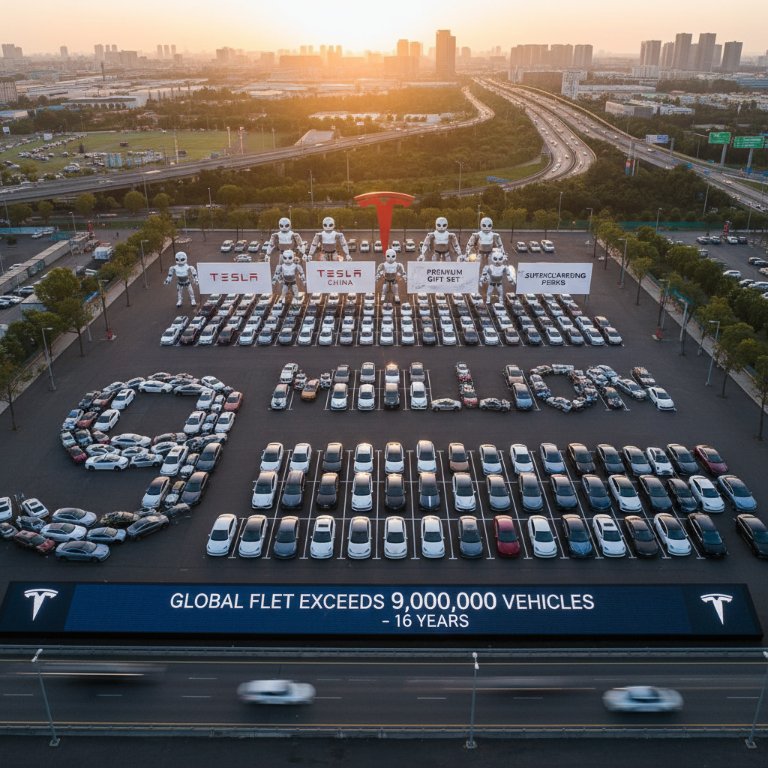
Tesla has officially surpassed a monumental milestone, with its global fleet now exceeding 9 million vehicles. This achievement comes 16 years after the delivery of the very first Tesla Roadster, marking a remarkable journey from niche EV pioneer to a global automotive powerhouse. This rapid acceleration in production is particularly impressive, with the company adding its latest million vehicles in just 207 days, suggesting a sharply upward production curve.
Tesla's Long Road to Dominance
The road to 9 million vehicles for Tesla has been anything but conventional. The company began its journey in 2008 with the Roadster, a low-volume, high-performance electric sports car that challenged perceptions of what an EV could be. For years, skeptics questioned Tesla's ability to scale production, but the introduction of high-volume models like the Model 3 and Model Y proved pivotal, transforming Tesla into one of the world's largest producers of electric cars. While Chinese manufacturer BYD recently surpassed Tesla in total EV sales for 2025 (2.25 million vs. 1.64 million), Tesla remains a dominant force, particularly in the US market. The 9 millionth vehicle, a Pearl White Model Y, rolled off the line at Giga Shanghai, Tesla's most productive factory and a crucial export hub.
Incentives Fueling the Future in China
To commemorate this significant global milestone and bolster its position in the fiercely competitive Chinese market, Tesla China rolled out a series of compelling incentives for select owners. These strategic offerings aim to reward loyalty and attract new buyers in a region where local contenders are rapidly gaining ground.
- Model Y L Test Drives: Providing exclusive access to test drives of the new six-seat Model Y L, introduced in August, could drive interest and sales for this expanded variant.
- Tesla Bot Premium Gift Sets: The inclusion of Tesla Bot Premium Gift Sets hints at Tesla's broader ambitions in AI and robotics, integrating its diverse technological ventures into its brand experience.
- Supercharging Perks: Enhanced Supercharging benefits, such as 5,000 km of free Supercharging for orders placed in October, directly address one of the primary concerns for EV owners – charging infrastructure and costs.
Why This Matters:
This 9 million-vehicle milestone signifies more than just impressive sales figures; it represents Tesla's profound impact on the automotive industry and its strategic positioning for future growth. The sheer volume of vehicles on the road translates into an unparalleled data advantage, crucial for refining advanced driver-assistance systems like Full Self-Driving (FSD). With over 8 million vehicles contributing data, Tesla possesses a 'data goldmine' that competitors struggle to replicate instantly. This data feedback loop is a formidable moat, enabling continuous software improvements and a significant lead in autonomous driving development.
For EV enthusiasts and prospective buyers, this milestone validates Tesla's long-term viability and the maturity of its ecosystem, from its vast Supercharger network to its continuous software updates. The rapid rate at which Tesla produces its vehicles – adding a million in just over six months – underscores its manufacturing efficiency, setting a benchmark that many legacy automakers struggle to meet.
In the competitive landscape, Tesla's sustained growth means increased pressure on rivals. Companies like BYD, while making significant strides, must continue to innovate aggressively to maintain their momentum against Tesla's established brand and scale. The strategic incentives in China are a direct response to this intense competition, demonstrating Tesla's commitment to defending and expanding its market share in the world's largest EV market. This isn't just about selling cars; it's about building a comprehensive, interconnected ecosystem that benefits from exponential data growth and manufacturing prowess, signaling to the market that Tesla intends to remain a formidable global leader.
Conclusion
Tesla's journey to 9 million vehicles is a testament to its relentless pursuit of electric vehicle adoption and manufacturing scale. This milestone solidifies its position as a global EV leader, leveraging its vast fleet for unparalleled data collection and continuous innovation. As Tesla continues its aggressive expansion and strategic market plays, particularly in crucial regions like China, the company reinforces its long-term vision, pushing the entire automotive industry towards an electrified and increasingly autonomous future. The focus now shifts to how quickly Tesla can reach its next million, and what further innovations and market strategies it will employ to stay ahead in a rapidly evolving landscape.