Tesla's 2026.8 Update Deepens App Integration, Puts Drivers in Focus
Tesla continues to redefine the automotive ownership experience, not just through cutting-edge EV hardware but critically, through its industry-leadin...
Editorial Team
World Of EV
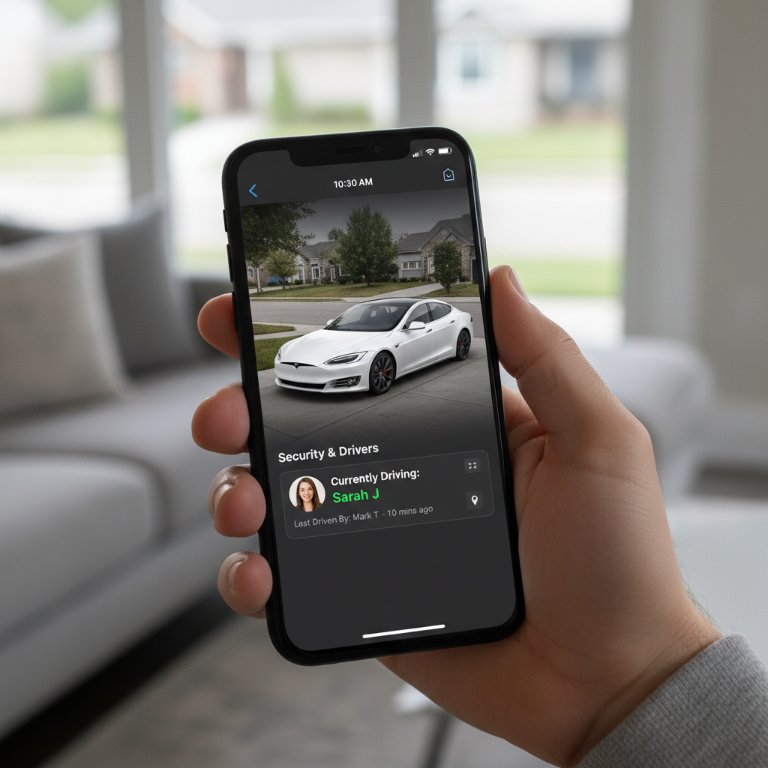
Tesla continues to redefine the automotive ownership experience, not just through cutting-edge EV hardware but critically, through its industry-leading software ecosystem. The latest demonstration of this commitment arrives with software update 2026.8, which introduces a seemingly minor, yet profoundly impactful, new feature: real-time visibility of the active driver profile directly within the Tesla mobile app. This enhancement, found conveniently under the 'Security & Drivers' section, allows owners to instantly see who is currently driving or who last operated their vehicle, marking another stride in Tesla's relentless pursuit of a more integrated, user-centric vehicle experience.
The Latest in 2026.8: Real-Time Driver Insight
The 2026.8 software update fundamentally elevates the Tesla mobile app's utility, transforming it into an even more powerful command center for owners. Previously, the app offered robust remote controls, location tracking, and vehicle status updates, establishing itself as a benchmark in the industry. Now, users gain real-time insight into the active driver profile. When the vehicle is in motion, the app prominently displays the name of the currently selected driver profile. Should the vehicle be parked or asleep, it intelligently shows the last active profile. This feature requires both the 2026.8 vehicle software and the most current version of the Tesla mobile app, ensuring seamless functionality across the entire Tesla lineup, including legacy Model S and Model X vehicles.
Beyond Convenience: A Focus on Enhanced User Experience
This isn't merely a cosmetic update; it's a strategic move to address practical challenges faced by multi-driver households and those who frequently share their Tesla vehicles. The immediate benefits are multifaceted:
- Greater Transparency: Owners can effortlessly confirm who is using their vehicle, fostering accountability and peace of mind, especially when lending the car to family members or friends.
- Time Savings: Knowing who last drove the car, or whose profile is active, can preemptively inform the next driver about expected seat, mirror, and climate settings, reducing adjustment time upon entry.
- Enhanced Safety & Personalization: For shared Teslas, the feature ensures that the correct, personalized settings are active, optimizing the driving experience for each individual. It can also help confirm that a restricted driver profile (e.g., for a teen driver) is indeed in use when required, adding a layer of parental control and safety.
- Effortless Personalization: Tesla's driver profiles already excel at automatically adjusting numerous settings, from seat position and steering wheel height to climate controls and media preferences. This real-time visibility further streamlines the process, ensuring the car behaves precisely as intended for the recognized driver.
Why This Matters:
This latest software update, while seemingly minor, represents a significant evolutionary step in Tesla's broader strategy and strengthens its competitive moat in the EV landscape. Tesla has long leveraged over-the-air (OTA) updates to continuously improve its vehicles, often adding new features and enhancing performance years after purchase—a stark contrast to traditional automakers who typically require dealership visits for software updates. This commitment to continuous, post-purchase innovation is a core tenet of Tesla's product-led marketing, generating sustained owner engagement and effectively refreshing the perceived value of its vehicles without conventional advertising.
This new driver profile visibility underscores Tesla's software-first approach, where the software is the car, not merely a feature within it. For owners, it translates to unprecedented granular control and information flow, deepening the connection between the user and their vehicle. It signals a move towards more intelligent, adaptive vehicles that cater precisely to individual user habits, a crucial differentiator as the EV market matures. While competitors are beginning to adopt OTA updates, they generally lag in frequency, scope, and the ability to update critical vehicle functions like powertrain performance, often limiting updates to infotainment systems. Tesla's ability to roll out such a nuanced, user-centric feature across its entire fleet, old and new, highlights its architectural advantage.
This move further solidifies Tesla's position as a leader in user experience, pushing the boundaries of what a mobile app can achieve in automotive ownership. It sets a new standard for intelligent vehicle management in multi-user environments, putting pressure on competitors to accelerate their software development and integration strategies.
Conclusion
Tesla's 2026.8 update with real-time driver profile visibility is more than a simple convenience; it’s a strategic reinforcement of its software prowess and commitment to enhancing the digital ownership experience. It provides tangible benefits for everyday users, particularly in shared vehicle scenarios, while simultaneously expanding Tesla's lead in the software-defined vehicle era. This seemingly small update exemplifies Tesla's ongoing ability to transform the user experience years after the initial sale, proving that in the EV world, software innovation remains as critical as horsepower or range.