Tesla Unleashes Gigawatt Charging Network for Semi, Electrifying Major Trucking Routes
After years of anticipation and a gradual rollout, Tesla is finally making a decisive move to solidify the Tesla Semi's position in the heavy-duty tru...
Editorial Team
World Of EV
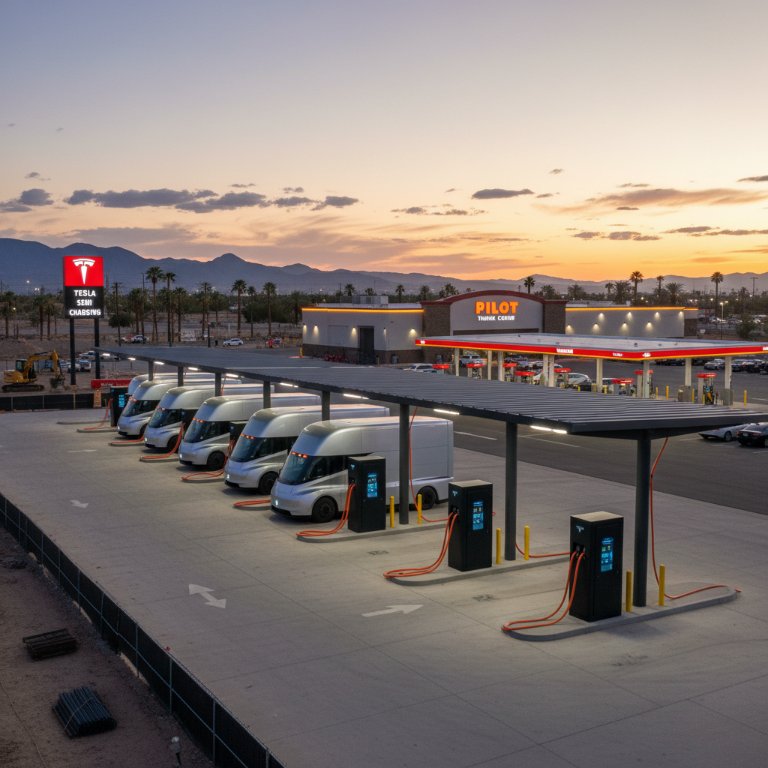
After years of anticipation and a gradual rollout, Tesla is finally making a decisive move to solidify the Tesla Semi's position in the heavy-duty trucking market. In a groundbreaking partnership, Tesla has joined forces with Pilot Travel Centers LLC to deploy a critical network of heavy-duty electric truck charging stations across key trucking corridors in California, Georgia, Nevada, New Mexico, and Texas. This collaboration directly addresses the long-standing challenge of range anxiety and charging infrastructure for electric Class 8 trucks, signaling a significant acceleration in the electrification of long-haul freight.
Strategic Expansion Across Critical Freight Lanes
Construction of these high-power charging facilities is slated to commence in the first half of 2026, marking a tangible commitment to the Tesla Semi's ecosystem. The strategic placement of these stations at select Pilot travel centers along some of the nation's busiest freight routes is paramount. This move ensures that fleet operators adopting the Tesla Semi will have reliable, high-speed charging options where they are most needed, transforming the viability of electric logistics.
Unprecedented Charging Power with V4 Technology
At the heart of this new network lies Tesla's cutting-edge V4 cabinet charging technology, designed specifically for the demanding needs of heavy-duty electric vehicles. Each station will feature between four and eight charging stalls, each capable of delivering an astounding 1.2 megawatts of power. To put this into context, this power output far surpasses anything seen in mainstream passenger EV charging, underscoring the immense energy requirements of a fully loaded Class 8 truck. The ambitious goal is for Tesla Semi trucks to recover the majority of their impressive 500-mile range within a mere 30-minute charging session, a critical metric for maintaining tight delivery schedules and maximizing uptime.
Initially, this robust network will exclusively serve Tesla Semi trucks. However, Tesla has indicated a future possibility of expanding compatibility to other heavy-duty electric vehicles, hinting at a broader vision for industry-wide electrification. This dedicated approach echoes Tesla's successful strategy with its Supercharger network for passenger vehicles, which initially provided a distinct advantage to Tesla owners before gradually opening up to other brands.
Why This Matters:
This partnership and subsequent infrastructure build-out represent a pivotal moment for the Tesla Semi and the broader electric trucking industry. For years, the Semi has been a 'promise' – a high-performance, long-range electric truck that needed a robust support system to truly thrive. This charging network is that system.
- Tesla Wins: This deployment is a massive validation for the Tesla Semi, finally providing the essential backbone infrastructure to enable widespread adoption. It significantly de-risks investment for potential fleet buyers, strengthening Tesla's competitive edge in the heavy-duty EV sector. It also demonstrates Tesla's capability to execute complex infrastructure projects beyond passenger vehicles.
- Pilot Travel Centers Wins: By partnering with Tesla, Pilot positions itself as a a forward-thinking leader in future transportation logistics. As electric trucking scales, these strategically located charging hubs will attract significant new business, transforming traditional truck stops into vital energy hubs for the electrified era.
- The Electric Trucking Industry Wins (Eventually): While initially proprietary, the sheer scale and power of this network set a new benchmark for heavy-duty EV charging. It validates the technical feasibility of ultra-fast truck charging and will likely spur further investment and development from competitors and public charging providers. The potential for future cross-compatibility is a long-term positive for the entire industry, pushing towards greater standardization and interoperability.
- Diesel Dominance Faces a Major Challenger: This infrastructure directly attacks the primary advantage of diesel trucks: readily available and fast refueling. By minimizing downtime and addressing range anxiety, Tesla and Pilot are eroding key barriers to EV adoption, signaling a tangible threat to the long-standing reign of internal combustion in freight.
This isn't merely an announcement; it's a foundational shift. The construction timeline for early 2026 signifies that the age of practical, long-haul electric freight is not just on the horizon – it's actively being built. This move by Tesla and Pilot is a resounding signal to the market that electric heavy-duty transport is not a niche concept but an impending reality, with the critical infrastructure now falling into place.
Looking ahead, the successful deployment and operation of these stations will be closely watched by the industry. The efficiency of the 30-minute charging goal, the reliability of the V4 technology, and the ultimate expansion of the network will be key indicators of how quickly and effectively the long-haul trucking sector can transition to a sustainable, electric future. This collaboration represents a crucial step in transforming the economics and environmental impact of freight transportation across North America.