Tesla Unleashes FSD v14.3: A Make-or-Break Moment for Autonomous Ambition
Tesla's Full Self-Driving (FSD) system stands at a pivotal juncture, with CEO Elon Musk signaling a potential wider release of version 14.3 as early a...
Editorial Team
World Of EV
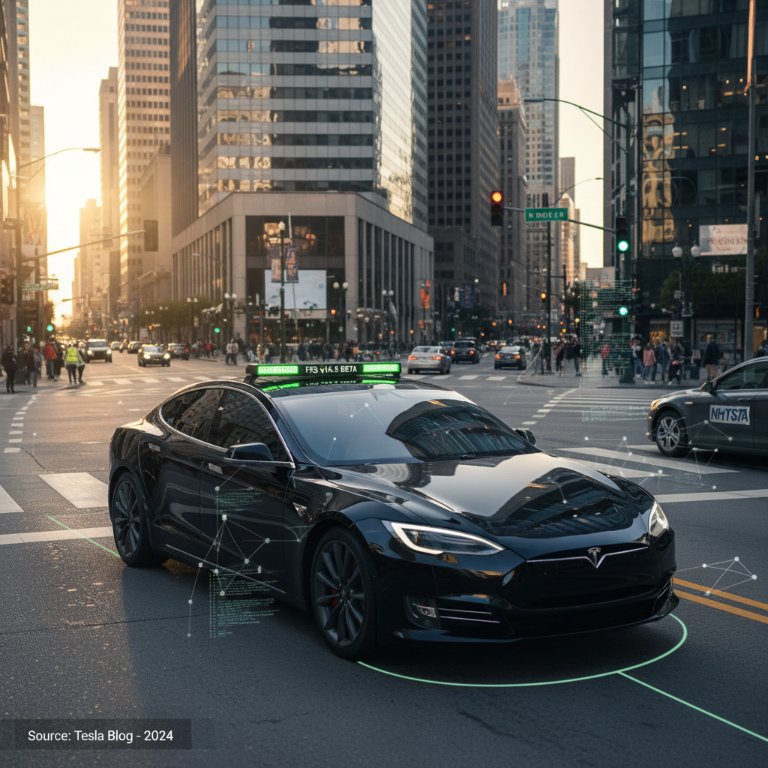
Tesla's Full Self-Driving (FSD) system stands at a pivotal juncture, with CEO Elon Musk signaling a potential wider release of version 14.3 as early as this week, following an intense period of employee beta testing. This isn't just another incremental update; FSD v14.3 promises a significant architectural overhaul, boasting a substantially larger neural network and advanced reasoning capabilities designed to tackle the notoriously complex urban driving environment. This release arrives under the constant, watchful eye of federal safety regulators, making its real-world performance more critical than ever.
FSD, a feature that Tesla owners pay thousands for, has long been a source of both fervent optimism and intense skepticism. While promising Level 5 autonomy, its current 'beta' designation and a history of sometimes unpredictable behavior have drawn scrutiny from entities like the National Highway Traffic Safety Administration (NHTSA). This latest iteration, therefore, isn't merely a software upgrade; it's a litmus test for Tesla's long-term autonomous vision and its credibility in the fiercely competitive EV landscape.
A Neural Network Reimagined: What v14.3 Delivers
At the heart of FSD v14.3's anticipated improvements lies a re-engineered foundation. Tesla claims this version integrates a 'significantly larger neural network,' a fundamental shift that could unlock unprecedented levels of perception and decision-making. This expanded network, coupled with enhanced processing, aims to deliver a more robust and human-like driving experience.
Key enhancements anticipated in FSD v14.3 include:
- Vastly Larger Neural Network: Expected to process more data and recognize intricate patterns, leading to superior situational awareness.
- Improved Reasoning and Reinforcement Learning: The system should exhibit more sophisticated decision-making, adapting better to unpredictable scenarios and learning from its experiences.
- Better Navigation: Enhanced route planning and execution, especially in complex intersections and multi-lane environments.
- Enhanced Performance in Complex Urban Driving Scenarios: This is the holy grail for autonomous systems, and v14.3 aims to tackle challenging city environments with greater confidence and fluidity.
Hardware Divide: The HW4 Advantage and the HW3 Wait
Crucially, this initial rollout of FSD v14.3 targets only vehicles equipped with Tesla's latest hardware suite, HW4. This advanced hardware, featuring more powerful computing capabilities and improved camera systems, is expected to fully leverage the expanded neural network of v14.3. For HW4 owners, this means immediate access to the bleeding edge of Tesla's autonomous tech.
However, owners of vehicles with the previous-generation HW3 hardware will need to exercise patience. While a 'FSD v14 Lite' is tentatively scheduled for mid-2026, this staggered release highlights the increasing computational demands of advanced autonomy and may create a two-tiered experience for FSD subscribers. This divergence underscores the importance of having the most current hardware for optimal FSD performance and could prompt some HW3 owners to consider upgrading their vehicles.
Why This Matters:
- For Tesla's Robotaxi Ambitions: A truly capable FSD is the linchpin of Elon Musk's long-held robotaxi vision. If v14.3 delivers on its promises, it could finally provide the necessary breakthrough to scale autonomous ride-hailing, fundamentally altering urban mobility and Tesla's revenue streams. Failure to meet expectations, however, could further delay these ambitions and erode investor confidence.
- Regulatory Showdown: The NHTSA's ongoing scrutiny of FSD's safety record means v14.3 will face intense governmental review. A demonstrably safer and more capable system could alleviate some of these pressures, but any lingering issues could invite harsher regulatory measures, including mandatory recalls or operational restrictions. This is a crucial test of FSD's safety assurances.
- Competitive Pressure: Other automakers and tech companies are aggressively developing their own autonomous driving systems. A significant leap by Tesla would intensify pressure on rivals like Waymo, Cruise, and traditional OEMs, forcing them to accelerate their own development cycles. Conversely, if v14.3 underwhelms, it opens a window for competitors to close the gap.
- Consumer Value Proposition: For prospective buyers and current FSD subscribers, the question remains: does v14.3 finally justify the significant financial investment? If the system can navigate complex scenarios with near-human proficiency, it transforms from a beta feature to a compelling value driver, potentially boosting vehicle sales and FSD subscriptions.
As the world awaits the wider rollout, all eyes will be on Tesla's FSD v14.3. Will this be the monumental leap forward that Elon Musk has long promised, moving FSD definitively beyond its beta designation? Or will it prove to be another incremental step on a protracted journey towards true autonomy, with regulators and a discerning public closely monitoring every mile? The coming weeks will offer crucial insights into the future of self-driving technology and Tesla's place within it.