Tesla Roadster’s Resurgence: Trademark Filings Ignite Hopes for Imminent Supercar Production
After years of anticipation, design tweaks, and shifting priorities, the long-mythologized second-generation Tesla Roadster appears to be on the preci...
Editorial Team
World Of EV
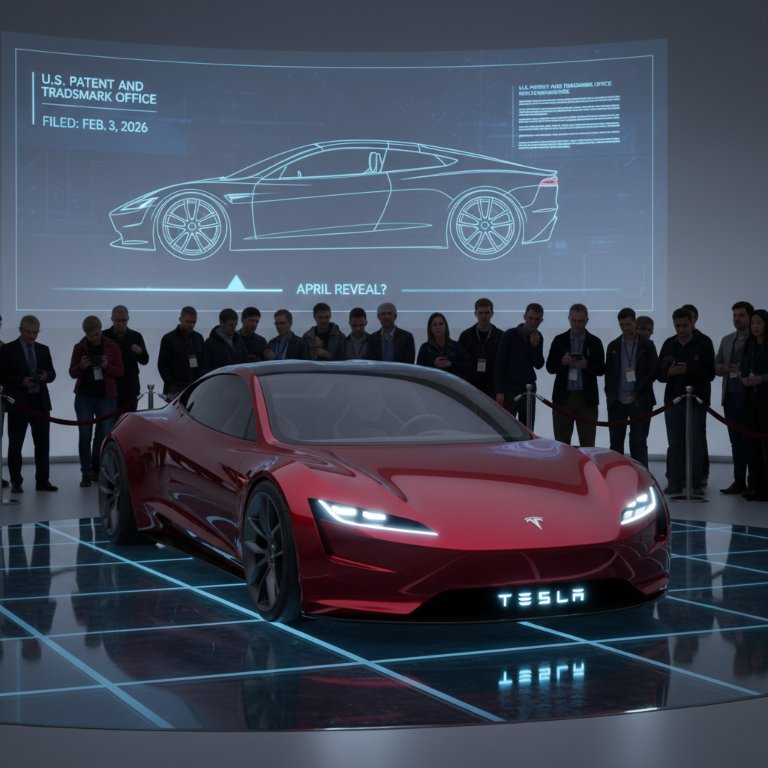
After years of anticipation, design tweaks, and shifting priorities, the long-mythologized second-generation Tesla Roadster appears to be on the precipice of production. New trademark applications filed with the U.S. Patent and Trademark Office on February 3, 2026, for both the Roadster's nameplate and its distinctive silhouette, offer the strongest signal yet that Tesla is finally preparing to unleash its electric supercar onto the world. These filings are far more than bureaucratic formalities; they represent a concrete, legal step toward commercialization, suggesting the development phase is largely complete and manufacturing preparations are well underway.
The Resurgence: Trademarks Point to Imminent Production
The U.S. Patent and Trademark Office filings specifically cover the 'Tesla Roadster' name and, crucially, its sleek silhouette. For an automaker, securing these intellectual property rights is a standard, yet critical, maneuver before a product launch. Companies don't typically expend resources on such applications for vehicles destined to remain in the conceptual realm. This move strongly indicates that the Roadster has progressed beyond the prototype stage and is entering the final phases of pre-production.
Musk’s Cryptic Tease and the Roadster’s Lofty Ambitions
Adding fuel to the fire, CEO Elon Musk has recently hinted at a potential reveal for the Roadster in April. This tease, coming nearly a decade after its initial show-stopping unveiling in 2017, carries immense weight. The original reveal captivated the automotive world with promises of unprecedented performance: a blistering 0-60 mph sprint in 1.9 seconds, a top speed exceeding 250 mph, and an astounding 620 miles of range. Tesla even teased a 'SpaceX package' featuring cold-air thrusters for enhanced performance.
While these figures seemed audacious then, and remain so now, they set an incredibly high bar for what an electric supercar could achieve. The Roadster’s protracted delay has largely been attributed to Tesla’s intense focus on scaling production for mass-market vehicles like the Model 3 and Y, as well as the ambitious development of the Cybertruck and the 4680 battery cells.
Why This Matters:
- For Tesla: The Roadster isn't just another vehicle; it's a potent halo car that reaffirms Tesla’s commitment to pushing the boundaries of automotive engineering and performance. Delivering on the Roadster’s promises would solidify Tesla's innovation leadership and provide a much-needed morale boost for enthusiasts who have patiently waited. It also serves as a critical counterpoint to emerging ultra-luxury EV competitors like Rimac, showcasing Tesla's continued ability to innovate at the top tier.
- For the Supercar Market: If the Roadster lives up to its initial specifications, it will undoubtedly redefine the performance benchmarks for both electric and traditional internal combustion engine supercars. Its capabilities could force established luxury and performance brands to accelerate their own electrification strategies, further validating the extreme potential of electric powertrains.
- For EV Enthusiasts and Prospective Buyers: The Roadster represents the pinnacle of EV performance and technology. Its eventual production validates the belief in electric vehicles' capability to outperform gasoline-powered counterparts in every measurable metric, from acceleration to range. Any technological advancements necessitated by the Roadster's extreme performance could eventually trickle down to more accessible Tesla models, enhancing the overall EV landscape.
- Market Signal: These trademark filings and Musk's hints signal Tesla's renewed focus on delivering on long-standing promises and dedicating resources to its most ambitious projects. It suggests a maturation of Tesla's production capabilities and perhaps the underlying battery and powertrain technologies required to bring such a formidable machine to market without compromising other critical product lines.
This latest development marks a critical turning point for the Tesla Roadster, transforming it from a legendary concept into a tangible reality. The automotive world will undoubtedly hold its breath for Elon Musk’s promised April reveal, anticipating not just the unveiling of a car, but the potential reset of supercar performance standards and a powerful statement on the future of electric mobility.