Tesla Refocuses Autopilot Terminology Amidst Mounting Regulatory Pressure
Tesla, a trailblazer in electric vehicle and autonomous driving technology, has initiated a significant over-the-air (OTA) software update, version 20...
Editorial Team
World Of EV
Tesla, a trailblazer in electric vehicle and autonomous driving technology, has initiated a significant over-the-air (OTA) software update, version 2026.2.9, that fundamentally redefines the terminology surrounding its Autopilot and Full Self-Driving (FSD) features. This isn't merely a cosmetic change; it's a direct and strategic response to a California Department of Motor Vehicles (DMV) order, underscoring the escalating regulatory scrutiny faced by advanced driver-assistance systems (ADAS) across the industry. For years, Tesla’s aggressive naming conventions, particularly 'Autopilot' and 'Full Self-Driving,' have sparked debate and drawn criticism for potentially misrepresenting the actual capabilities of its systems to the public. This update marks a tangible shift in that narrative.
The Nomenclature Overhaul
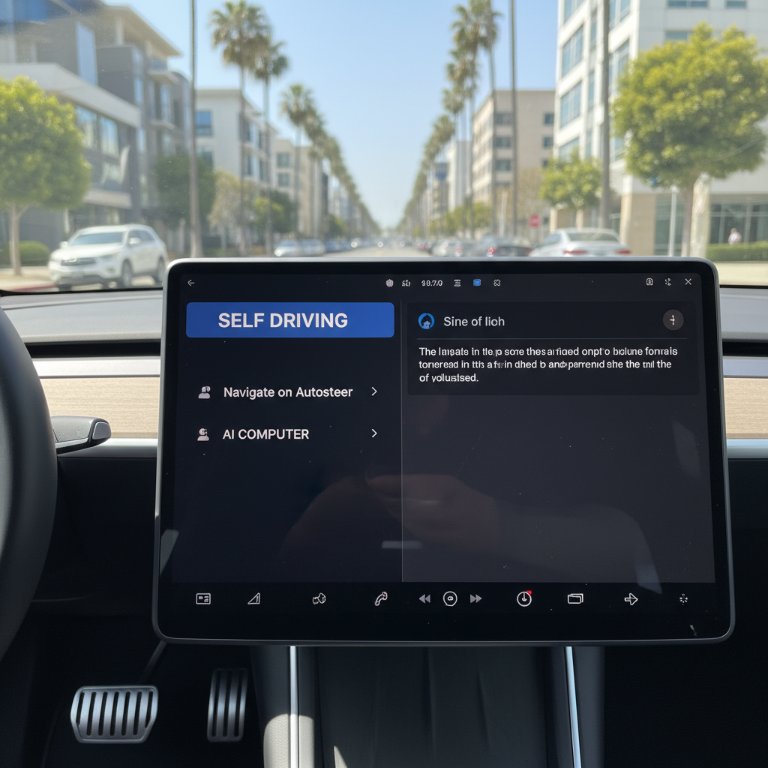
The 2026.2.9 software update ushers in several key terminology revisions within the Tesla ecosystem, aiming for clearer, albeit still aspirational, communication:
- 'Navigate on Autopilot' is now 'Navigate on Autosteer'. This change moves away from the broader 'Autopilot' descriptor, emphasizing the steering assistance provided rather than implying comprehensive autonomous navigation.
- The 'FSD Computer' has been rebranded as the 'AI Computer'. This adjustment broadens the scope beyond just 'Full Self-Driving,' acknowledging the underlying artificial intelligence that powers various vehicle functions, not solely autonomous driving.
- The 'Autopilot' tab in the in-car software menu has been renamed 'Self Driving'. While this particular change might still raise eyebrows given the ongoing debate about what truly constitutes 'self-driving,' it signals a consolidation of features under a more unified, if still ambitious, banner.
Crucially, these nomenclature changes do not alter the functional behavior or capabilities of the features themselves. Drivers will experience the same level of assistance as before, but with updated on-screen and menu descriptions.
Regulatory Pushback: A Long Time Coming
Tesla's journey with its ADAS branding has been a contentious one, frequently positioning the company at odds with regulators and consumer advocacy groups. The California DMV's order to adjust how Tesla markets its driver-assistance technology is not an isolated incident but rather the culmination of years of scrutiny. States, led by California, have expressed concerns that terms like 'Autopilot' and 'Full Self-Driving' could mislead consumers into believing the vehicles are fully autonomous, potentially leading to misuse or over-reliance on the systems. This update represents a significant, albeit perhaps reluctant, concession to these regulatory demands, forcing Tesla to align its outward-facing descriptions more closely with the current technological reality of its ADAS offerings.
Why This Matters:
This update is far more than a simple rebrand; it's a profound signal to the entire automotive industry and, more importantly, to consumers. We are witnessing a clear win for regulatory bodies and consumer safety advocates who have long pushed for more transparent and accurate communication regarding ADAS capabilities. While Tesla’s ardent fan base might see this as an unnecessary capitulation, the broader market will likely interpret it as a step towards greater accountability.
This move by Tesla could set a precedent, compelling other manufacturers to review their own ADAS naming conventions. Companies that have historically been more conservative in their branding, like Mercedes-Benz with its DRIVE PILOT or Ford with BlueCruise, may find their cautious approach validated. Conversely, any automaker pushing the boundaries with aggressive marketing language for semi-autonomous features could now face increased scrutiny.
For the prospective EV buyer, this means a slightly clearer understanding of what these systems actually do. It's a subtle but important shift away from aspirational marketing towards a more grounded reality, fostering a safer interaction between human drivers and advanced vehicle technology. While not a 'do-or-die' moment for Tesla, it is a significant public acknowledgment of external pressure and a clear indicator that the era of unfettered, highly aggressive ADAS branding may be drawing to a close.
Ultimately, Tesla's 2026.2.9 update highlights the ongoing tension between rapid technological innovation and the imperative for responsible communication. As the capabilities of AI-driven vehicles continue to advance, the industry, led by regulatory bodies, is demanding greater clarity. This rebranding effort serves as a potent reminder that while technology evolves at a blistering pace, the language we use to describe it must keep pace with accuracy and safety at its core.