Tesla Pumps Brakes on FSD 10.3: Autonomous Ambitions Hit Another Snag
Tesla has reportedly pulled back the latest iteration of its Full Self-Driving (FSD) car software, version 10.3, reverting eligible vehicles to the pr...
Editorial Team
World Of EV
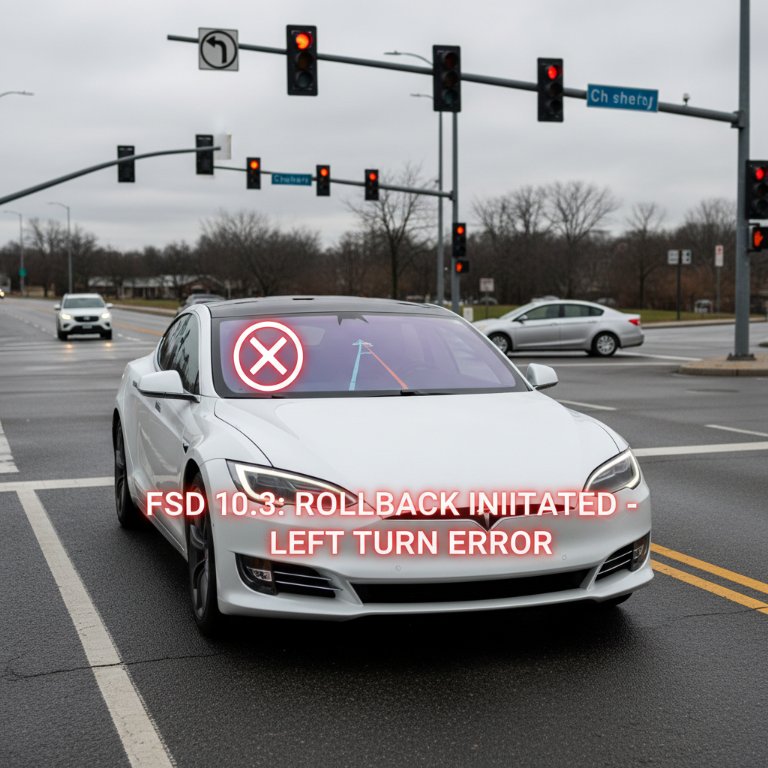
Tesla has reportedly pulled back the latest iteration of its Full Self-Driving (FSD) car software, version 10.3, reverting eligible vehicles to the prior 10.2 build. This critical decision stems from significant issues discovered within FSD 10.3, most notably persistent problems with ‘left turns at traffic lights.’ For a company that has staked its future, and a considerable portion of its market valuation, on achieving full autonomy, this rollback represents a tangible setback in its ambitious journey.
For years, Tesla and its charismatic CEO, Elon Musk, have championed FSD as the ultimate differentiator, promising a future where Teslas navigate themselves. This vision has driven significant investment from enthusiasts and early adopters who’ve paid a premium for FSD capabilities. Each new software version is met with intense scrutiny and expectation, making any regression a prominent talking point among the savvy EV community and industry watchers alike.
The FSD 10.3 Rollback Explained
The immediate cause for the retraction of FSD 10.3 was a critical flaw affecting how the system handled a common driving scenario: making left turns at traffic lights. While the exact technical specifics of the failure modes remain internal to Tesla, reports from beta testers indicated unpredictable and potentially unsafe maneuvers. This forced Tesla’s hand, leading to a swift decision to revert vehicles to the more stable 10.2 version.
- Version Rollback: From FSD 10.3 back to FSD 10.2
- Primary Issue Identified: Problems with 'left turns at traffic lights'
- Impact: Acknowledged stability concerns leading to a precautionary retreat.
This isn't an isolated incident in the often-turbulent world of autonomous driving development. Tesla's FSD Beta program, by its very nature, is a public testing ground, and iterations are frequent. However, a full rollback, especially for such a fundamental driving maneuver, underscores the immense technical hurdles still facing the company’s vision of widespread, unsupervised self-driving.
Why This Matters:
This FSD 10.3 rollback is more than just a minor software glitch; it carries significant implications for Tesla, its customers, and the broader autonomous vehicle industry. It highlights the profound complexity of achieving true Level 4 or Level 5 autonomy, reinforcing that the road ahead is fraught with challenges, even for the perceived leader in consumer-facing ADAS technology.
- Erosion of Trust: Each significant setback, especially one requiring a full software downgrade, can erode confidence among existing FSD beta testers and prospective buyers. The perception of FSD's reliability is paramount, and these incidents chip away at that trust.
- Delayed Ambitions: Tesla has consistently pushed aggressive timelines for achieving full self-driving capabilities. Such rollbacks demonstrate that fundamental challenges persist, potentially pushing out the realistic timelines for widespread, regulatory-approved autonomous operation. This impacts not just consumer expectations but also Tesla's long-term business models tied to robotaxis and autonomous fleets.
- The Software Plateau: While Tesla's hardware suite is generally considered robust, this incident underscores that the ultimate hurdle is software. Even with advanced cameras and computing power, translating real-world driving nuances into reliable, safe AI decision-making remains an extraordinarily difficult task. Competitors like Waymo and Cruise, which operate in geofenced areas with extensive mapping, illustrate a different, often slower, but arguably more controlled approach to autonomy.
- Industry Signal: For the wider automotive industry, this serves as another reminder of the monumental investment and meticulous validation required for autonomous driving. It cools some of the more hyperbolic claims about the imminent arrival of fully self-driving cars and encourages a more pragmatic view of development.
Ultimately, this rollback signals that while Tesla continues to innovate at an aggressive pace, the journey to true, reliable Full Self-Driving is far from over. It is a stark reminder that even the most advanced systems are susceptible to the intricate and unpredictable nature of real-world driving environments. Tesla’s ability to quickly identify and address these issues is commendable, but the incident undeniably casts a shadow on the immediate future of its autonomous aspirations.
Tesla must now demonstrate not just rapid iteration, but also robust validation to regain momentum and maintain the trust of its dedicated FSD user base. The world is watching to see how quickly they can rectify the ‘left turn’ problem and resume their forward march towards autonomous driving perfection.