Tesla Pivots to Power: Megapack Dominance Signals Strategic Shift Amid EV Headwinds
Tesla, once synonymous with revolutionary electric vehicles, is executing a profound strategic pivot, redirecting significant focus and resources towa...
Editorial Team
World Of EV
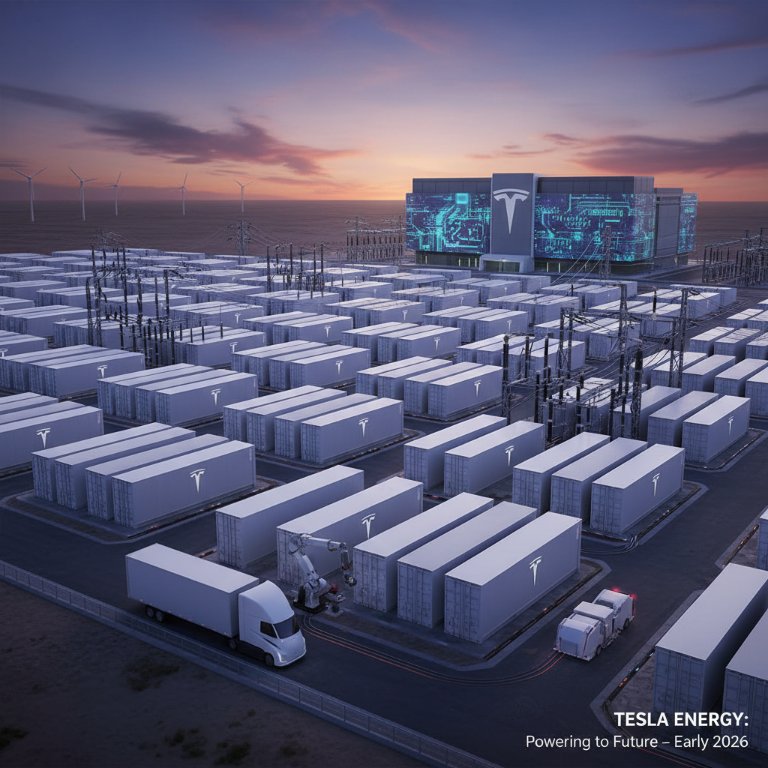
Tesla, once synonymous with revolutionary electric vehicles, is executing a profound strategic pivot, redirecting significant focus and resources towards its large-scale energy storage systems (ESS), particularly the highly profitable Megapack product line. This bold move comes in early 2026, driven by a noticeable cooling in global electric vehicle demand and an insatiable appetite for grid-scale, AI-powered data center storage. Energy storage has rapidly emerged as one of Tesla's fastest-growing and most profitable segments, proving a crucial diversification strategy for the Silicon Valley titan.
Shifting Sands in the Automotive Sector
The electric vehicle market, after years of explosive growth, is facing a significant deceleration. Major automakers worldwide, including Stellantis and Ford, have collectively written off over $55 billion, acknowledging an overestimation of EV demand. Analysts project a challenging period, with some forecasting a 15% contraction in U.S. annual passenger EV sales in 2026. Factors contributing to this 'EV winter' include consumer hesitancy over price, charging infrastructure, and performance, alongside fierce competition from Chinese manufacturers and a fluctuating landscape of government incentives.
While Tesla's automotive revenue growth has flattened, and even seen a 16% decline in EV deliveries in Q4 2025, the company's energy storage deployments soared by 49% year-over-year in 2025, reaching a record 46.7 GWh. This stark contrast underscores the critical timing of Tesla's strategic re-prioritization.
The Megapack Ascendancy: Powering the AI Era
Tesla's energy generation and storage business, anchored by the utility-scale Megapack, is not merely a side project; it is now a cornerstone of the company's profitability. In 2025, this segment generated $12.7 billion in revenue, up 27% from the prior year, and accounted for 13% of Tesla's total revenues, a rise from 10% in 2024. More impressively, it contributed nearly 25% of the company's gross profit, with margins near 30%—making it Tesla's most lucrative segment by margin.
The demand for Megapacks stems significantly from the booming AI industry. AI data centers are voracious energy consumers, with global data center electricity demand projected to more than double by 2030, reaching around 945 TWh, primarily driven by AI workloads. These facilities require massive, reliable power infrastructure, making grid-scale battery storage indispensable for stability and continuous operation.
Tesla is aggressively expanding its Megapack production, including a new Megapack factory in Houston, Texas, designed to produce 50 GWh annually of Megapack 3 systems starting in 2026. The company is also rolling out technological enhancements with Megapack 3, promising enhanced energy density and streamlined deployment processes.
Why This Matters:
Who Wins: Tesla emerges as a clear winner, leveraging its unparalleled battery technology and manufacturing expertise to diversify revenue streams, reduce reliance on the increasingly competitive automotive market, and tap into the high-growth, high-margin energy storage sector. Renewable energy developers, utilities, and AI data center operators also win, gaining access to advanced, reliable, and scalable storage solutions crucial for grid stability and sustainable operations. The growth of this segment demonstrates strong revenue visibility for Tesla, with billions in deferred revenues from projects already underway.
Who Loses: Pure-play EV manufacturers struggling with the current market slowdown and those without significant diversification into energy solutions may face increasing pressure. Companies that fail to adapt to the escalating energy demands of AI and grid modernization could also fall behind.
Market Signal: This signals a profound shift in market priorities. While EVs remain vital for decarbonization, the immediate investment returns and urgent infrastructure needs lie in grid-scale energy storage. It validates Tesla's long-held vision of being a comprehensive energy company, not solely an automotive one, and underscores the symbiotic relationship between renewable energy, AI, and robust grid infrastructure.
A Strategic Imperative: For Tesla, this is not a 'do-or-die' moment but a shrewd strategic recalibration that strengthens its long-term resilience and profitability. By doubling down on Megapacks, Tesla is capitalizing on urgent market demand while fortifying its financial health against automotive sector volatility.
Conclusion:
Tesla's accelerated shift towards energy storage, particularly its Megapack business, represents a calculated and timely response to evolving market dynamics. As EV growth moderates, the soaring demand for grid-scale battery solutions to power the AI revolution and stabilize renewable grids provides a lucrative and high-growth avenue. This strategic reorientation solidifies Tesla's position as a multifaceted energy and technology powerhouse, poised to shape not just how we move, but how our world is powered. Looking ahead, expect Tesla to continue innovating in both hardware and software, leveraging its Autobidder platform to optimize energy markets and further integrate its holistic energy ecosystem.