Tesla Model 3 Dominance Continues as Car and Driver Unveils Definitive 2026 EV Rankings
Car and Driver has dropped its comprehensive rankings for the best electric vehicles of 2026, and the results underscore both the enduring excellence ...
Editorial Team
World Of EV
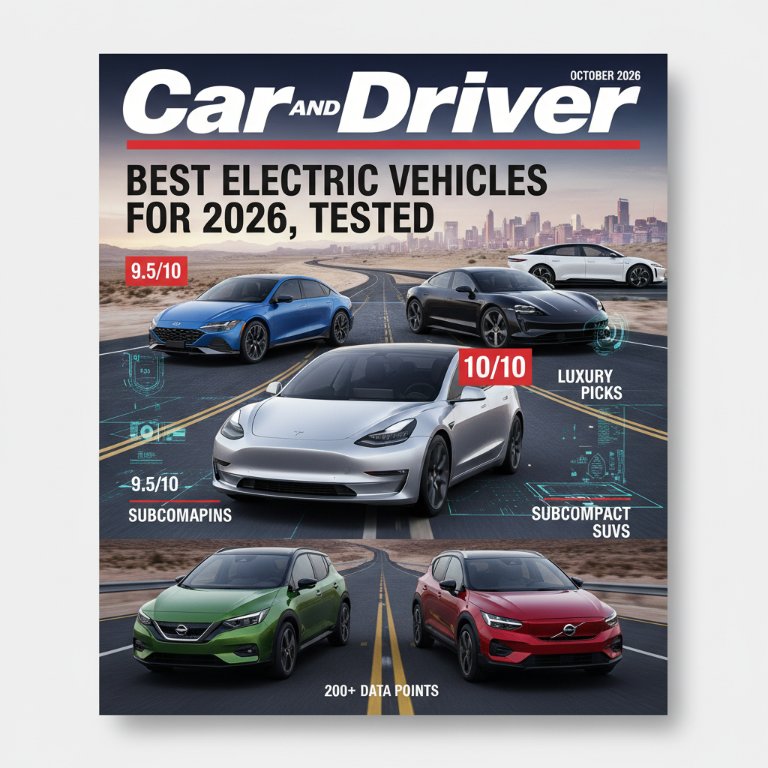
Car and Driver has dropped its comprehensive rankings for the best electric vehicles of 2026, and the results underscore both the enduring excellence of established players and the fierce competition from rising stars. This definitive evaluation, based on extensive instrumented testing and expert editors' real-world driving impressions across approximately 200 data points, serves as a critical benchmark for the rapidly evolving EV market. While the 2026 Tesla Model 3 reaffirms its segment leadership with a perfect 10/10 score, the 2025 Hyundai Ioniq 6 makes a formidable statement at 9.5/10, showcasing the incredible strides traditional automakers are making in the electric transition.
The Unyielding Reign of the Tesla Model 3
Even after years on the market, the 2026 Tesla Model 3 continues to set the gold standard, securing a flawless 10/10 rating. This isn't just a win; it's a testament to Tesla's relentless iterative improvement and a holistic package that competitors still struggle to match. While early Model 3 iterations faced scrutiny over build quality, Tesla has systematically refined the vehicle, enhancing everything from interior materials to software integration. Its seamless access to the industry-leading Supercharger network, coupled with potent performance, impressive efficiency, and a continually updated tech suite, solidifies its position as the benchmark for a well-rounded, high-performance EV. The Model 3’s persistent success demonstrates that a cohesive, user-centric ecosystem remains a powerful differentiator in a crowded market.
Hyundai Ioniq 6: A Bold Design and Performance Statement
Hot on Tesla's heels, the 2025 Hyundai Ioniq 6 garnered an exceptional 9.5/10 rating, proving that Hyundai's aggressive push into the EV space is paying massive dividends. Built on the innovative E-GMP platform, which also underpins the critically acclaimed Ioniq 5 and Kia EV6, the Ioniq 6 distinguishes itself with its striking, aerodynamically optimized design and a compelling blend of rapid charging capabilities, engaging driving dynamics, and a strong value proposition. Hyundai’s rapid ascent showcases how legacy automakers, when fully committed, can leverage their manufacturing prowess and design flair to create truly competitive and desirable electric vehicles that offer distinct alternatives to Tesla's minimalist aesthetic.
Luxury and Accessible Options Broaden the Spectrum
Beyond the mass-market contenders, Car and Driver highlighted continued excellence in diverse segments. The 2026 Porsche Taycan and 2026 Lucid Air stood out as top picks for luxury, reaffirming their status as aspirational EVs that push boundaries in performance, range, and opulent interiors. These vehicles cater to a segment of buyers seeking uncompromising premium experiences, demonstrating that the EV revolution is flourishing across the entire price spectrum.
On the more accessible end, the 2026 Nissan Leaf and Volvo EX30 were recognized as top choices for 'subcompact SUVs.' The inclusion of the all-new, stylish, and technologically advanced Volvo EX30 is no surprise, as it perfectly embodies the future of compact, urban-focused EVs. The Nissan Leaf's continued presence on a 'best of' list, however, is a notable point of discussion. While the Leaf has been a trailblazer, its platform is aging. Its recognition here likely speaks to its enduring value, practicality for urban use, and perhaps a specific niche it still fills for budget-conscious consumers, despite technically being a compact hatchback rather than an SUV. This dual mention underscores the market's need for both cutting-edge and economically viable electric mobility solutions.
Why This Matters:
For Prospective Buyers: Car and Driver's rankings provide invaluable clarity in a market saturated with new EV models. The Tesla Model 3 remains the default recommendation for its overall excellence, while the Hyundai Ioniq 6 offers a distinct, compelling, and stylish alternative. For those seeking luxury, the Taycan and Lucid Air continue to define the pinnacle. Critically, the strong showing of the Volvo EX30 signals a new wave of highly desirable, smaller EVs that will make electric ownership more accessible and appealing to a broader demographic. The Leaf's mention, while puzzling in its category, highlights that even older, more affordable options still have a place.
For the Industry: Tesla's sustained leadership with the Model 3 is a constant reminder to competitors that simply launching an EV isn't enough; continuous refinement, a robust charging infrastructure, and superior software are paramount. Hyundai's strong performance, alongside other legacy players like Porsche, proves that traditional automotive giants can innovate rapidly and effectively, challenging the early dominance of pure-play EV manufacturers. The emergence of strong subcompact offerings like the EX30 points to market maturation, signaling a shift from a focus purely on range and performance to diverse form factors and price points. It suggests that the 'one-size-fits-all' approach is rapidly becoming obsolete, demanding specialized vehicles for various consumer needs.
Market Trends: This report confirms the ongoing segmentation of the EV market. We are moving beyond a nascent stage where any EV was noteworthy. Now, consumers demand excellence across specific criteria – be it performance, luxury, efficiency, or affordability. The diverse top picks illustrate a healthy, competitive landscape where innovation is thriving, ultimately benefiting the end-user with more tailored options.
These 2026 rankings from Car and Driver solidify the notion that the electric vehicle market is not just expanding, but maturing. While established leaders like the Tesla Model 3 continue to refine their winning formula, dynamic challengers from both traditional and new automakers are pushing boundaries, ensuring a vibrant and competitive future for EV enthusiasts and new buyers alike. The road ahead promises even more compelling choices as the industry continues its rapid evolution.