Tesla Ignites Q1 with Robust China Sales and Strategic Global Expansion
Tesla Inc. stormed into March with a commanding 3.27% stock surge on March 11, decisively outperforming the broader Automobiles & Auto Parts sector. T...
Editorial Team
World Of EV
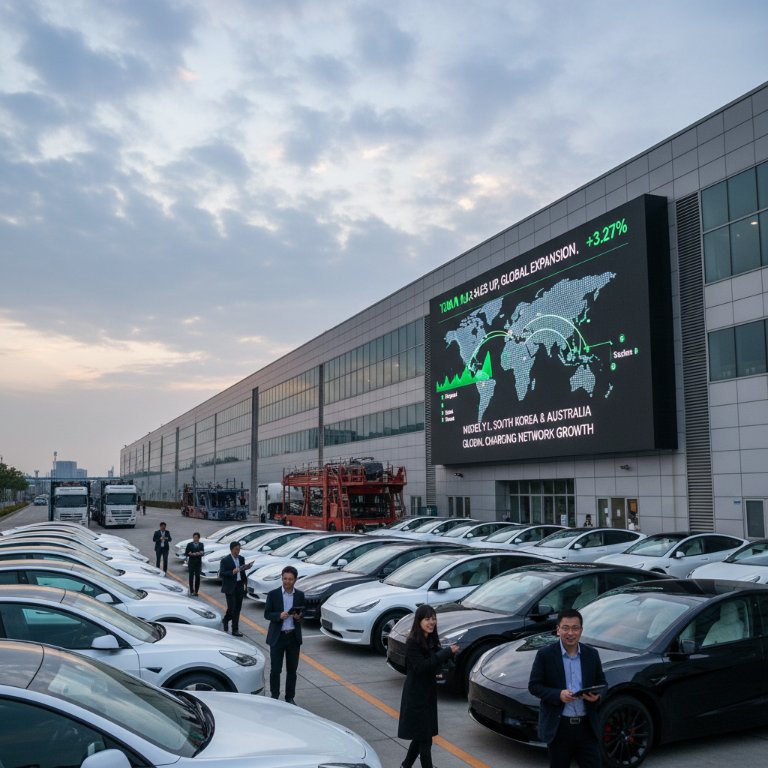
Tesla Inc. stormed into March with a commanding 3.27% stock surge on March 11, decisively outperforming the broader Automobiles & Auto Parts sector. This significant leap isn't merely a fleeting market fluctuation; it’s a clear affirmation of Tesla’s multi-pronged strategy, underscored by burgeoning demand in its critical Chinese market, an anticipated product refresh in key growth regions, and relentless investment in its foundational charging ecosystem. This confluence of factors signals a potent acceleration for the EV titan as it navigates an increasingly competitive global landscape.
China's Demand Fuels Unprecedented Growth
The most immediate catalyst for Tesla's recent market performance was an impressive year-over-year increase in its China-made vehicle sales for February 2026. This isn't just about selling more cars; it’s a testament to Tesla's enduring appeal and operational prowess within the world's largest and most fiercely contested electric vehicle market. While many legacy automakers and domestic Chinese brands like BYD have intensified competition, Tesla continues to demonstrate its ability to capture significant market share, leveraging its Gigafactory Shanghai's efficiency and a well-established brand presence. This robust performance in China provides crucial momentum, offsetting potential slowdowns in other regions and demonstrating the enduring strength of the Tesla brand amidst fierce local rivalry.
Model Y L Set for Strategic Global Rollout
Further fueling investor optimism is the imminent launch of the six-seater Model Y L in two vital markets: South Korea and Australia. The Model Y, already a global bestseller, is a cornerstone of Tesla's volume strategy. The introduction of a six-seater variant, denoted by the 'L' (likely signifying 'Long-range' or 'Large' configuration targeting increased passenger capacity), directly addresses a growing consumer demand for more versatile family-friendly EVs in these regions.
- Targeted Market Expansion: South Korea boasts a rapidly growing EV adoption rate and a strong appetite for premium electric vehicles, while Australia's vast distances make range and practicality paramount.
- Enhanced Versatility: The six-seater configuration offers a compelling alternative to traditional SUVs and minivans, potentially unlocking new buyer segments who require greater passenger capacity without compromising on EV performance or Tesla's technology suite. This move is a shrewd play to further entrench the Model Y's dominance in a segment increasingly targeted by competitors.
Charging Infrastructure: The Unseen Bedrock
Tesla's continuous investments in its EV charging infrastructure, particularly the Supercharger network, remain an understated yet critical driver of its long-term success. While often overshadowed by vehicle sales figures, a robust and reliable charging network is the backbone of the EV ownership experience. For years, Tesla's Supercharger network has been a significant competitive advantage, mitigating range anxiety and ensuring seamless travel for its customers.
- Customer Confidence: Ongoing expansion and upgrades reinforce customer confidence, proving Tesla's commitment beyond just selling vehicles.
- Strategic Advantage: Even as other manufacturers adopt Tesla's North American Charging Standard (NACS), Tesla's proprietary network, strategically positioned and maintained, continues to offer a superior charging experience, acting as a powerful retention tool and a draw for new buyers considering the shift to electric.
Why This Matters:
This trifecta of positive developments isn't just good news for Tesla; it's a strategic blueprint playing out in real-time. The strong performance in China signals that Tesla is successfully navigating intense domestic competition, demonstrating resilience and product appeal in a market that is often a bellwether for global EV trends. The Model Y L launch highlights Tesla's intelligent product diversification, addressing specific market needs and expanding its addressable audience in crucial, high-growth regions. This move directly challenges rivals who may struggle to offer similar combinations of performance, practicality, and charging infrastructure access. Finally, the unwavering commitment to charging infrastructure underscores Tesla’s understanding that the ecosystem, not just the car, sells the EV. For the broader EV market, this sends a clear message: competition will continue to intensify, but foundational elements like charging reliability will remain non-negotiable for consumer adoption. Who wins? Tesla, by solidifying its market position and proving its adaptability. Who loses? Competitors who fail to match Tesla's holistic approach to market penetration, product innovation, and infrastructure development. This is not a 'do-or-die' moment, but rather a robust reinforcement of Tesla's leading position, setting a high bar for the industry as a whole.
Looking ahead, these developments position Tesla for sustained growth through the remainder of 2026. The company’s ability to leverage its manufacturing prowess in China, strategically deploy new product variants, and continue enhancing its foundational infrastructure forms a powerful synergy. As the EV market matures, Tesla's integrated strategy, focusing on both vehicle innovation and the critical supporting ecosystem, remains a formidable force, promising further intriguing developments for enthusiasts and industry watchers alike.