Tesla FSD (Supervised) Now Reads Detour Signs: A Critical Leap Towards True Autonomy
For years, the promise of truly autonomous driving has been a tantalizing, yet often elusive, goal. While advanced driver-assistance systems (ADAS) ha...
Editorial Team
World Of EV
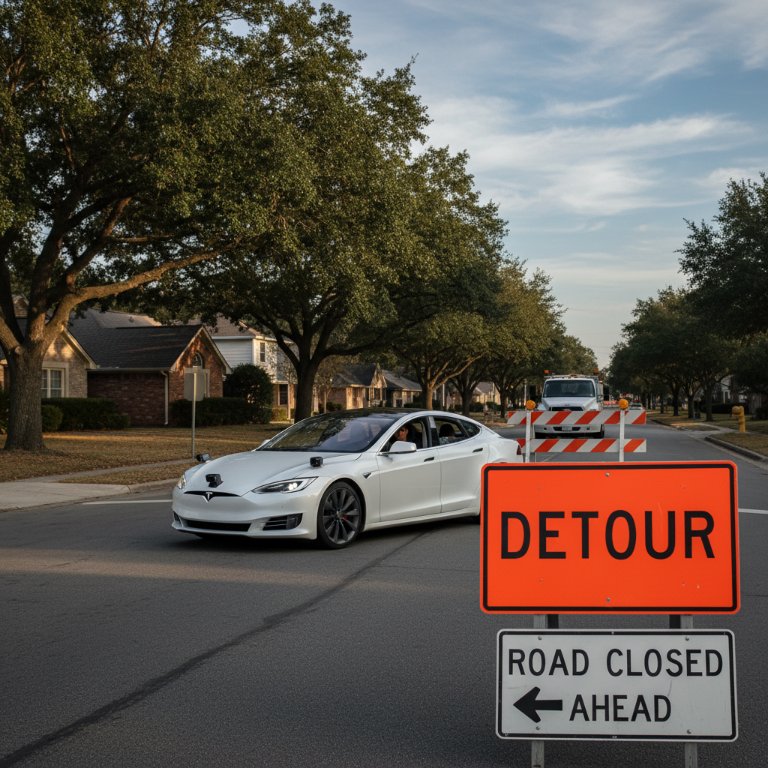
For years, the promise of truly autonomous driving has been a tantalizing, yet often elusive, goal. While advanced driver-assistance systems (ADAS) have proliferated, the ability to seamlessly navigate the unpredictable complexities of real-world roads has remained a significant hurdle. Today, Tesla's Full Self-Driving (Supervised) system has taken a monumental step forward, demonstrating a new capability to interpret physical detour signs and respond appropriately to road closures without direct driver intervention. This isn't just an incremental update; it marks a profound improvement in environmental perception, allowing FSD to dynamically override its planned route based on temporary, physical signage, shifting the goalposts for what's possible in consumer-grade autonomous software.
Unlocking Dynamic Road Resilience
Historically, autonomous driving systems, including early iterations of FSD, have relied heavily on pre-mapped data and digital navigation. While robust for static environments, this approach often stumbles when confronted with the dynamic, often chaotic, realities of road construction, accidents, or temporary events. This latest enhancement directly addresses that weakness, pushing FSD (Supervised) further into the realm of human-like adaptability. The system now demonstrates a sophisticated understanding of its immediate physical surroundings, going beyond mere lane keeping or traffic light recognition.
Key aspects of this transformative update include:
- Physical Sign Interpretation: FSD (Supervised) can now visually identify and understand the meaning of physical detour and road closure signs, such as 'ROAD CLOSED' or 'DETOUR AHEAD'.
- Dynamic Route Overrides: Upon recognizing a closure, the system intelligently adjusts its navigation, re-routing the vehicle to bypass the obstruction without requiring the driver to take control.
- Enhanced Real-World Perception: This capability signifies a major leap in how FSD processes and reacts to unforeseen, temporary changes in the driving environment, moving beyond static map data.
- Reduced Driver Intervention: For situations involving unexpected road blockages, the system aims to handle the re-routing autonomously, lessening the cognitive load and intervention requirement from the supervising driver.
Why This Matters:
This isn't just a convenient new feature; it's a profound strategic advantage and a significant milestone on the path to widespread autonomous driving. For Tesla, it reinforces their leadership in AI-driven software development and enhances the value proposition of their FSD package, potentially accelerating adoption and data collection. It differentiates FSD (Supervised) from many competitor ADAS systems that still struggle with dynamic, unmapped road changes, often requiring immediate driver takeover in such scenarios.
For EV owners and prospective buyers, this directly translates to a more reliable, less stressful driving experience. Imagine navigating an unfamiliar city only to encounter an unexpected road closure; instead of scrambling for your phone or frantically trying to find an alternate route, your vehicle proactively handles the situation. This builds crucial trust in the system's capabilities, an essential ingredient for broader acceptance of autonomous technology. Competitors, especially those relying more heavily on pre-computed HD maps or less sophisticated vision systems for real-time interpretation, face increased pressure to match this level of environmental awareness. This advancement signals to the broader automotive market that vision-only (or vision-primary) systems, when properly trained with vast datasets, can indeed achieve robust, real-world perception capabilities previously thought to require extensive lidar or radar setups for complex edge cases.
Tesla's ability to integrate this level of real-time environmental processing into FSD (Supervised) underscores the power of its iterative, data-driven development approach. While the journey to true Level 5 autonomy is still ongoing, the capability to independently read and respond to physical detour signs represents a critical bridge over one of the most persistent gaps in autonomous navigation. It brings us demonstrably closer to a future where our vehicles don't just follow a path, but intelligently understand and react to the ever-changing world around them.