Tesla FSD Gains Its Voice: A Critical Leap in User Control and Intuition
Tesla's Full Self-Driving (FSD) system, a perennial topic of both awe and debate within the automotive world, is set to receive a transformative updat...
Editorial Team
World Of EV
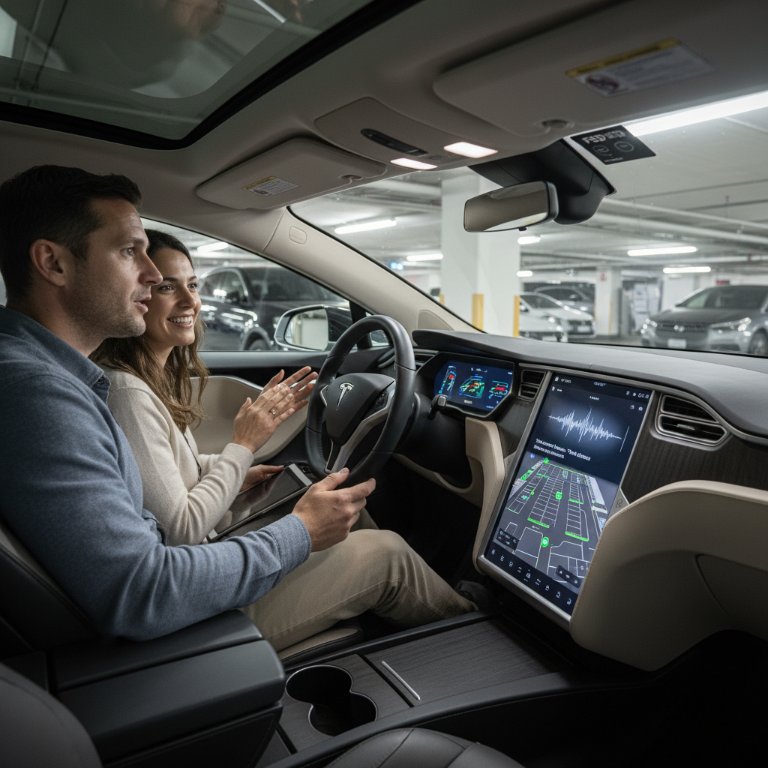
Tesla's Full Self-Driving (FSD) system, a perennial topic of both awe and debate within the automotive world, is set to receive a transformative update. CEO Elon Musk recently confirmed on X that FSD will soon integrate voice prompts, fundamentally altering how drivers interact with the advanced driver-assistance system. This isn't merely a software tweak; it represents a significant push towards a more intuitive, human-centric FSD experience, directly addressing long-standing user frustrations with system control.
For years, Tesla has been at the forefront of pushing the boundaries of vehicle autonomy, often drawing criticism for the 'beta' nature of its FSD software while simultaneously pioneering features that many traditional automakers are still struggling to replicate. The journey has been fraught with challenges, from navigating complex regulatory landscapes to refining the intricate algorithms required for true self-driving. Now, with the introduction of voice commands, Tesla is demonstrating a clear focus not just on the capability of FSD, but on its usability—a crucial differentiator in a rapidly maturing market.
FSD Finds Its Voice: What Voice Prompts Mean
The forthcoming voice prompt feature is designed to empower drivers with a new level of command over their FSD system. Instead of relying solely on screen-based inputs or pre-programmed decisions, users will soon be able to issue verbal instructions, guiding the FSD system more directly. This represents a substantial enhancement to the user interface, aiming for a seamless integration of human intent with automated actions.
Key functionalities highlighted for this update include:
- Specific Parking Preferences: Drivers can verbally request FSD to park in a particular manner, such as closer to a building entrance or within an empty, less congested section of a parking lot. This goes beyond the system simply finding a spot, offering tailored convenience.
- Addressing Navigation Shortcomings: The update directly targets existing limitations where FSD might not perfectly align with a driver's immediate needs or preferences in nuanced situations.
- Enhanced User Experience: By shifting control to natural language, Tesla aims to reduce cognitive load and make interacting with FSD feel more natural and less like a battle against an algorithm.
A Deeper Dive into Control and Convenience
The introduction of voice prompts marks a critical evolution in how Tesla views the driver's role within an autonomous context. Historically, FSD has excelled at the core tasks of driving, yet often struggled with the subjective nuances that human drivers effortlessly manage—like selecting the best parking spot rather than just any spot, or adjusting a route based on personal preference rather than pure algorithmic efficiency. These 'edge cases' of personal choice have been significant friction points for users.
This update seeks to bridge that gap, giving drivers an active, intuitive voice in the FSD's decision-making process. It acknowledges that even highly advanced autonomous systems benefit from human guidance and input, especially in areas where subjective judgment plays a significant role. This move suggests Tesla is listening to its user base, recognizing that true autonomy isn't just about technical capability, but also about seamless, user-friendly interaction.
Why This Matters:
This isn't merely an incremental feature; it signals a strategic pivot in Tesla's approach to FSD, prioritizing intuitive user interaction alongside raw driving capability. For the savvy EV enthusiast and prospective buyer, this matters immensely because it makes FSD a more practical and less frustrating tool in daily life. It’s a testament to the fact that even the most advanced technology needs a human touchpoint.
- Who Wins: Current FSD subscribers immediately gain a more flexible and customizable experience, enhancing the value proposition of their existing investment. Prospective buyers might find the system less intimidating and more aligned with their personal driving style, potentially boosting FSD adoption. Tesla itself reinforces its reputation as an innovator not just in hardware, but in software and user experience.
- Who Loses: Competitors lagging in advanced driver-assistance systems (ADAS) that offer deep levels of user interaction stand to lose. While many automakers offer voice commands for infotainment, integrating them seamlessly into complex driving functions like FSD for nuanced control represents a higher bar. This move widens the gap in user interface sophistication.
- Market Signal: This feature underscores Tesla’s commitment to iterative improvement and user-centric design. It signals that the path to full autonomy isn't just about perfecting the underlying algorithms, but also about perfecting the interaction between human and machine. It's not a 'do-or-die' moment in terms of core autonomous functionality, but it is a critical step in making FSD more approachable, more valuable, and ultimately, more desirable for the mass market. It demonstrates a maturation of Tesla's FSD strategy, moving beyond just showing what's technically possible to making it genuinely useful and intuitive.
In essence, Tesla's FSD gaining its voice is a crucial step towards creating an autonomous system that understands not just the road, but also the driver. It transforms FSD from a powerful, albeit sometimes rigid, co-pilot into a more adaptable and responsive partner. As the automotive industry races towards a truly autonomous future, it's clear that the battle will be won not just on the merits of technology, but on the strength of the user experience it delivers.