Tesla FSD Breaks New Ground: Israel Trials Signal Global Ambitions Amidst Regulatory Scrutiny
Tesla's ambitious Full Self-Driving (FSD) system is set to tackle one of the world's most dynamic and challenging road environments, as the Ministry o...
Editorial Team
World Of EV
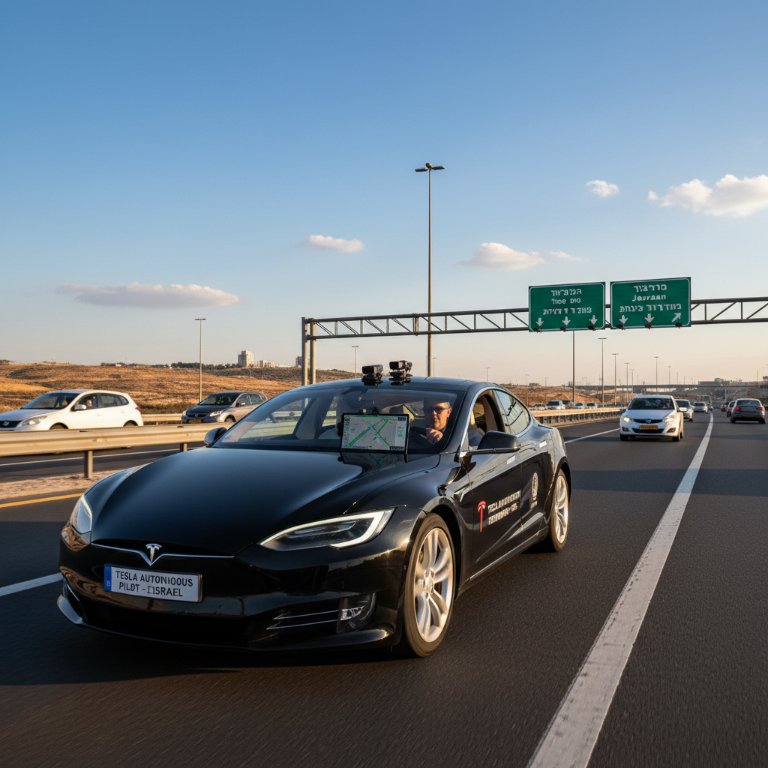
Tesla's ambitious Full Self-Driving (FSD) system is set to tackle one of the world's most dynamic and challenging road environments, as the Ministry of Transport in Israel officially granted approval for trials on public roads. This pivotal move positions Israel as a critical proving ground for Tesla's advanced autonomous technology, which continues to face intense regulatory scrutiny and diverse operational challenges across global markets.
After years of development and incremental rollouts, Tesla's FSD system, though not yet fully autonomous, represents a significant leap in the company's vision for self-driving cars. This latest development comes at a time when FSD is under close watch in several jurisdictions, particularly in the U.S., where regulatory bodies like the National Highway Traffic Safety Administration (NHTSA) have launched investigations into its capabilities and safety. This Israeli approval offers Tesla a valuable opportunity to demonstrate its system's adaptability and robustness in a complex real-world setting, a crucial step toward broader international acceptance.
The Israeli Testing Ground: A New Frontier for FSD
The pilot program in Israel aims to thoroughly assess FSD's performance across various parameters unique to the region. This isn't merely a symbolic gesture; it's a strategic undertaking for both Tesla and the Israeli government.
Key aspects of the trial include:
- Interaction with Local Infrastructure: Evaluating how the FSD system interprets and navigates Israel's distinct road signage, lane markings, and traffic light configurations.
- Diverse Traffic Patterns: Observing FSD's behavior in varying traffic densities, from congested urban centers to faster intercity routes.
- Local Driving Behaviors: Adapting to regional driving nuances, which can often differ significantly from those in other primary testing markets like the U.S. and China.
- Mandatory Human Supervision: A critical safety measure, a human driver will be required to be present and supervise the system at all times, ready to intervene.
This supervised approach is consistent with how Tesla's FSD currently operates in most markets where it's available, emphasizing that despite its 'Full Self-Driving' moniker, the system remains a Level 2 advanced driver-assistance system (ADAS) requiring active driver engagement.
Advancing Regulation and Invaluable Data Collection
For Israel, this initiative extends beyond simply hosting a tech trial. The Ministry of Transport explicitly states its aim to advance vehicle regulation and create a comprehensive framework for the future, routine, supervised use of autonomous driving systems. Israel has been actively working on autonomous vehicle legislation, and this trial solidifies its position as a hub for smart mobility.
For Tesla, the value lies in the unparalleled data generated from real-world scenarios that are difficult to replicate in simulation or in regions with more standardized driving conditions. Collecting diverse driving data from unique environments is paramount for refining AI models and enhancing the safety and reliability of autonomous systems. This comprehensive data will be crucial for Tesla's continuous improvement of its FSD software, especially as the company strives for the holy grail of unsupervised autonomy.
Why This Matters:
This development is more than just another news byte for the EV enthusiast; it carries significant implications for Tesla, the autonomous driving industry, and global regulatory bodies.
- For Tesla: Securing regulatory approval in a new, complex market like Israel is a substantial win. It provides invaluable real-world data to train and validate FSD, particularly regarding edge cases and diverse driving behaviors that might be less prevalent in existing testbeds. This helps counter narratives of FSD's limitations and supports its global expansion strategy. It also highlights Tesla's continued push despite regulatory hurdles and criticisms in other regions regarding FSD's naming and capabilities.
- For Israel: The country is actively cultivating an image as a leader in automotive technology and innovation. By proactively developing a regulatory framework for supervised autonomous driving, Israel positions itself to attract further investment and talent in the burgeoning AV sector. This pilot program, building on previous efforts for autonomous public transport, could lead to a safer and more efficient transportation system, addressing concerns about human error.
- For the Autonomous Driving Industry: Israel's rigorous approach to approving and monitoring these trials could set a precedent for other nations grappling with autonomous vehicle regulation. It underscores the global push towards autonomous mobility, with several Middle Eastern nations, including the UAE and Saudi Arabia, also making significant strides in developing their AV ecosystems. The ongoing need for human supervision in FSD trials also reinforces the current reality that true Level 4 or Level 5 autonomy remains a distant, complex goal requiring extensive real-world validation beyond simulated environments.
Conclusion
Tesla's FSD trial approval in Israel marks a strategic expansion into a challenging yet rewarding operational domain. It represents a crucial step in collecting diverse, real-world data vital for the continuous evolution of its autonomous driving system, while simultaneously aiding Israel in forging a robust regulatory path for future AV integration. This symbiotic relationship pushes the boundaries of autonomous technology forward, bringing the vision of widespread self-driving closer, albeit with a clear emphasis on supervised implementation as the industry navigates the complexities of a truly autonomous future.