Tesla Embraces WeChat: A Pivotal Move to Reclaim China's EV Crown
Tesla is making a critical strategic pivot in its battle for market share in China, announcing a landmark partnership with Tencent Cloud. This collabo...
Editorial Team
World Of EV
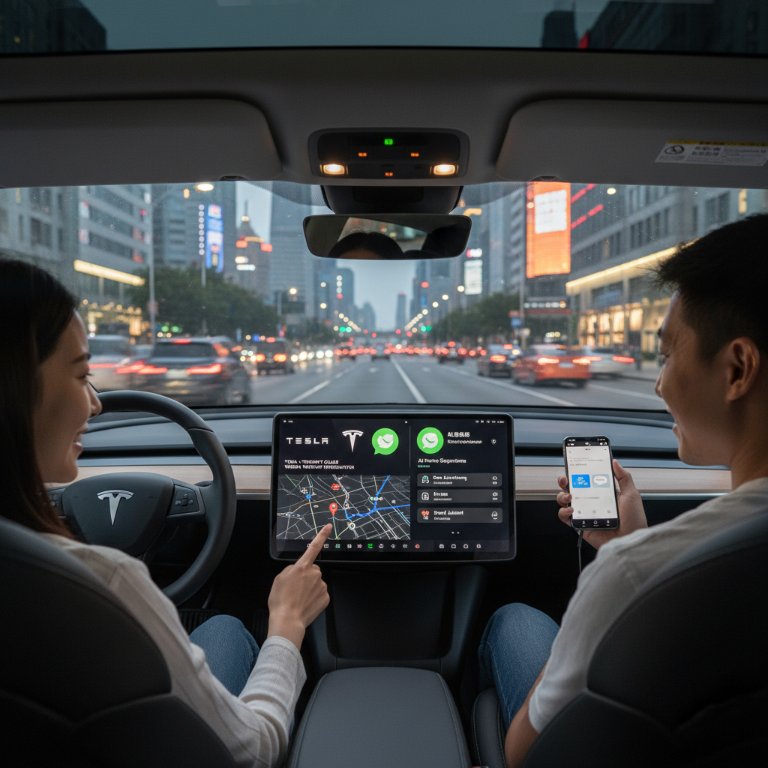
Tesla is making a critical strategic pivot in its battle for market share in China, announcing a landmark partnership with Tencent Cloud. This collaboration will deeply integrate popular WeChat-linked features directly into over one million Model 3 and Model Y vehicles, marking a significant step towards localizing the in-car software experience via an over-the-air (OTA) update.
This isn't merely a feature addition; it's a direct response to the escalating competition and shifting consumer preferences within China's dynamic electric vehicle landscape. For the first time, Tesla experienced a domestic sales decline in China in 2025, underscoring the urgency for the American EV giant to adapt its globally-centric approach to the unique demands of its most vital international market.
Tencent Cloud Integration: Tailoring the Tesla Experience
The partnership leverages Tencent Cloud's robust infrastructure to embed functionality familiar to millions of Chinese smartphone users directly into Tesla's infotainment system. This move aims to bridge the gap between Tesla's traditionally proprietary software ecosystem and the deeply integrated digital lives of Chinese consumers.
Key features arriving in Model 3 and Model Y vehicles include:
- One-tap location sharing: Seamlessly share destinations from WeChat directly to the vehicle's navigation system, a crucial convenience in daily Chinese life.
- AI-powered service suggestions: Personalized recommendations for local services, likely including charging stations, restaurants, and points of interest, enhancing the utility of the in-car experience.
This deep integration with WeChat, China's ubiquitous super-app, acknowledges the platform's central role in daily communication, payments, and services. While Tesla has always boasted cutting-edge technology, its software integration in China has often been perceived as lagging behind local competitors who have natively built their systems around the local digital ecosystem.
The China Imperative: Adapting to Fierce Local Competition
The decision to partner with Tencent Cloud highlights Tesla's recognition of the unique challenges and opportunities in the Chinese market. For years, domestic players like BYD, Nio, Xpeng, and Li Auto have excelled by offering highly localized, feature-rich software experiences that resonate deeply with Chinese consumers. These rivals often integrate a vast array of local apps and services, creating a seamless digital experience that extends beyond mere driving.
Tesla's 2025 sales decline in China served as a stark reminder that while its brand appeal and performance remain strong, the lack of deeply integrated local software features could hinder its long-term growth. The Chinese market doesn't just demand advanced hardware; it expects a 'smart car' that acts as an extension of one's digital life, a domain where local manufacturers have held a distinct advantage.
Why This Matters:
This partnership represents a significant strategic recalibration for Tesla, signaling its proactive intent to compete more effectively on the 'smart car' front in China. It's an acknowledgment that a one-size-fits-all global software strategy no longer suffices in a market as sophisticated and locally-driven as China's.
- For Tesla Owners in China: This is a clear win. They gain a more intuitive, familiar, and genuinely useful in-car experience that aligns with their daily digital habits. This enhanced usability could significantly improve customer satisfaction and loyalty.
- For Tesla's Market Position: By addressing a key differentiator of its local rivals, Tesla aims to stem its sales decline and fortify its competitive stance. It transforms a perceived weakness in local software integration into a strength, potentially attracting a broader segment of tech-savvy Chinese buyers who prioritize seamless digital experiences.
- Industry Signal: This move sends a powerful message to all foreign automakers: success in China hinges not just on product quality but on deep, authentic localization, particularly in software and connectivity. It underscores the immense influence of local tech giants like Tencent in shaping the future of mobility in the region.
Tesla's embrace of Tencent Cloud and WeChat integration marks a crucial turning point. It demonstrates a pragmatic shift from a purely proprietary approach to one that strategically partners with local champions to deliver a superior, localized user experience. This pivot is not merely about adding features; it's about cementing Tesla's relevance and securing its future growth in the world's most competitive EV market. The success of this integration will undoubtedly be a key indicator of Tesla's long-term trajectory in China, setting a precedent for how global brands must adapt to thrive in diverse digital ecosystems.