Tesla Axes Custom Model S/X Orders, Signals Major Pivot to AI and Robotics
In a seismic shift for the electric vehicle landscape, Tesla has officially ceased accepting custom orders for its flagship Model S sedan and Model X ...
Editorial Team
World Of EV
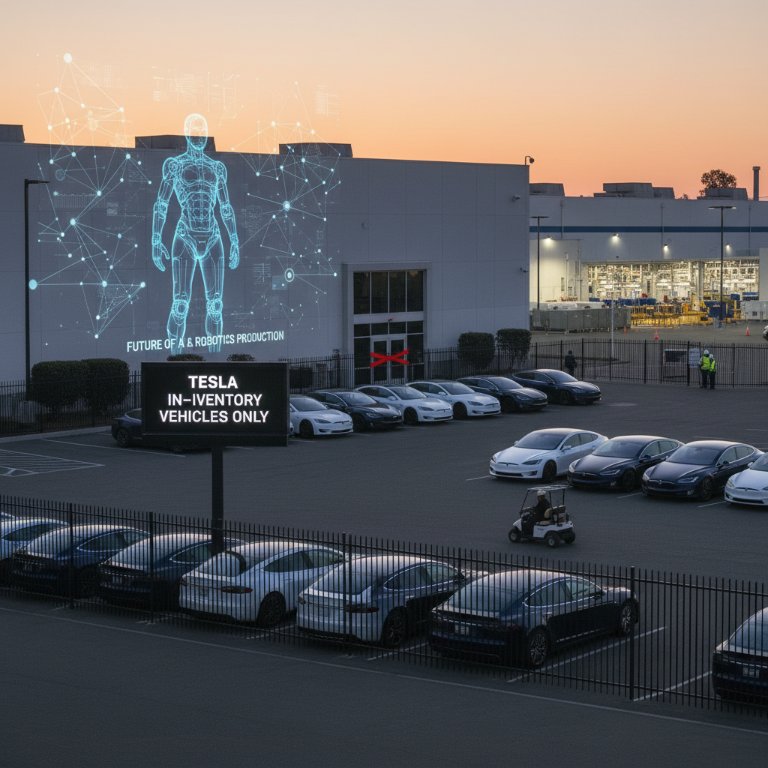
In a seismic shift for the electric vehicle landscape, Tesla has officially ceased accepting custom orders for its flagship Model S sedan and Model X SUV. The custom order configurator has vanished from Tesla's website, now redirecting prospective buyers to existing limited inventory listings. This decisive move, confirmed by CEO Elon Musk, marks the definitive end of bespoke production for these long-running models, ushering in a new era focused on efficiency and, more profoundly, artificial intelligence.
The Model S, in particular, was the vehicle that truly put Tesla on the map, demonstrating that electric cars could be luxurious, high-performance, and technologically advanced alternatives to internal combustion engines. Its groundbreaking design and impressive range established Tesla as a serious contender in the automotive industry. The Model X followed, introducing unique falcon-wing doors and a seven-seat configuration, further cementing Tesla's innovative, albeit sometimes unconventional, approach. For years, these vehicles symbolized Tesla's premium offerings, but their custom order demise signals a strategic realignment.
The Strategic Shift: Fremont Pivots to Optimus and AI
Tesla's decision is far from a simple product line adjustment; it's a profound strategic recalibration. The rationale, as articulated by Elon Musk, involves reallocating precious manufacturing capacity at the Fremont factory. This capacity will now primarily serve the burgeoning production of Optimus humanoid robots and other AI-driven initiatives. This isn't merely a business optimization; it’s a categorical statement from Tesla: the company is increasingly positioning itself as a leader in AI and robotics, with its automotive division now seemingly a significant, but perhaps not exclusive, means to an end.
For current Model S and Model X customers, this means the only path to ownership is through existing, pre-configured inventory. While this could potentially lead to faster delivery times for those who find a suitable match, it eliminates the ability to personalize options, colors, and trims to individual specifications. This change reflects a broader industry trend towards simplifying ordering processes, but for Tesla, it carries a heavier symbolic weight, effectively declaring these premium models as mature, stable products rather than platforms for bespoke customization. The retooling of Fremont, a factory synonymous with Tesla's automotive output, to prioritize humanoid robot production underscores the company's bold vision for a future driven by AI and automation, far beyond the confines of electric vehicles.
Why This Matters:
Tesla's Evolving Identity: This move unambiguously signals Tesla's accelerated pivot from being 'just' an EV manufacturer to a full-fledged AI and robotics company. While vehicles like the Cybertruck and upcoming Robotaxi concepts still feature prominently, the explicit re-prioritization of manufacturing capacity towards Optimus robots indicates where the company sees its most significant long-term growth and disruptive potential. This redefines Tesla's competitive landscape, pitting it not only against traditional automakers but also against tech giants in the AI and robotics space.
Impact on the Premium EV Segment: The removal of custom orders for the Model S and Model X effectively 'commoditizes' Tesla's luxury offerings. While efficiency and reduced complexity are valid business goals, luxury buyers often demand personalization. Competitors like Mercedes-Benz with their EQS, Porsche with the Taycan, and Lucid with the Air, all of whom offer extensive customization, may find an opening to capture discerning premium EV customers who value bespoke options. Tesla appears to be betting that performance, technology, and brand appeal alone will suffice for this segment.
Manufacturing Efficiency and Scale: By simplifying the Model S and Model X production to inventory-only, Tesla can significantly streamline its manufacturing processes. This reduces complexity, potentially lowers costs, and frees up resources — both human and robotic — for higher-volume, potentially higher-margin endeavors like Optimus, and perhaps future mass-market vehicles. This is a classic business strategy for mature product lines, but it’s audacious for models that were once the company's crown jewels.
What This Signals to the Market: Investors and analysts will undoubtedly interpret this as a strong signal of Tesla's long-term vision. The focus isn't just on selling more cars, but on developing foundational AI and robotics technology that could power a multitude of future industries. It’s a bold, high-risk, high-reward strategy that aims to establish Tesla as a diversified tech behemoth, not solely an automotive player.
Tesla’s decision to end custom orders for the Model S and Model X is more than just a product update; it’s a clear declaration of intent. The company is actively shedding legacy production complexities to aggressively pursue its vision as a leader in AI and robotics. While the immediate impact for luxury EV buyers means less choice, the long-term implications point towards a future where Tesla's influence extends far beyond our roads, potentially reshaping industries through its ambitious AI and automation initiatives.